

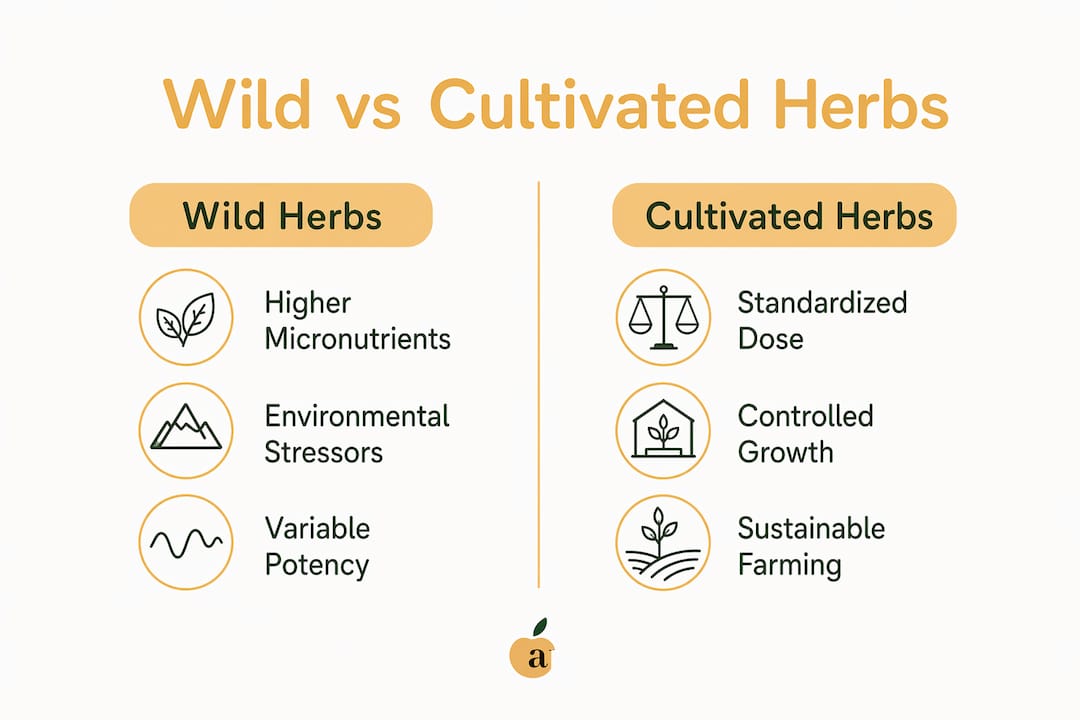
Wild-harvested herbs are often more potent than their cultivated counterparts because they produce higher concentrations of secondary metabolites in response to natural environmental stressors. No irrigation, no fertiliser, no shelter. Plants growing in the wild must defend themselves, and that defence is chemical. The result is a richer profile of phenolics, terpenoids, and alkaloids than you typically find in crops grown under controlled conditions.
Here is what drives that potency:
- Environmental stress such as drought, UV exposure, and herbivory triggers production of protective phytochemicals
- Genetic variability in wild populations means some plants invest more heavily in secondary metabolites than any single cultivated variety
- Soil biodiversity in natural habitats supports a wider range of bioactive compounds than managed farmland
- Harvest timing matters: active compound concentration peaks at specific growth stages, and a poorly timed wild harvest can underperform a well-managed cultivated crop
- Plant part selection is critical — leaves, roots, and seeds each carry different active compound profiles
That said, potency alone does not equal quality. Variability, contamination risk, and lack of standardisation are real concerns for anyone choosing a supplement.
Table of Contents
- 1. How genetics and environment shape herbal potency
- 2. Wild versus cultivated herbs: what the science and herbalists actually say
- 3. What this means for UK consumers choosing herbal supplements
- Vitaminb17’s pure herbal extracts for UK wellness
- Key takeaways
1. How genetics and environment shape herbal potency
Potency is not fixed. It shifts constantly depending on what a plant experiences during its life cycle.
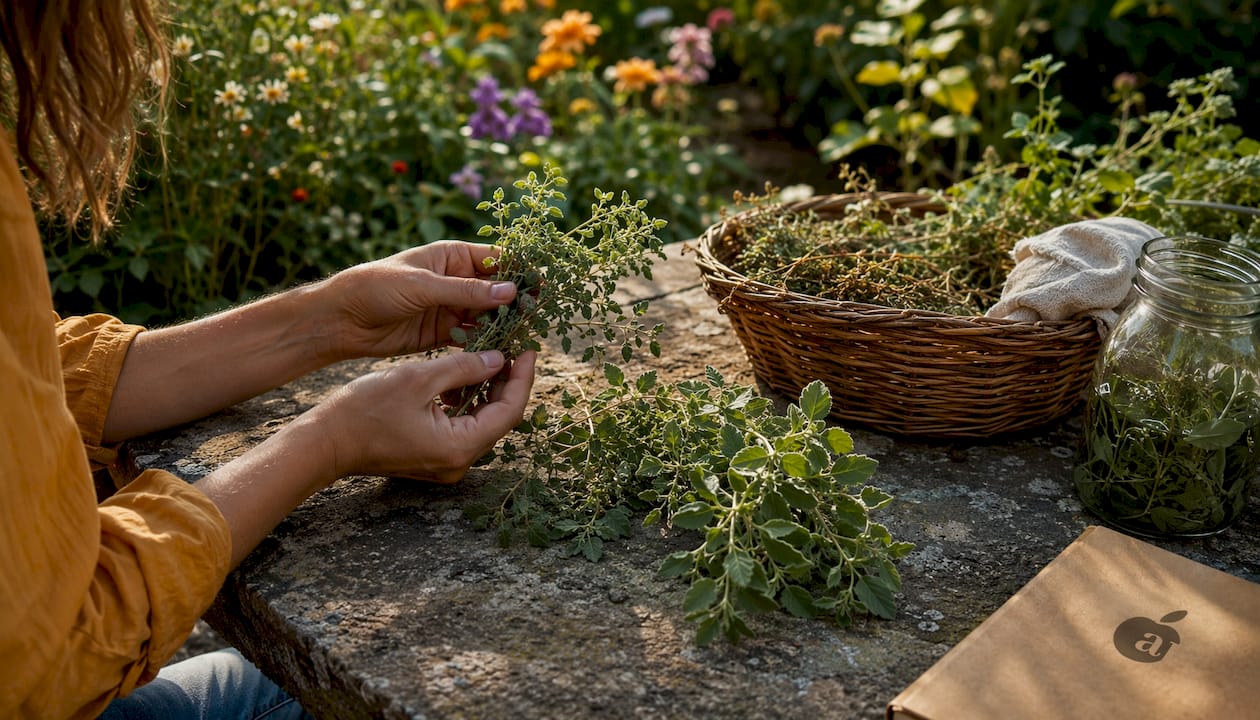
Genetic differences between wild herb populations mean that two plants of the same species growing a mile apart can produce markedly different levels of active compounds. Wild populations contain far greater genetic diversity than cultivated varieties, which are typically selected for yield and uniformity rather than phytochemical richness.
Environmental stressors amplify this effect. Drought forces plants to produce more flavonoids and sterols as a survival mechanism. UV radiation at altitude triggers anthocyanin and terpenoid synthesis. Herbivory prompts alkaloid production as a deterrent. Each stressor adds a layer of chemical complexity absent in plants grown in sheltered, well-watered conditions.
Soil quality and biodiversity play an equally significant role. Wild habitats support microbial communities and mineral profiles that managed farmland rarely replicates. This directly influences the phytochemical output of the plants growing in them. Understanding ingredient sourcing and the conditions under which herbs are grown is therefore central to evaluating supplement quality.
- Flavonoids and sterols increase under drought stress
- Terpenoids and anthocyanins rise with UV exposure
- Alkaloids are produced in greater quantities under herbivore pressure
- Harvest timing relative to growth stage determines peak active compound concentration
- Cultivation mimicking wild stress can produce standardised extracts with comparable potency
2. Wild versus cultivated herbs: what the science and herbalists actually say
The idea that wild automatically means better is an oversimplification. The reality is more nuanced, and the research reflects that.
Cultivated valerian roots generally contain more valerenic acids than wild roots, while wild roots tend to carry higher essential oil content. Neither is universally superior. The chemical profile depends on what you are trying to achieve therapeutically. Wild Reishi mushroom, grown on specific wood substrates, contains unique metabolites that cultivated forms on sawdust simply do not replicate. These are not minor differences.
Jo Sesay makes a complementary point: standardised doses from cultivated herbs reduce the potency variation inherent in wild harvests, which matters when you need a reliable therapeutic effect. A wild herb that is 40% more potent on average is of limited value if the batch you receive happens to be one of the weaker ones.
Sustainability is the third dimension of this debate. Responsible cultivation methods, incorporating environmental stress simulation, may provide sustainable supplies and consistent quality, avoiding unsustainable wild harvesting impacts that wild harvesting cannot always guarantee.
3. What this means for UK consumers choosing herbal supplements
For anyone buying herbal supplements in the UK, the practical takeaway is clear: the “wild-harvested” label on a product tells you something about origin, but not enough about potency or safety on its own.
Wild-herb supplements can present risks such as contamination and batch variability. Third-party testing and transparent sourcing are important to ensure safety and consistency.
- Prioritise standardised active compound content over marketing claims about origin
- Check for documented sourcing and transparent supply chain information from your supplier
- Look for no fillers, no binders, no synthetic additives — these dilute potency and introduce unnecessary ingredients
- Verify harvest timing documentation where possible; active compounds peak at specific growth stages
- Seek herbal supplement purity assurances backed by testing, not just label claims
The Food Standards Agency (FSA) and the Medicines and Healthcare products Regulatory Agency (MHRA) both set standards for herbal product safety in the UK. Supplements sold here must comply with relevant food safety legislation, but the burden of verifying potency and purity still falls largely on the consumer.
Key insight: Standardised extracts providing consistent active compound levels often yield more reliable effects than unstandardised wild-harvested products.
Wild edible plants are higher in micronutrients and bioactive compounds than many cultivated counterparts, but that advantage only reaches you if the supplement is properly extracted, tested, and encapsulated without dilution.
Vitaminb17’s pure herbal extracts for UK wellness
Potency without purity is not enough. Vitaminb17 builds its entire range around that principle: raw, high-potency extracts with no fillers, no binders, and no synthetic additives.

Three products stand out for consumers focused on natural potency and clean sourcing:
- Apricot Kernels Amygdalin Laetrile Capsules — a traditional ingredient encapsulated raw, preserving the full active compound profile without processing losses
- Sea Kelp Extract Capsules 5000mg — bladderwrack-sourced, supporting blood health and delivering antioxidant activity in a clean, concentrated form
- Celery Seed Capsules 8,000mg — raw, high-strength extract for gout relief and anti-inflammatory support
Every Vitaminb17 product is encapsulated for convenience and nutrient preservation. No compromise on purity. No unnecessary ingredients. If you want to understand what separates a genuinely potent supplement from an underdosed one, the buyer’s guide to underdosed supplements is the clearest place to start.
Key takeaways
Wild-harvested herbs are often more potent because environmental stressors force plants to produce higher concentrations of secondary metabolites, but standardised extracts with documented sourcing deliver more consistent and reliable benefits for UK supplement consumers.
| Point | Details |
|---|---|
| Stress drives potency | Drought, UV, and herbivory trigger phenolics, terpenoids, and alkaloids in wild plants. |
| Genetics add variability | Wild populations contain diverse genotypes, producing wider phytochemical ranges than cultivated varieties. |
| Wild label is not enough | Standardised active compound content and third-party testing matter more than origin claims alone. |
| Harvest timing is critical | Active compound concentration peaks at specific growth stages; poorly timed harvests reduce potency. |
| Vitaminb17 delivers purity | Raw, high-potency extracts with no fillers or binders, covering apricot kernels, sea kelp, and celery seed. |


