

Raw herbs preserve nutrients because they avoid the three main causes of vitamin loss: heat, water exposure, and oxygen contact. When you cook or heavily process herbs, heat-sensitive vitamins like vitamin C and thiamine (vitamin B1) break down rapidly. The scientific term for this is thermal degradation, and it applies to virtually every processing method from boiling to frying. Understanding why raw herbs maintain nutrients gives you a clear framework for choosing and handling herbs to get the most from them. Vitaminb17 builds its entire supplement range on this principle: raw, pure extracts with no fillers and no synthetic additives.
Why raw herbs preserve nutrients better than processed alternatives
Nutrient retention in herbs depends on three competing forces: temperature, exposure time, and oxygen level during processing and storage. Raw herbs sidestep all three. The moment you apply heat or submerge herbs in water, you trigger two damaging processes simultaneously.
The first is leaching. Water-soluble vitamins, including vitamin C and folate, dissolve into cooking water and are lost when that water is discarded. The second is oxidative stress. Heat accelerates the reaction between oxygen and sensitive compounds, breaking their molecular structure. Heat processing degrades vitamins like vitamin C and thiamine significantly, and the damage is not reversible once it occurs.
Raw consumption avoids both mechanisms entirely. No water carries vitamins away. No elevated temperature speeds up oxidation. The nutrients stay locked inside the plant tissue where they formed.
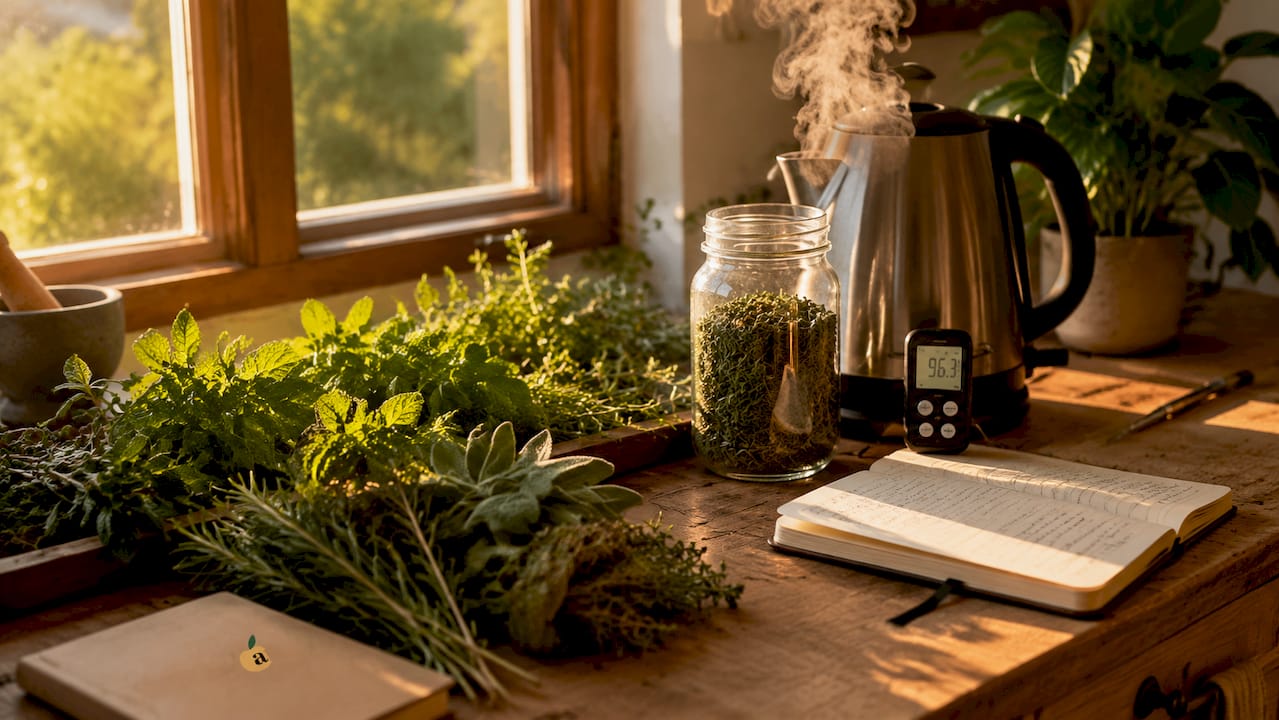
How heat and water affect nutrient stability in herbs
Different cooking methods cause different levels of damage. Boiling is the most destructive because it combines high heat with full water immersion. Frying adds fat-soluble compound breakdown on top of thermal stress. Steaming and microwaving are less damaging because they reduce water contact and shorten exposure time, but they still apply heat.
The key variables are:
- Temperature: Higher temperatures accelerate oxidation and enzyme denaturation, destroying vitamins faster.
- Duration: Longer cooking times compound the damage, even at moderate temperatures.
- Water contact: Direct immersion leaches water-soluble vitamins into the cooking liquid.
- Oxygen exposure: Open-pan cooking exposes herbs to more oxygen, worsening oxidative loss.
Processing methods that reduce leaching and oxidative stress preserve more vitamin C and folate. This is not a minor difference. Boiling can eliminate a substantial portion of heat-sensitive vitamins in a short cooking period.
Pro Tip: If you must cook herbs, add them at the very end of cooking and use the minimum liquid possible. This cuts both leaching and thermal exposure.
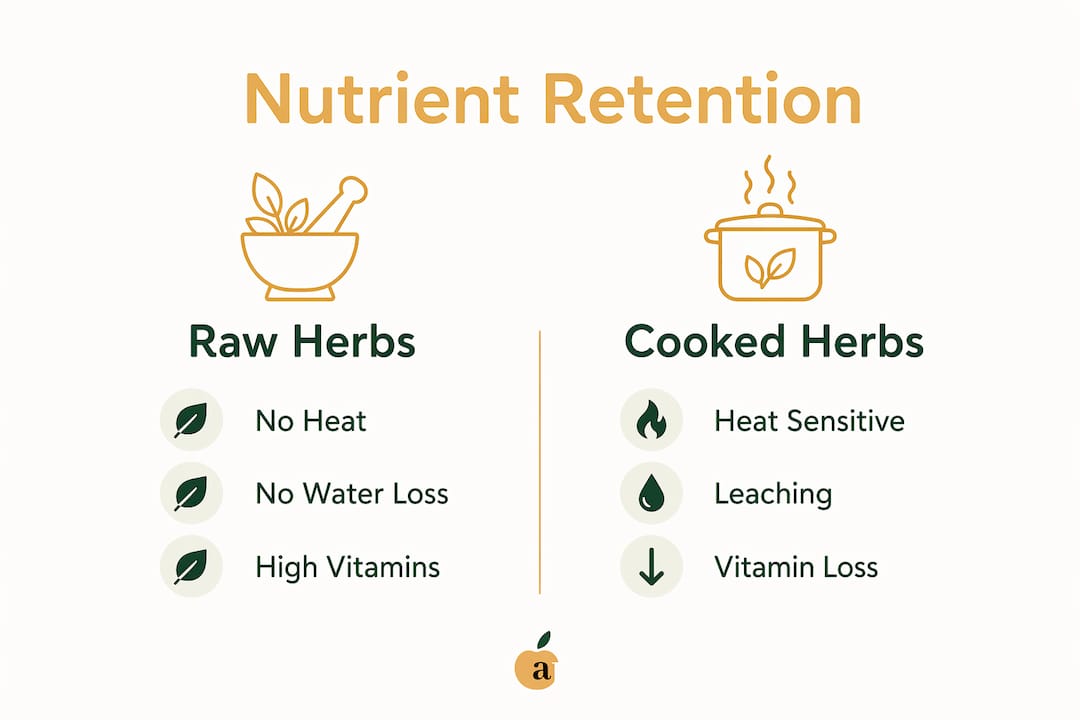
Colour change is a reliable visible signal of nutrient loss. Colour changes in dried herbs correlate strongly with vitamin C and thiamine degradation. Bright, vivid colour in a raw or dried herb generally signals better nutrient retention.
How do raw, dried, and frozen herbs compare for nutrient retention?
Raw fresh herbs consumed immediately after harvest retain the highest nutrient levels. Once harvested, though, enzymatic and oxidative degradation begins immediately unless you control storage conditions. This is a critical distinction: raw herbs eaten straight from the plant are not the same as raw herbs sitting in a warm kitchen for three days.
| Preservation method | Heat applied | Nutrient retention | Key risk |
|---|---|---|---|
| Raw (consumed immediately) | None | Highest | Enzymatic degradation if stored poorly |
| Freeze-dried | Minimal (vacuum, low temp) | Very high | Cost and equipment |
| Air-dried / convection-dried | Moderate to high | Moderate | Oxidation and thermal loss |
| Blanched then frozen | Brief high heat | Good over months | Initial vitamin loss from blanching |
| Boiled / stewed | High, prolonged | Lowest | Leaching and thermal destruction |
Freeze-drying is the best preservation method after raw consumption. Ascorbic acid retention after freeze-drying reached 3.13 mg/g in kiwifruit, compared to just 1.06–1.21 mg/g after natural drying. That is roughly three times more vitamin C preserved. Vitamin C losses in freeze-drying are typically only about 5–10%, far lower than any heat-based drying method.
Enzymes remain active during storage and continue degrading nutrients unless inactivated. For frozen herbs, blanching before freezing is the standard solution. Blanching uses brief high heat to deactivate these enzymes. Proper blanching retains more vitamins over months of frozen storage, despite a small initial vitamin loss from the heat step itself.
Pro Tip: Buy freeze-dried herbs over air-dried wherever possible. The nutrient difference is significant, and freeze-dried herbs rehydrate cleanly without the colour loss that signals degradation.
Practical tips for keeping nutrients intact in raw and minimally processed herbs
Storage is where most people lose the nutritional advantage of raw herbs without realising it. Light, warmth, and moisture all accelerate degradation after harvest. Dried herbs stored cool, dry, and dark retain nutrients well for up to one year. The same logic applies to raw herbs: refrigerate them promptly and keep them away from light.
Follow these steps to maximise nutrient retention from purchase to consumption:
- Buy little and often. Fresh herbs degrade from the moment of harvest. Smaller, more frequent purchases mean you consume herbs closer to their peak nutrient content.
- Refrigerate immediately. Wrap fresh herbs loosely in a damp cloth and store in the coldest part of your fridge. This slows both enzymatic activity and oxidation.
- Avoid pre-washing until use. Moisture on stored herbs accelerates mould and enzymatic breakdown. Wash just before you use them.
- Use airtight containers for dried herbs. Oxygen exposure is the primary enemy of dried herb quality. Seal containers tightly and store away from the cooker.
- Check colour before use. Dull, brown, or faded dried herbs have already lost a significant portion of their vitamins. Discard and replace them.
Pro Tip: If you dry herbs at home, use the lowest possible temperature and the shortest drying time. Rapid, low-heat drying preserves far more nutrients than slow air-drying at room temperature, where oxidation continues unchecked.
For those who want consistent nutrient delivery without managing fresh herb storage, herbal supplement stacking offers a practical alternative. High-quality encapsulated extracts remove the storage variable entirely.
Do antioxidants in raw herbs support health beyond basic vitamins?
Raw herbs contain more than vitamins. They carry phytochemicals, including polyphenols, flavonoids, and carotenoids, that act as antioxidants in the body. These compounds are often more heat-sensitive than vitamins themselves, which makes raw consumption especially valuable for people seeking their full functional benefit.
Key antioxidant compounds found in raw herbs include:
- Polyphenols: Found in herbs like rosemary, thyme, and oregano. They degrade rapidly under sustained heat.
- Flavonoids: Present in parsley, chamomile, and many medicinal herbs. Water-soluble and prone to leaching during boiling.
- Carotenoids: Found in herbs with deep colour, such as parsley and dill. More stable than vitamin C but still affected by prolonged heat.
- Chlorophyll: The green pigment in fresh herbs. Breaks down visibly with heat, signalling broader phytochemical loss.
The health benefits of raw herbs extend beyond nutrient content to bioavailability. A nutrient that survives processing but is bound in a form the body cannot absorb delivers little value. Raw herbs generally preserve both the compound and its accessible form. Natural supplement absorption is directly affected by how the source material is processed before consumption.
Vitaminb17’s raw apricot kernel extracts follow this same principle: no synthetic additives, no unnecessary processing steps that would compromise the bioactive compounds present in the raw source.
Key takeaways
Raw herbs preserve nutrients because they avoid heat, water leaching, and oxygen exposure. These three factors are the primary causes of vitamin and phytochemical loss in processed herbs.
| Point | Details |
|---|---|
| Heat is the primary enemy | Boiling and frying destroy vitamin C and thiamine faster than any other processing method. |
| Freeze-drying leads among preservation methods | Freeze-drying retains roughly three times more vitamin C than natural air-drying. |
| Enzymatic degradation continues post-harvest | Store raw herbs cold and dark immediately after purchase to slow nutrient loss. |
| Colour signals nutrient quality | Bright colour in raw or dried herbs indicates better vitamin and antioxidant retention. |
| Bioavailability matters as much as content | Raw herbs preserve both the nutrient and its absorbable form, maximising functional benefit. |
The part most articles on raw herbs get wrong
People assume “raw” is a binary state. Either the herb is raw and nutritious, or it is cooked and depleted. The reality is more nuanced, and understanding that nuance changes how you shop and store.
I have seen people buy fresh herbs at a farmers’ market, leave them on a warm windowsill for four days, and then add them raw to a salad, believing they are getting maximum nutrition. They are not. The enzymatic degradation that began at harvest has been running unchecked the entire time. A properly freeze-dried herb consumed a week later will often deliver more usable nutrients than a “fresh” herb stored carelessly.
The other misconception I encounter regularly is that cooking always destroys everything. Some compounds, like lycopene in tomatoes, actually become more bioavailable with heat. Herbs are not tomatoes, and most of their key vitamins and polyphenols do not benefit from heat. But the point stands: blanching before freezing is not a failure of the raw principle. It is a controlled, minimal heat application that protects nutrients over the long term.
What I find most useful is treating nutrient preservation as a spectrum, not a switch. Raw and immediate is best. Freeze-dried is excellent. Air-dried and stored well is acceptable. Boiled and discarded with the cooking water is a waste. Knowing where each method sits on that spectrum lets you make genuinely informed choices rather than following a rule of thumb that oversimplifies the science.
— Jade
Pure raw extracts with no compromise on quality
If managing fresh herb storage feels like a constant battle against time and degradation, there is a cleaner solution.

Vitaminb17 formulates every product around the same principle this article covers: raw, high-potency extracts with no fillers, no binders, and no synthetic additives. Products like Burdock Root Capsules and Ginger Root Extract deliver standardised doses of active compounds without the nutrient loss that comes from poor storage or heavy processing. Before you buy any herbal supplement, read the buyer’s guide to underdosed supplements to know exactly what to look for. Pure. Raw. No compromise.
FAQ
Why do raw herbs retain more vitamins than cooked ones?
Raw herbs avoid heat, which is the primary cause of vitamin C and thiamine breakdown. They also avoid water leaching, which removes water-soluble vitamins during boiling.
Are freeze-dried herbs as nutritious as raw fresh herbs?
Freeze-dried herbs come very close. Vitamin C losses during freeze-drying are typically only about 5–10%, making freeze-dried herbs far superior to air-dried or heat-processed alternatives.
How should I store fresh herbs to keep their nutrients?
Refrigerate fresh herbs immediately after purchase, wrapped loosely in a damp cloth. Keep them away from light and do not wash them until you are ready to use them.
Do dried herbs lose all their nutrients over time?
Not if stored correctly. Dried herbs kept cool, dry, and dark retain nutrients well for up to one year. Colour fading is a reliable sign that significant nutrient loss has already occurred.
What makes raw herb supplements better than synthetic alternatives?
Raw herb supplements preserve the natural phytochemical profile of the plant, including antioxidants and bioactive compounds that synthetic versions do not replicate. Clean supplements outperform synthetics precisely because the source material retains its original nutrient structure.


