

Vitamin B17 is not a vitamin. It is a common name for amygdalin, a naturally occurring chemical compound found in the seeds of certain fruits and plants. The term carries no official recognition from any health authority, and no proven benefit for cancer treatment or general health has been established in clinical trials. Researchers, regulators, and cancer bodies consistently classify it as a misnamed substance with real safety risks. If you are researching vitamin B17 health claims, understanding what the science actually says is the most useful place to start.
What is vitamin B17, and where did the name come from?
Vitamin B17 is a marketing term, not a scientific classification. The compound it refers to, amygdalin, is a cyanogenic glycoside. That means the body breaks it down into hydrogen cyanide during digestion. No health authority, including the NHS, the US Food and Drug Administration, or the World Health Organisation, recognises it as an essential nutrient.
The name itself was coined in the 1950s by a biochemist named Ernst T. Krebs Jr. His goal was to classify amygdalin as a dietary supplement rather than a drug, which would allow it to bypass the stricter regulatory controls applied to pharmaceutical products. Calling it a “vitamin” gave it the appearance of something the body needs. It does not.
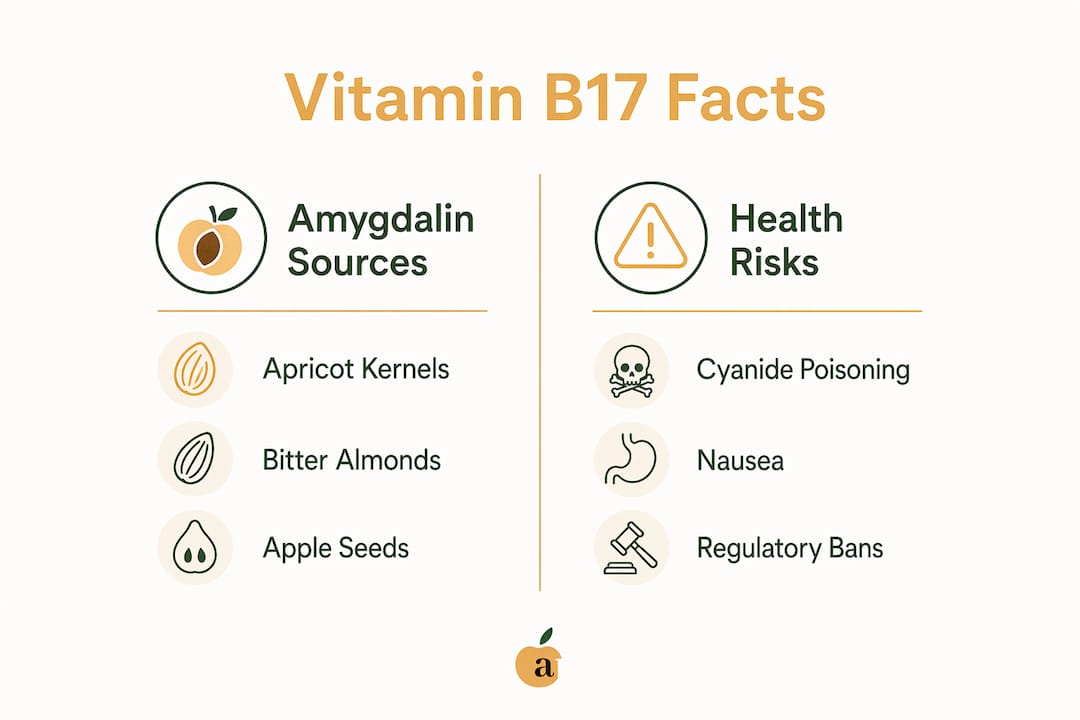
Amygdalin occurs naturally in the seeds of over 1,200 plant species, including apricot kernels, bitter almonds, and apple seeds. The concentration varies significantly depending on the plant variety, growing conditions, and season. That variability alone makes consistent, safe dosing practically impossible.
- Amygdalin is a cyanogenic glycoside, not a nutrient
- The “vitamin B17” label was created to avoid drug regulation
- No reputable health body recognises it as a vitamin
- Natural occurrence does not equal safety or therapeutic value
Pro Tip: If you see a supplement labelled “vitamin B17,” check whether the product lists amygdalin or laetrile as the active ingredient. These are the same compound under different names.
Which foods contain amygdalin, and what are the risks?
Amygdalin is present in a range of common foods, primarily in the seeds and kernels of stone fruits. The highest concentrations appear in bitter apricot kernels, followed by bitter almonds and apple seeds. Concentration varies by plant species, season, and preparation method, which makes it impossible to establish a reliably safe dose from food alone.

| Food source | Amygdalin present | Risk level |
|---|---|---|
| Bitter apricot kernels | High | High |
| Bitter almonds | High | High |
| Apple seeds | Low to moderate | Moderate |
| Sweet apricot kernels | Low | Lower |
| Cherry stones | Moderate | Moderate |
The core danger is straightforward. Human digestive enzymes break amygdalin down into hydrogen cyanide. Cyanide interferes with cellular respiration, meaning cells cannot use oxygen properly. This process does not target diseased cells selectively. It affects all cells.
- Symptoms of cyanide poisoning include headache, dizziness, nausea, and vomiting
- Severe cases cause seizures, loss of consciousness, and cardiac arrest
- Children are at greater risk due to lower body weight
- Cooking reduces but does not eliminate amygdalin content
Pro Tip: Eating a few apple seeds accidentally carries minimal risk. Consuming multiple bitter apricot kernels daily, as some wellness sources recommend, carries a genuine risk of cyanide poisoning. The dose matters enormously.
Regulatory bodies in several countries have restricted or banned the sale of high-dose amygdalin products. The variability in natural amygdalin content means that even food-based sources cannot be treated as a controlled supplement. Anyone considering apricot kernels as part of a regular diet should read the official advisories on safe consumption limits before proceeding.
What does the science say about vitamin B17’s effectiveness?
The scientific consensus is clear. Vitamin B17 does not work as a cancer treatment. A 2015 systematic review and a landmark 1982 clinical trial published in the New England Journal of Medicine both found no benefit for cancer patients receiving amygdalin or laetrile. The 1982 trial was the most rigorous human study conducted, and its conclusion was unambiguous.
“The National Cancer Institute and Australia’s Cancer Council explicitly warn against ingesting vitamin B17 products. The risks of cyanide toxicity are real, and no clinical evidence supports therapeutic use in humans.”
The US National Cancer Institute and the Cancer Council of Australia have both issued formal warnings. Their position is that the risks of cyanide toxicity outweigh any theoretical benefit. The FDA banned the interstate sale of laetrile in the United States decades ago, and similar restrictions exist in other jurisdictions.
Laboratory and animal studies have explored amygdalin’s molecular effects in isolated settings. Some early findings showed antioxidant activity at the cellular level. Those results do not translate to safe or effective human treatment. The gap between a lab observation and a clinically validated therapy is enormous, and no trial has bridged it for amygdalin.
The key points from the evidence base are:
- The 1982 New England Journal of Medicine trial found no cancer treatment benefit
- A 2015 systematic review confirmed those findings
- Cyanide released from amygdalin kills all cells, not just cancer cells
- Lab studies show isolated effects that do not support clinical use
- Multiple national health agencies advise strongly against use
The idea that natural origin guarantees safety is one of the most persistent and dangerous misconceptions in supplement culture. Arsenic, ricin, and cyanide are all entirely natural. Origin tells you nothing about safety.
Why do people still promote vitamin B17 as a cancer cure?
The promotion of vitamin B17 is a documented case of medical misinformation. Laetrile was deliberately rebranded as a vitamin to exploit the public’s trust in natural remedies and to sidestep pharmaceutical regulation. That strategy proved effective at generating sales, even without evidence of benefit.
People seeking cancer treatments are often in a vulnerable position. They may have exhausted conventional options, or they may distrust mainstream medicine. Promoters of vitamin B17 have historically targeted this group with claims of miraculous results and suppressed cures. Those claims have no credible scientific foundation.
Here is what every person researching vitamin B17 should know before making any decision:
- The “natural equals safe” assumption is false. Amygdalin produces cyanide inside the human body regardless of its plant origin.
- Anecdotal reports of recovery do not constitute clinical evidence. People recover from cancer for many reasons, and attributing recovery to an unproven substance is unreliable.
- Delaying proven treatment in favour of unproven alternatives carries serious risk. Time matters in cancer care.
- Regulatory bans exist for a reason. The FDA and equivalent bodies banned laetrile after reviewing the evidence, not because of commercial interests.
- Always consult a qualified medical professional before adding any supplement to a treatment plan, particularly if you have a serious health condition.
The persistence of vitamin B17 claims reflects a broader pattern in wellness culture, where the desire for simple, natural solutions creates fertile ground for misinformation. Understanding why these claims spread is the first step towards making genuinely informed choices. Checking ingredient safety across all supplement categories, not just amygdalin, is equally important. Resources on toxic compounds in wellness products apply the same critical lens to other areas of the supplement market.
Key takeaways
Vitamin B17 is a marketing term for amygdalin, a cyanogenic compound with no proven health benefit and a documented risk of cyanide poisoning in humans.
| Point | Details |
|---|---|
| Not a vitamin | Amygdalin has no recognised nutrient status and was labelled a vitamin to avoid drug regulation. |
| Cyanide risk is real | Digestion converts amygdalin to hydrogen cyanide, which damages all cells indiscriminately. |
| No clinical benefit | Both the 1982 New England Journal of Medicine trial and a 2015 systematic review found no cancer treatment benefit. |
| Official warnings exist | The National Cancer Institute, Cancer Council, and FDA all advise against using vitamin B17 products. |
| Natural does not mean safe | Plant origin provides no protection against the toxic effects of amygdalin in the human body. |
My view on the vitamin B17 debate
I have spent years reading the literature on herbal supplements and natural health compounds. The vitamin B17 story frustrates me more than most, not because the science is complicated, but because it is not. The evidence is clear, the regulatory position is clear, and yet the claims persist.
What strikes me most is how the “natural” label does so much heavy lifting in this space. People who would never accept a synthetic drug without clinical proof will consume bitter apricot kernels daily because they came from a tree. The logic does not hold. Cyanide is as natural as it gets, and it is lethal.
The supplement industry contains genuinely useful products. Verified plant-based extracts, standardised for potency and free from fillers, can support health in real and measurable ways. Burdock root, sea kelp, and celery seed all have documented properties worth exploring. The problem with vitamin B17 is not that it comes from plants. The problem is that it produces a toxin and has never been shown to help anyone.
My honest recommendation: approach any supplement that claims to treat cancer with immediate scepticism. Ask for clinical trial data. Check the position of the NHS, the National Cancer Institute, or the Cancer Council. If the evidence is not there, the risk is not worth it.
— Jade
Choosing supplements that are actually safe and effective
If researching vitamin B17 has raised questions about supplement quality more broadly, that is a healthy instinct to follow.

Vitaminb17 offers pure, raw herbal extracts with no fillers, no binders, and no synthetic additives. Every product uses standardised extracts for consistent dosing, so you know exactly what you are taking. Before adding any supplement to your routine, read the buyer’s guide to underdosed supplements to understand what separates a quality product from a low-grade one. For a broader view of what plant-based supplements can genuinely offer, the plant-based supplement guide covers verified options backed by real evidence.
FAQ
What is vitamin B17 actually made of?
Vitamin B17 is a common name for amygdalin, a cyanogenic glycoside found in the seeds of stone fruits and over 1,200 plant species. The body converts it to hydrogen cyanide during digestion.
Is vitamin B17 effective for treating cancer?
No. A 1982 New England Journal of Medicine clinical trial and a 2015 systematic review both found no benefit for cancer patients. The National Cancer Institute and Cancer Council advise strongly against its use.
What are the side effects of vitamin B17?
Amygdalin releases cyanide in the body, causing symptoms including headache, nausea, dizziness, vomiting, and in severe cases, seizures, organ damage, or death.
Where do you find vitamin B17 naturally?
Amygdalin occurs in bitter apricot kernels, bitter almonds, apple seeds, and cherry stones. Concentrations vary by plant and season, making safe dosing from food sources unreliable.
Why is vitamin B17 still sold if it is dangerous?
The term “vitamin B17” was created in the 1950s to classify amygdalin as a supplement rather than a drug, bypassing stricter regulatory controls. Some products remain available despite bans in several countries, which is why checking regulatory guidance before purchasing matters.


