

Supercritical extraction is a separation process that uses a fluid heated and pressurised past its critical point to dissolve target compounds out of a raw material, then releases them cleanly on depressurisation. The workhorse solvent is carbon dioxide, which turns supercritical at roughly 31°C and 74 bar. At that stage it behaves like a liquid dense enough to dissolve oils and actives, yet flows and diffuses like a gas.
CO2 gets picked for a simple reason: it is non-toxic and easy to remove once the pressure drops, leaving no chemical residue behind. Compare that to hexane or ethanol extraction, where solvent traces have to be boiled off or evaporated, often under heat that damages fragile compounds.
- Runs near body temperature, so heat-sensitive actives survive intact.
- Leaves zero solvent residue once the pressure is released.
- Works without oxygen present, so nothing oxidises during processing.
Fact worth remembering: small changes in pressure and temperature shift CO2’s density enough to make it selective for one compound over another. Technical reviews call this tunability the method’s single biggest advantage over fixed-solvent extraction.
Key Takeaways
Supercritical extraction uses carbon dioxide heated past 31°C and 74 bar to dissolve target compounds cleanly, then recovers them by depressurisation without leaving solvent residue.
| Point | Details |
|---|---|
| Core definition | A fluid pushed past its critical point acts like a liquid solvent with gas-like penetration into the matrix. |
| CO2’s critical point | Roughly 31°C and 74 bar, close to room temperature, which is why CO2 dominates the industry. |
| Main tuning levers | Pressure controls solvating power, temperature affects solute volatility, and modifiers add polarity reach. |
| Trade-off to remember | High selectivity and purity come with a higher capital cost than conventional solvent extraction. |
| Product quality link | Vitaminb17 builds its capsules on the same purity principle SFE delivers: no fillers, no solvent residue, no synthetic additives. |
Table of Contents
- What makes a fluid ‘supercritical’?
- How does supercritical extraction work step by step?
- Which solvents and modifiers are used in supercritical extraction?
- What equipment does a supercritical extraction system need?
- How do you tune pressure, temperature and flow rate?
- What are the advantages and limitations of supercritical extraction?
- Where is supercritical extraction used today?
- What safety and environmental factors matter?
- Why does supercritical extraction matter for herbal extract quality?
- Frequently asked questions
- Sources
What makes a fluid ‘supercritical’?
Every substance has a critical point: a specific combination of temperature and pressure beyond which liquid and gas stop being distinct phases. Push CO2 past 31°C and 74 bar and it stops boiling or condensing altogether. It simply becomes a single dense phase that fills its container like a gas but dissolves things like a liquid.
That dual nature is what makes supercritical fluid technology useful for extraction. Three physical properties do the actual work:
- Density close to a liquid’s, giving the fluid genuine solvating power, the ability to pull oils, waxes, and aromatic compounds off a plant matrix.
- Diffusivity close to a gas’s, so the fluid penetrates deep into porous material far faster than a liquid solvent would.
- Low viscosity, which lets it flow through packed extraction vessels without the pressure drop a thick liquid solvent would cause.
Put those together and you get a solvent that reaches into cell walls a liquid struggles to penetrate, then carries the dissolved material out efficiently. Supercritical fluids combine liquid-like density with gas-like diffusivity, which is precisely why they outperform straight liquid extraction on speed and penetration.
Pro Tip: Think of pressure and temperature as dials on a mixing desk rather than switches. Nudge them and you change what the solvent picks up, without swapping chemicals. That is the practical meaning of “tunable” solvent power, and it is the reason one CO2 system can produce dozens of different extract profiles from the same raw material.
How does supercritical extraction work step by step?
The process follows a fixed sequence, regardless of whether the plant runs in a laboratory or an industrial facility.
- Pressurise and heat the CO2. A high-pressure pump pushes liquid CO2 through a heater until it crosses the critical point and becomes supercritical.
- Contact the matrix. The supercritical fluid flows through an extraction vessel packed with the raw material (ground botanical, coffee beans, hop pellets) and dissolves the target compounds.
- Depressurise in a separator. Dropping the pressure collapses the fluid’s density, so it can no longer hold the dissolved material in solution. The extract precipitates out.
- Recover and recycle the CO2. The now-gaseous CO2 is cooled, re-compressed, and looped back to the pump rather than vented, which is why closed-loop recycling is standard in commercial systems.
Two operating modes exist within that sequence. Dynamic extraction keeps fresh solvent flowing continuously through the vessel; static extraction recirculates the same batch of CO2 to let it saturate before a fresh pass. Most commercial runs blend both, a static soak followed by dynamic flushing.
| Process stage | Operator action | Physical change |
|---|---|---|
| Pressurisation | Pump raises CO2 to supercritical pressure | Density rises to liquid-like levels |
| Extraction contact | Fluid flows through packed vessel | Target compounds dissolve into the fluid |
| Depressurisation | Pressure drops in separator | Density collapses, extract precipitates |
| Recovery | CO2 vapour cooled and recompressed | Gas returns to liquid CO2 for reuse |
Extraction kinetics follow a predictable curve, too: a fast initial pull, then a diffusion-limited slowdown, then a long tail where each extra percentage of yield costs disproportionately more solvent and time. Knowing where that curve bends is what separates an efficient run from a wasteful one.
Which solvents and modifiers are used in supercritical extraction?
CO2 dominates the industry because its critical point sits close to room temperature, it is cheap, it is chemically inert, and it presents no toxicity concern in food or pharmaceutical settings. Other fluids exist but see far less use:
- Ethane has a lower critical temperature but is flammable, limiting industrial appeal.
- Propane extracts fats efficiently but carries similar fire risk.
- Water becomes supercritical only above 374°C and 220 bar, useful for waste treatment but far too aggressive for delicate botanicals.
CO2’s limitation is polarity. It extracts non-polar and mildly polar compounds well (oils, terpenes, waxes) but struggles with polar molecules like many flavonoids. That’s where modifiers, also called entrainers, come in. Adding a small proportion of ethanol or methanol, typically 1 to 10% of the total solvent volume, raises the fluid’s polarity and expands what it can dissolve.
| Fluid | Critical temperature | Critical pressure |
|---|---|---|
| Carbon dioxide | 31°C | 74 bar |
| Ethane | 31°C | 74 bar |
| Water | 374°C | 220 bar |
What equipment does a supercritical extraction system need?
Diagrams of SFE plants look complex at first glance, but they reduce to a handful of functional blocks. The core topology is an extraction vessel, a solvent delivery and recycling loop, and one or more separators.
- High-pressure pump, which pushes liquid CO2 up to working pressure before it ever reaches the heater.
- Heat exchanger, bringing the pressurised fluid across the 31°C threshold into the supercritical state.
- Extraction vessel, the pressure chamber holding the raw material during contact.
- Back-pressure regulator, controlling the pressure drop into the separator stage.
- Separators, where the extract precipitates as density collapses.
- CO2 recycling loop, cooling and recompressing the recovered gas for reuse.
- Safety systems, including pressure relief valves and gas detectors.
Scale changes the engineering, not the principle. A benchtop unit might hold a few grams of material in a vessel the size of a test tube; an industrial plant runs vessels measured in hundreds of litres, where uneven flow distribution and particle packing become genuine problems. Flow metres and pressure gauges sit throughout, giving operators the real-time readings needed to hold conditions steady.
How do you tune pressure, temperature and flow rate?
Pressure is the main lever. Raise it and CO2’s density climbs, which increases its solvating power and pulls more material into solution. Temperature works less predictably: raising it can lower density (reducing solvating power) while simultaneously raising the vapour pressure of the target solutes, which can help or hurt yield depending on the compound.
Flow rate governs speed and cost. A faster flow shortens contact time and speeds extraction, but a flow that outpaces diffusion out of the matrix wastes solvent on material the fluid never fully contacts. Slower flow gives better yield per unit of CO2 but takes longer.
- Increase pressure to boost solvating power and overall yield.
- Raise temperature carefully. Effects on density and solute volatility can pull in opposite directions.
- Slow the flow rate when yield matters more than throughput speed.
- Add a modifier in small proportions to reach polar compounds that CO2 alone can’t dissolve.
Pro Tip: Operators sometimes run a sequence of rising pressure stages rather than one fixed setting. This multi-step density profiling pulls off volatile, low-density-soluble compounds first, then heavier lipids at higher pressure, giving a naturally fractionated extract without any post-processing chemistry.
What are the advantages and limitations of supercritical extraction?
SFE earns its reputation on selectivity and cleanliness, but it isn’t the right tool for every material or every budget.
Advantages:
- Selective extraction through simple pressure and temperature adjustment.
- Low-temperature operation preserves heat-sensitive compounds.
- No toxic solvent residue in the finished extract.
- CO2 recyclability cuts both waste and running cost over time.
- Recognised as a green alternative to hazardous-solvent extraction methods.
Limitations:
- High-pressure equipment carries a steep capital cost compared with a simple solvent bath.
- Poor solubility for polar compounds unless a modifier is added.
- Scale-up introduces flow and packing problems absent at bench scale.
- Requires specialised safety training and pressure-rated infrastructure.
As a rule of thumb: reach for SFE when the target compound is heat-sensitive or when the finished product must be free of solvent residue. Reach for conventional solvent extraction when the material is highly polar and the equipment budget is tight. Long-term efficiency and purity tend to outweigh the higher upfront cost for high-value extracts, even though the initial outlay is real.
Where is supercritical extraction used today?
The method shows up anywhere a manufacturer needs purity without a toxic solvent trail.
- Coffee decaffeination. SFE strips caffeine while leaving flavour compounds largely intact, avoiding the chlorinated solvents older decaffeination methods relied on.
- Essential oils. Low-temperature operation keeps thermolabile aromatic compounds from degrading, something steam distillation can’t always guarantee.
- Hop extraction. Brewers use SFE to recover bittering and aroma compounds from hops without the residual solvent smell that other extraction methods can leave behind.
- Pharmaceutical and analytical prep. SFE isolates active compounds for testing and formulation, where residue-free results matter for regulatory compliance.
- Botanical active ingredients. Manufacturers use it to concentrate plant actives while keeping the finished extract genuinely solvent-free.
Reviews of the field point to emerging uses too, including biorefinery processing that valorises plant biomass byproducts rather than discarding them, a growth area as manufacturers look for greener extraction routes.
What safety and environmental factors matter?
High-pressure systems carry real hazards. Vessels operating at 74 bar or higher need pressure-rated construction, and CO2 released rapidly from pressure expands and cools sharply enough to cause cold burns on contact. In a confined space, a large CO2 release can also displace breathable air, creating an asphyxiation risk that engineering controls (ventilation, gas detectors, interlocked venting) are designed to prevent.
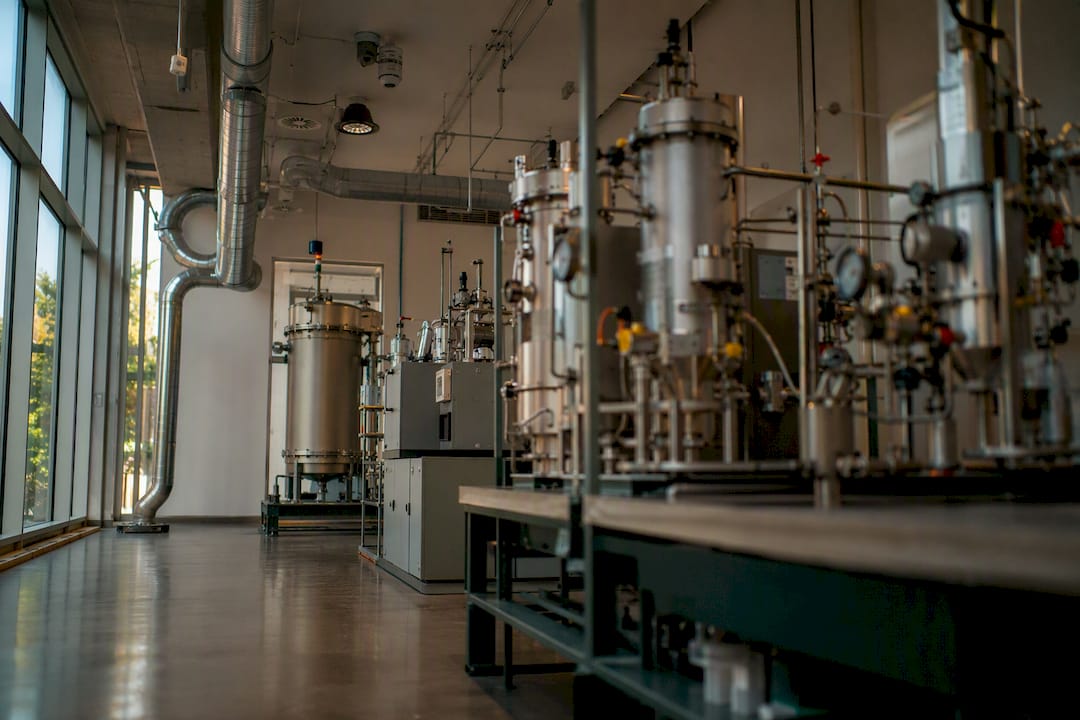
On the environmental side, the picture is genuinely favourable. Closed-loop systems cool and recompress CO2 rather than venting it, which cuts solvent waste dramatically compared with single-use solvent baths. The CO2 itself can be sourced from industrial capture streams, reducing the net footprint further.

Pro Tip: Best practice in a production environment includes scheduled process audits, checking that recycled CO2 hits the required purity before reuse, and logging pressure cycles on vessels to catch fatigue before it becomes a failure.
Why does supercritical extraction matter for herbal extract quality?
For anyone comparing herbal supplements, the extraction method behind a capsule tells you more than the marketing copy usually does.
- No solvent residue means nothing chemical carries through to the finished capsule, reflecting the importance of herbal healing traditions in sourcing and preserving botanical integrity.
- Low-temperature processing preserves actives that heat-based extraction can degrade.
- Selective fractionation allows a manufacturer to concentrate specific compounds rather than diluting them with unwanted plant material.
A solvent-free extraction method is one of the clearest manufacturing signals a buyer can check before trusting a purity claim, because the process itself, not just the label, determines what ends up in the capsule.
Readers weighing up potency claims can cross-reference our guide on why wild-harvested herbs are potent for the fuller picture on raw material quality.
A brief note on judging extraction claims
Solvent-free processing is one quality marker among several worth weighing, alongside dose standardisation, sourcing, and third-party testing. No single method makes a supplement good on its own; the combination is what counts.
Read the manufacturing notes before you buy
There are other ways to judge a supplement’s purity, batch testing certificates, ingredient sourcing statements, third-party lab reports, and each has its place. Vitaminb17 takes a more direct route: every capsule is made from high-potency extracts with no fillers, no binders, and no synthetic additives, so the purity question that supercritical extraction raises in this article is answered on the label itself.

If you want the fuller case for why concentration and purity matter this much, our guide to high-potency plant extracts walks through standardisation and dosing consistency in plain terms. Before you buy any herbal capsule, check the product page for clear manufacturing notes, a standardised dose, and confirmation of solvent-free processing. Browse Vitaminb17’s apricot kernel capsules to see what that standard looks like in practice.
Frequently asked questions
What is supercritical extraction explained in one sentence?
It’s a process that uses a fluid, usually CO2, heated and pressurised past its critical point so it dissolves compounds like a liquid while flowing like a gas, then releases them cleanly when pressure drops.
Why is CO2 the preferred solvent for supercritical fluid extraction?
Its critical point sits near room temperature (about 31°C and 74 bar), it’s non-toxic, and it leaves no residue once pressure is released, unlike hexane or ethanol.
Does supercritical extraction work on all compounds?
No. CO2 alone extracts non-polar and mildly polar compounds well but struggles with strongly polar molecules unless a modifier such as ethanol is added.
How does supercritical extraction differ from steam distillation?
Steam distillation uses heat and water vapour, which can degrade delicate aromatic compounds. Supercritical extraction runs near body temperature, preserving compounds that heat would break down.
Is supercritical CO2 extraction environmentally friendly?
Commercial systems cool and recompress CO2 in a closed loop rather than venting it, cutting solvent waste substantially compared with single-use chemical solvents.
Sources
- Supercritical fluid extraction
- Principles of supercritical fluid systems (5) What is supercritical fluid extraction? | JASCO Global
- Supercritical CO2 technology for biomass extraction: Review
- Fundamentals, mathematical models, and extraction processes with supercritical fluids (chapter)


