

A herbal immune modulator is a plant-derived substance that adjusts immune system activity to maintain balance, either stimulating a sluggish response or calming an overactive one. The medical community increasingly prefers the term “immune homeostasis” over “immune boosting” to describe this effect, because these herbs reshape disturbed immune states rather than simply amplifying immunity. That distinction matters. A blindly boosted immune system can cause as much harm as a weak one. Herbal immune modulators, from Ashwagandha to Astragalus, work by influencing cytokines, macrophages, and signalling pathways such as NF-kB and MAPK. Vitaminb17 builds its supplement range around this principle: pure, standardised extracts with no fillers, no binders, and no synthetic additives.
What is a herbal immune modulator and how does it work biologically?
Herbal immune modulators influence both innate and adaptive immunity, the two main branches of the immune system. Innate immunity is your first line of defence, responding immediately to threats. Adaptive immunity is slower but more targeted, producing antibodies and memory cells. Effective modulators act on both.
At the molecular level, these herbs work through several mechanisms:
- Cytokine regulation: Phytochemicals adjust the production of cytokines, the chemical messengers that coordinate immune responses. Overproduction causes inflammation; underproduction leaves you vulnerable.
- Macrophage and NK-cell activation: Macrophages engulf pathogens. Natural killer (NK) cells destroy infected or cancerous cells. Herbal compounds activate both without triggering excessive inflammation.
- Signalling pathway modulation: Pathways such as NF-kB and JAK/STAT control whether immune genes switch on or off. Herbal phytochemicals modulate these pathways to keep immune activity proportionate to the threat.
- Phytochemical classes involved: Alkaloids, polysaccharides, and glycosides are the primary active compounds. Each class interacts with immune receptors differently, which is why different herbs suit different immune needs.
Pro Tip: Not all phytochemicals survive poor extraction methods. Always choose standardised extracts that guarantee the active compound level per capsule, rather than raw powders with unknown potency.
The practical implication is significant. These herbs do not simply switch immunity on. They read the situation and respond accordingly, which is why the term “modulator” is more accurate than “booster.”
Which herbs are proven immune modulators?
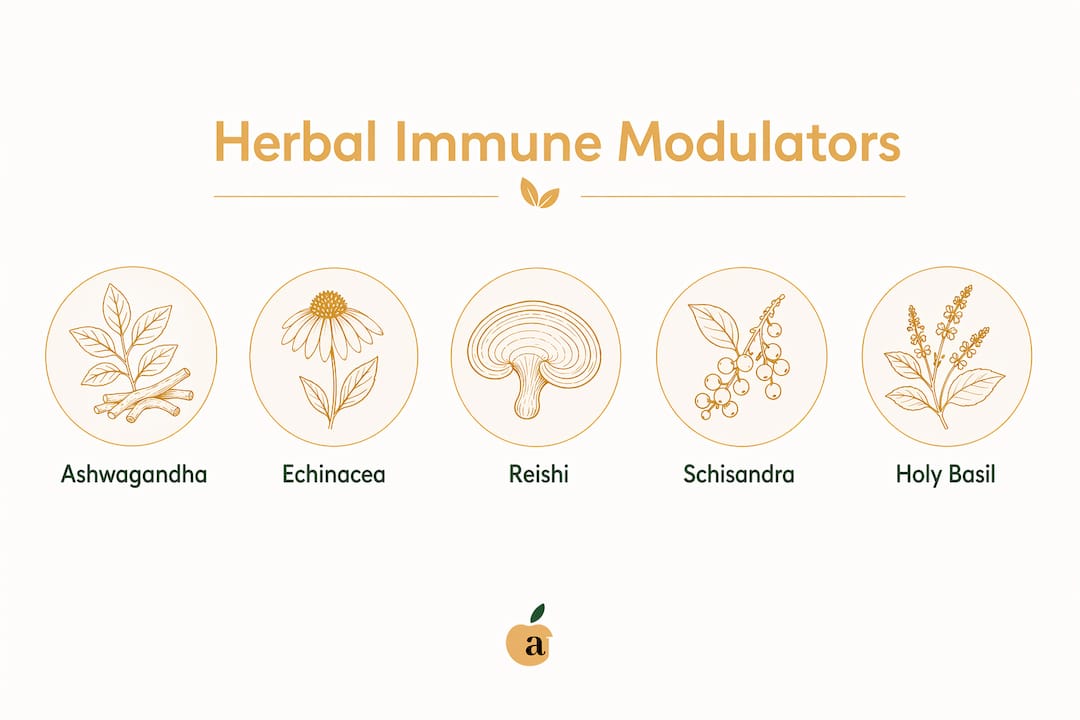
Several herbs have strong experimental and clinical evidence behind them. The types of wellness-supporting botanicals used in immune modulation fall into two broad categories: those that primarily stimulate immune activity and those that primarily regulate or calm it.
| Herb | Primary action | Key compounds | Evidence strength |
|---|---|---|---|
| Ashwagandha | Stimulates and balances | Withanolides, alkaloids | Strong: increases T-lymphocytes, NK cells, macrophages |
| Tinospora cordifolia (Guduchi) | Stimulates innate immunity | Polysaccharides, alkaloids | Moderate to strong: macrophage activation |
| Turmeric (Curcumin) | Anti-inflammatory, regulating | Curcuminoids | Strong: NF-kB pathway inhibition |
| Tulsi (Holy Basil) | Adaptogenic, regulating | Eugenol, flavonoids | Moderate: stress-related immune support |
| Echinacea | Stimulates innate immunity | Alkylamides, polysaccharides | Strong: short-term immune activation |
| Astragalus | Stimulates adaptive immunity | Astragalosides | Moderate to strong: T-cell and NK-cell support |
| Elderberry | Antiviral, cytokine modulating | Anthocyanins | Moderate: reduces duration of viral illness |
Ashwagandha stands out in the research. Its withanolides and alkaloids increase T-lymphocyte, NK-cell, and macrophage activity while simultaneously moderating cytokine overproduction. That dual action makes it one of the most studied herbal immune modulators available.
Safety and standardisation matter as much as the herb itself. Variability in soil quality and harvest conditions directly affects active compound levels in raw herbs. A raw Ashwagandha powder may contain a fraction of the withanolides found in a standardised extract. For consistent immune modulation effects, standardised herbal extracts are the clear choice over unprocessed plant material.
How do lifestyle factors work alongside herbal immune support?
Herbal modulators work best as part of a broader approach to immune health, not as a standalone fix. About 70% of immune cells reside in the gastrointestinal tract, making gut health the single most important foundation for immune function. That figure means your diet directly shapes your immune capacity before any supplement enters the picture.
A practical framework for combining lifestyle and herbal support looks like this:
- Prioritise gut health first. Eat whole foods rich in fibre, fermented foods, and antioxidants. A diverse gut microbiome supports a balanced immune response. Herbs like Turmeric and Astragalus complement this by reducing gut inflammation.
- Exercise moderately and consistently. Moderate physical activity increases circulation of immune cells. Intense, prolonged exercise without recovery actually suppresses immunity temporarily, so balance is the goal.
- Protect sleep. Restorative sleep is when the body produces cytokines that fight infection and inflammation. Cutting sleep short reduces this output directly.
- Manage stress actively. Gut immune cells are sensitive to cortisol, the primary stress hormone. Chronic stress suppresses immune function even when your supplement routine is perfect.
- Add herbal modulators as a complement. Once the lifestyle foundation is in place, herbs like Tulsi, Ashwagandha, and Echinacea add targeted support. They do not replace the foundation. They build on it.
Pro Tip: Consult a qualified healthcare provider before adding herbal immune modulators if you have an autoimmune condition, are pregnant, or take prescription medication. Some herbs interact with immunosuppressant drugs.
Long-term immune resilience depends on this whole-system approach. Supplements accelerate progress; they do not create it from nothing.
What should you consider before choosing herbal immune modulators?
Choosing the right herbal immune modulator requires more than picking a popular herb. Quality, dosage, and safety all determine whether a product delivers results or simply occupies shelf space.
Key considerations before you buy:
- Standardised extracts only. Raw herb powders have inconsistent active compound levels. A standardised extract guarantees a specific percentage of the key phytochemical per dose. For example, Ashwagandha extracts are typically standardised to 5% withanolides.
- Check for underdosing. Many products list impressive herb names on the label but include quantities too small to have any physiological effect. Learning to recognise underdosed supplements is the most important skill a supplement buyer can develop.
- Understand herb-drug interactions. Echinacea can interfere with immunosuppressant therapy. Turmeric at high doses affects blood clotting. Always cross-reference your current medications before adding a new herb.
- Consider autoimmune conditions carefully. Stimulating herbs like Echinacea and Astragalus may worsen autoimmune conditions by increasing immune activity in a system that is already overactive. Regulating herbs like Turmeric are generally safer in these contexts, but professional guidance is non-negotiable.
- Read the label for fillers and binders. Synthetic additives, fillers, and binders dilute potency and introduce unnecessary compounds. Vitaminb17 products contain none of these, which is why their extracts deliver consistent results.
- Early clinical findings are positive, but long-term safety data for some herbs is still developing. Choose products from transparent brands that publish their extract ratios and sourcing standards.
The supplement market contains a wide range of quality levels. Paying attention to these factors separates effective immune support from expensive placebo.
Key takeaways
Herbal immune modulators are plant-derived agents that regulate immune balance through cytokine control, macrophage activation, and signalling pathway modulation, making standardised extracts and lifestyle integration essential for real results.
| Point | Details |
|---|---|
| Definition matters | Herbal immune modulators regulate immunity rather than blindly boost it, targeting immune homeostasis. |
| Biological mechanisms | Key targets include cytokines, NK cells, macrophages, and pathways such as NF-kB and MAPK. |
| Top researched herbs | Ashwagandha, Echinacea, Astragalus, and Turmeric have the strongest evidence for immune modulation. |
| Lifestyle is the foundation | 70% of immune cells live in the gut; diet, sleep, and stress management come before any supplement. |
| Standardised extracts win | Consistent dosing of active compounds requires standardised extracts, not raw herb powders. |
Why “immune boosting” is the wrong way to think about this
I have spent years reading supplement labels and clinical papers on herbal immune health, and the single biggest misconception I encounter is the idea that more immune activity equals better health. It does not. An overactive immune system causes autoimmune disease, chronic inflammation, and tissue damage. The goal is always balance, not amplification.
The shift from “immune enhancement” to immune regulation in pharmacological literature reflects genuine scientific progress. Herbs like Tulsi and Turmeric are not exciting because they switch immunity on. They are exciting because they help a dysregulated system find its way back to normal function.
What I find underappreciated is how much the quality of the extract determines the outcome. Two products labelled “Ashwagandha 500mg” can have completely different physiological effects depending on whether the withanolide content is standardised or not. I always look for the extract ratio and the standardisation percentage before anything else on the label.
My practical advice: start with one well-researched herb at a therapeutic dose, give it 6–8 weeks, and track how you feel. Stacking multiple herbs from day one makes it impossible to know what is working. Build your protocol the same way you would build any evidence-based health habit: one change at a time, with attention to results.
— Jade
Vitaminb17 and quality herbal immune support
Choosing a herbal immune modulator is only as good as the product you choose to deliver it.

Vitaminb17 specialises in pure, standardised herbal extracts with no fillers, no binders, and no synthetic additives. Every product is formulated to deliver consistent active compound levels, so you get the same dose every time. If you want to understand what separates effective supplements from underdosed ones, the Vitaminb17 buyer’s guide to underdosed supplements is the clearest resource available. For those ready to build a full protocol, the guide on stacking herbal supplements covers how to combine immune modulators safely and effectively. Clean ingredients. Real potency. No compromise.
FAQ
What is a herbal immune modulator?
A herbal immune modulator is a plant-derived substance that regulates immune system activity, either stimulating or suppressing responses to maintain balance. It targets cytokines, macrophages, and immune signalling pathways rather than simply amplifying immunity.
How do herbal immune modulators differ from immune boosters?
Immune modulators regulate immune balance, while “immune boosters” is a non-specific term that implies simply increasing immune activity. The medical community prefers “immune homeostasis” because overactivation of the immune system can cause harm.
Which herb is the most studied herbal immune modulator?
Ashwagandha has among the strongest evidence, with research showing it increases T-lymphocyte, NK-cell, and macrophage activity while moderating cytokine overproduction through its withanolides and alkaloids.
Are herbal immune modulators safe for long-term use?
Early clinical findings are positive, but long-term safety data is still developing for several herbs. People with autoimmune conditions or those taking prescription medication should consult a healthcare provider before use.
Why do standardised extracts matter for immune modulation?
Standardised extracts guarantee a consistent level of active compounds per dose, which raw herb powders cannot. Variability in growing conditions directly affects potency, making standardisation critical for reliable immune support.


