

Salvia officinalis, the common sage leaf, is a perennial evergreen subshrub in the mint family (Lamiaceae) grown across the UK for its culinary, ornamental, and traditional medicinal uses. In the kitchen it flavours stuffings, brown butter sauces, and rich meat dishes. In the garden it earns its place as a drought-tolerant, pollinator-friendly herb. As a traditional remedy it has been used for digestive complaints, excessive sweating, and mouth inflammations, though clinical evidence remains limited and inconsistent. Before using sage medicinally, note the key safety points:
- Thujone content: sage leaf contains a thujone-rich essential oil; high-dose or prolonged use carries toxicity risk.
- Pregnancy and breastfeeding: avoid medicinal doses entirely.
- Seizure risk: intake of sage oil equivalent to more than 15 g of sage leaf is reported to cause epileptiform convulsions.
- Drug interactions: sage may lower blood glucose and interact with diabetes medications, sedatives, and anticholinergic drugs.
- Always consult a healthcare professional before using sage as a medicinal product.
Normal culinary use — a tablespoon of fresh leaves in a stuffing or a few leaves fried in butter — carries none of these risks.
Table of Contents
- What does a sage leaf look like, and how do you identify it?
- Which sage varieties grow well in UK gardens?
- Where does sage grow naturally, and which UK sites suit it best?
- How do you use sage leaf in cooking?
- What does the evidence say about sage leaf’s medicinal uses?
- What gives sage its aroma and pharmacological activity?
- How do you grow sage successfully in the UK?
- How and when should you harvest and preserve sage?
- What are sage’s historical and cultural uses beyond the kitchen?
- Key takeaways
- Why sage deserves a permanent place in your garden and kitchen
- Vitaminb17’s sage leaf extract: pure, standardised, no fillers
- Useful sources for further reading
What does a sage leaf look like, and how do you identify it?
Salvia officinalis belongs to the family Lamiaceae, the same family as rosemary, lavender, and mint. Its common names include common sage, garden sage, culinary sage, and true sage. According to Kew, it grows as a perennial evergreen subshrub, typically 30–90 cm tall and equally wide, with woody stems at the base and softer growth above.
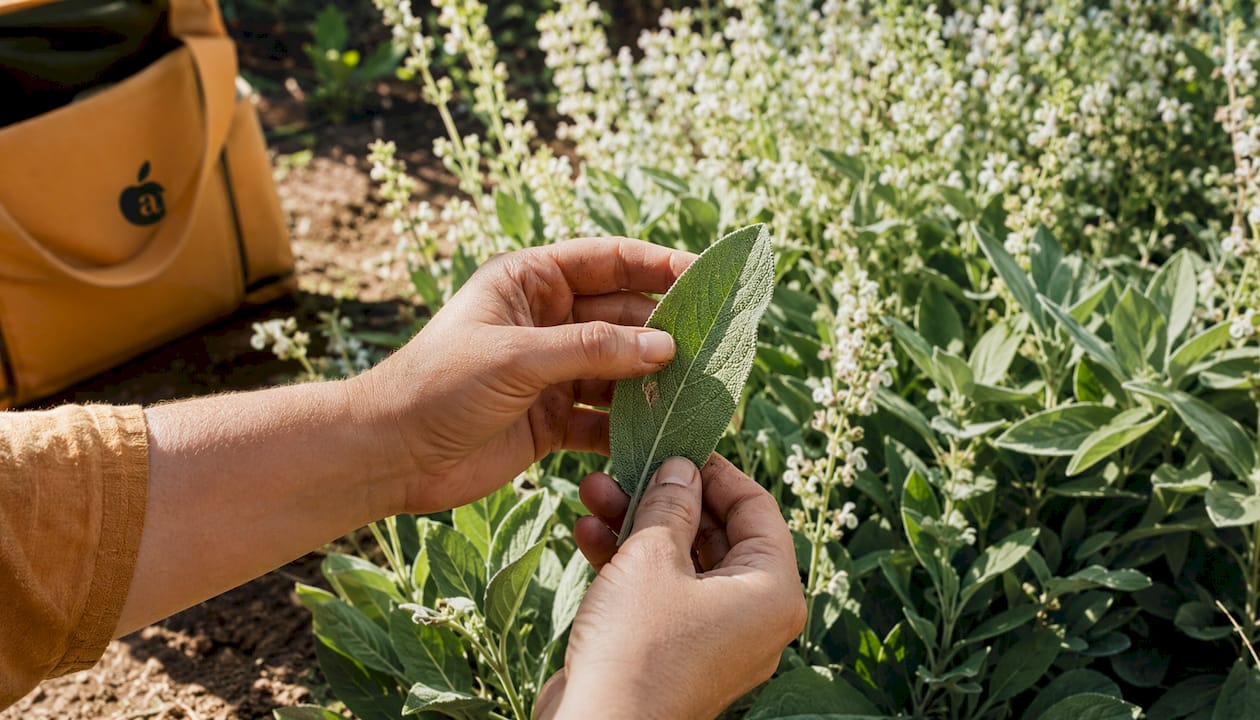
The leaves are the most distinctive feature: oblong to oval, grey-green, with a distinctly wrinkled (rugose) surface and a finely textured, almost velvety underside. Flowers appear in early summer, tubular and two-lipped, usually purple to violet-blue, occasionally white or pink, arranged in whorls up the stem. The whole plant is strongly aromatic.
Field identification checklist:
- Leaves grey-green, wrinkled, and softly hairy on both surfaces
- Distinct, pungent aroma when a leaf is rubbed between the fingers
- Woody stems at the base; softer, square stems above
- Tubular, two-lipped flowers in purple, white, or pink
- Height 30–90 cm; spreading, bushy habit
Pro Tip: Rub a fresh leaf firmly between your fingers. A genuine Salvia officinalis releases a strong, slightly camphor-like, piney scent immediately. If the aroma is faint or absent, the leaf lacks the potency to influence a dish — and may not be true culinary sage at all.
A practical note on lookalikes: several ornamental Salvia species share the same flower shape and grey foliage. Unless you are confident in your identification, avoid foraging wild or garden plants you have not grown yourself. Pesticide risk from unknown garden plants is a further reason to buy fresh sage from a reputable supplier or grow your own.
Which sage varieties grow well in UK gardens?
The RHS lists a range of Salvia officinalis cultivars suited to UK conditions. Choosing the right one depends on whether your priority is flavour, appearance, or container growing.
- Salvia officinalis (common/culinary sage): the standard species; large grey-green leaves with the strongest flavour and the best choice for drying. Fully hardy in most of the UK.
- ‘Purpurascens’ (purple sage): purple-flushed young leaves, strong flavour, ornamentally striking. Slightly less hardy than the species; worth a sheltered spot in northern gardens.
- ‘Icterina’ (golden sage): green and gold variegated leaves, milder flavour, excellent for containers and borders. Good hardiness.
- ‘Tricolor’: green, white, and pink variegated foliage; primarily decorative, with a weaker flavour than the species. Less hardy; best in a sheltered spot or container brought under cover in hard winters.
- ‘Berggarten’: broad, rounded leaves, very low-flowering habit, strong flavour. Popular with cooks who want maximum leaf area and minimal flowering. Good for drying.
- Compact/dwarf forms: smaller-growing selections suit 30 cm containers on a sunny windowsill or patio, though leaf yield is lower.
For pure culinary use and drying, common sage or ‘Berggarten’ give the most flavour per gram. For a decorative herb garden, ‘Icterina’ or ‘Purpurascens’ add colour without sacrificing too much taste. ‘Tricolor’ is best treated as an ornamental with culinary potential rather than the reverse.
Where does sage grow naturally, and which UK sites suit it best?
Sage is native to the Mediterranean and Middle Eastern regions, where it grows on rocky, free-draining slopes in full sun. That origin tells you almost everything you need to know about siting it in the UK.
Site and soil requirements:
- Full sun: at least six hours of direct sunlight daily; south- or west-facing aspects are ideal.
- Free-draining soil: the single most important factor. Sage rots in waterlogged ground, especially over winter. Improve heavy clay with grit or raised beds.
- Shelter from cold winds: particularly relevant in northern England, Scotland, and exposed coastal sites.
- pH: neutral to slightly alkaline (pH 6.5–7.5) suits it well.
- Containers: excellent in terracotta pots with a gritty, loam-based compost; containers allow you to move plants under cover in harsh winters.
In the south and midlands of England, sage is reliably hardy in a well-drained border. In Scotland and northern England, a sheltered south-facing wall or a container that can be moved to a cold greenhouse in December and January reduces winter losses significantly. Coastal gardens benefit from the mild temperatures but need protection from salt-laden winds, which can scorch the foliage.
How do you use sage leaf in cooking?
Sage is an accent herb, not a background one. Its flavour is woody, slightly bitter, piney, and earthy, and it cuts through rich, fatty dishes with real authority. Use it sparingly: one tablespoon of chopped fresh sage is approximately equivalent to one teaspoon of dried, and a good starting point is one teaspoon dried (or one tablespoon fresh) per pound of meat or per two cups of sauce.
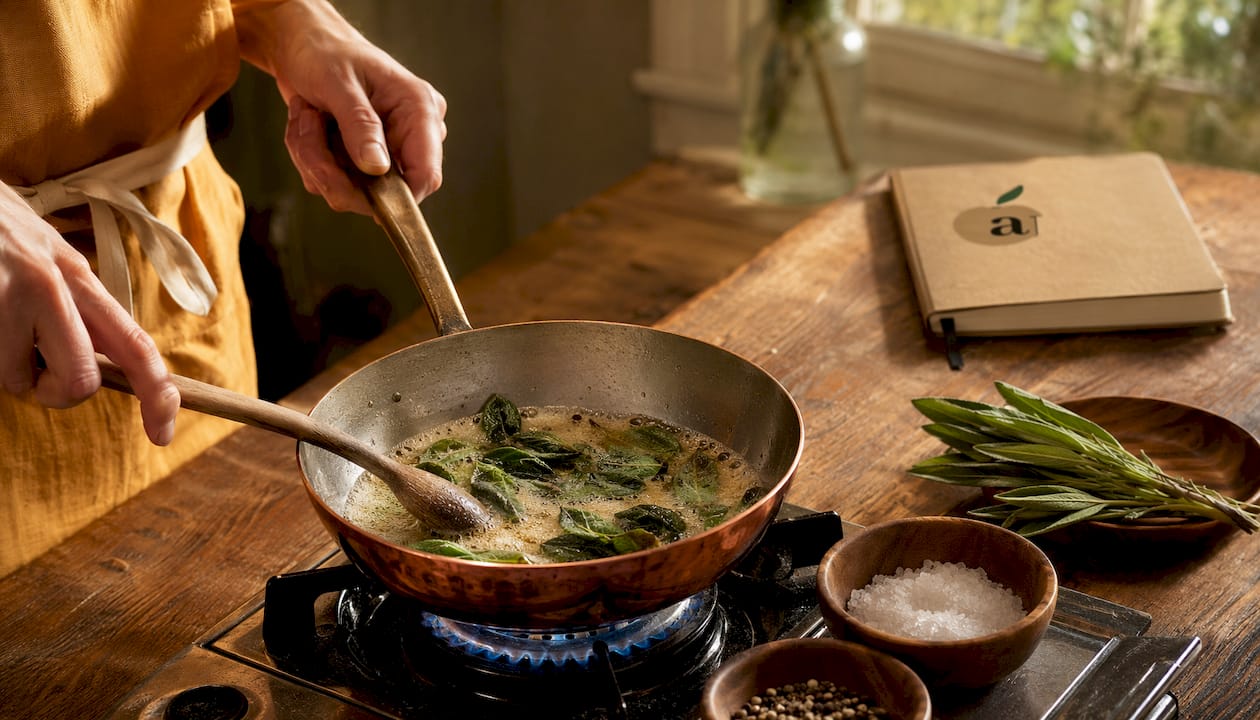
Heat and fat transform the flavour. Raw sage can taste slightly medicinal; frying or browning it in butter mellows the bitterness and brings out a nutty, caramelised depth.
Best pairings and dishes:
- Pork, sausage, and game birds (classic stuffing herb)
- Brown butter sauces for pasta, gnocchi, and ravioli
- Roasted or puréed butternut squash and pumpkin
- Slow-cooked beans and lentils
- Liver and onions
- Focaccia and flatbreads (pressed into the dough before baking)
Avoid sage with delicate white fish, light salads, or any dish where a subtle flavour needs to come through. It will dominate.
Preservation and storage:
- Fresh leaves: wrap in a slightly damp paper towel, place in a sealed bag, and refrigerate for up to one week. Check for dark or slimy spots before use.
- Drying: hang small bunches upside down in a warm, airy spot away from direct light, or use a dehydrator at 35–40°C. Whole dried leaves retain flavour for up to about one year; rubbed or powdered forms fade within roughly six months and should be tested by crushing and smelling before use.
- Freezing: freeze whole leaves on a tray, then transfer to a bag; alternatively, chop and freeze in olive oil in an ice-cube tray for ready-to-use portions.
Pro Tip: For crisp, nutty fried sage leaves, pat the leaves completely dry first. Add them to hot butter or oil the moment the fat begins to foam, and remove within 30–60 seconds. Any moisture on the leaves or fat that is not hot enough will make them soggy rather than crisp.
What does the evidence say about sage leaf’s medicinal uses?
The NCCIH notes that small studies suggest sage may reduce hot flashes in menopause and may improve some measures of memory, but the evidence is limited and inconsistent. Trials have also looked at lipid effects and blood glucose regulation. The pattern across this research is promising but not conclusive: sample sizes are small, study durations are short, and results vary between preparations.
WebMD reports that common sage extract doses used in studies range from approximately 280–1,500 mg daily for up to 12 weeks in adults. Those figures come from controlled trials, not from culinary use. The gap between a tablespoon of leaves in a stuffing and a standardised extract taken daily for three months is significant.
Active compounds and why standardisation matters:
The Commission E / HerbalGram monograph identifies over 160 polyphenols in sage, alongside a thujone-rich essential oil containing thujone, cineol (eucalyptol), and camphor. Because essential-oil concentration varies by cultivar, harvest time, and growing conditions, researchers prefer standardised extracts to achieve consistent dosing in clinical studies. Culinary leaves and a standardised extract are not interchangeable for therapeutic purposes. For readers interested in how botanical supplements support neurological health, this review of evidence covers the broader picture.
Safety and contraindications:
- Thujone toxicity: high doses carry real risk; do not exceed recommended amounts.
- Pregnancy and breastfeeding: avoid medicinal doses; culinary quantities are generally considered safe.
- Seizure risk: high-dose sage oil is associated with epileptiform convulsions in susceptible individuals.
- Diabetes medications: sage may lower blood glucose; monitor carefully and inform your prescriber.
- Sedatives: additive sedation is possible.
- Anticholinergic drugs: potential interaction; check with your pharmacist.
- Before surgery: stop medicinal sage use at least two weeks prior to any planned procedure.
Speak to your GP or a qualified medical herbalist before using sage as a medicinal product. This article is general information, not medical advice; always confirm current guidance with a qualified professional for your own situation.
What gives sage its aroma and pharmacological activity?
The essential oil of Salvia officinalis is responsible for both its distinctive scent and many of its pharmacological properties. The Commission E monograph specifies that dried sage leaf contains at least 1.5% (v/w) thujone-rich essential oil, with thujone, cineol (eucalyptol), and camphor as the principal components.
Beyond the volatile oil, sage contains a broad array of polyphenols, flavonoids, and tannins. These non-volatile compounds contribute to its antioxidant activity and are the focus of much of the current pharmacological research. Growing conditions, the specific cultivar, and the timing of harvest all influence which compounds are present and at what concentration, which is why wild-harvested or carefully timed crops can differ markedly from commercially grown material.
“Intake of sage oil corresponding to more than 15 g of sage leaf is reported to cause sensation of heat, tachycardia, vertigo and epileptiform convulsions (seizures). No case of overdose from sage leaves has been reported.” — European Union herbal monograph on Salvia officinalis L., folium (EMA, 2016)
The practical implication is clear: culinary use of whole leaves is safe; concentrated essential oil is not for internal consumption. Standardised extracts sit between these two extremes, and their value lies in delivering a known, repeatable dose of active compounds without the variability of fresh or dried leaf.
How do you grow sage successfully in the UK?
Sage is one of the more forgiving perennial herbs once established, but it does need the right start. The following steps and seasonal plan cover everything from propagation to overwintering.
Propagation methods
- From seed: sow indoors in February or March at 18–21°C. Germination takes 10–21 days. Pot on when seedlings are large enough to handle, and harden off before planting outside after the last frost (typically May in most of England; late May to early June in Scotland).
- From cuttings: take 8–10 cm softwood cuttings in May or June. Remove lower leaves, dip in rooting powder, and insert into free-draining compost. Roots form within 4–6 weeks.
- By division: lift and divide established clumps in spring. Each division needs a section of root and several healthy shoots.
Soil, watering, and feeding
- Use a gritty, loam-based compost for containers; add 20–30% horticultural grit to heavy border soil.
- Water sparingly once established; sage is drought-tolerant and resents sitting in wet soil.
- Feed lightly with a balanced fertiliser in spring; over-feeding produces lush, flavour-poor growth.
Month-by-month care plan
| Season | Key tasks |
|---|---|
| February–March | Sow seed indoors; check overwintered plants for frost damage |
| April–May | Harden off seedlings; plant out after last frost; take cuttings |
| June–July | Harvest leaves freely; allow some plants to flower for pollinators |
| August | Continue harvesting; take semi-ripe cuttings for new plants |
| September–October | Final main harvest before growth slows; dry or freeze surplus |
| November–January | Mulch border plants; move containers under cover in hard frost areas |
Pro Tip: Remove no more than one-third of growth at any single pruning, and prune in early spring after the last hard frost. This keeps the plant vigorous and prevents it from becoming bare and woody at the base.
Pests and diseases
- Root rot: the most common problem; caused by poor drainage. Prevention is the only reliable cure.
- Fungal leaf spots: improve air circulation and avoid overhead watering.
- Aphids: check new growth in spring; knock off with a jet of water or use an organic insecticidal soap.
- Leafhoppers: small pale insects that cause stippled, bleached patches; remove by hand or tolerate at low levels.
How and when should you harvest and preserve sage?
Timing and technique make a real difference to flavour intensity.
When and how to harvest
- Harvest in the morning after any dew has dried but before the heat of the day drives off volatile oils.
- Pick before the plant flowers for the strongest flavour; once flowering begins, leaf production slows and flavour can diminish.
- Use clean, sharp scissors or secateurs. Cut stems back to just above a leaf node.
- Never remove more than one-third of the plant at a single harvest.
- Young, fresh leaves from the tips of stems carry the most flavour; older basal leaves are tougher and more bitter.
Drying
- Air drying: tie small bunches loosely and hang upside down in a warm, well-ventilated room away from direct sunlight. Allow 1–2 weeks until leaves are crisp and papery.
- Oven or dehydrator: dry at 35–40°C for 2–4 hours. Check regularly; over-drying destroys volatile oils.
- Store whole dried leaves in an airtight glass jar away from heat and light. Whole dried leaves keep their flavour for up to about one year; rubbed or powdered forms fade within roughly six months.
Freezing and potency checks
- Freeze whole leaves flat on a baking tray, then transfer to a sealed bag. Use straight from frozen.
- For cooking convenience, chop fresh leaves and freeze in olive oil in an ice-cube tray.
- Before using any stored sage, crush a small amount and smell it. No distinct aroma means no useful flavour.
What are sage’s historical and cultural uses beyond the kitchen?
Sage has been valued far beyond the kitchen for centuries.
- Traditional digestive and respiratory use: European herbalists used sage leaf preparations for dyspeptic complaints, bloating, and catarrh long before clinical trials existed. The EU herbal monograph formally recognises its traditional use for mild digestive complaints, excessive sweating, and mouth and throat inflammations.
- Ceremonial and folkloric roles: in medieval Europe, sage was associated with longevity and wisdom; the Latin name Salvia derives from salvere, meaning “to be well” or “to save.” It featured in household remedies, strewing herbs, and apothecary gardens across Britain.
- Dried sachets and insect-repellent folklore: bundles of dried sage were placed in linen drawers and wardrobes; the camphor-rich oil was thought to deter moths and insects, a practice that persists in some households today.
- Ornamental value: the range of foliage colours across cultivars (grey-green, purple, gold, tricolour) makes sage a genuine ornamental plant for borders and containers.
- Pollinator support: sage flowers are attractive to pollinators, particularly bees and hoverflies. Allowing a few plants to flower each season supports garden biodiversity.
- Companion planting: sage is traditionally planted near brassicas to deter cabbage white butterflies, and near carrots to confuse carrot fly. Its strong scent is thought to mask the smell of neighbouring crops.
A word of caution: traditional and folkloric uses are not a substitute for evidence-based medicine. Use historical context to appreciate the plant’s cultural depth, not to self-prescribe.
Key takeaways
Salvia officinalis is a versatile, hardy herb that rewards UK gardeners and cooks equally, but medicinal use requires caution and professional guidance.
| Point | Details |
|---|---|
| Culinary conversion rule | One tablespoon fresh sage equals one teaspoon dried; start with one teaspoon dried per pound of meat. |
| Frying technique | Pat leaves dry, add to foaming butter or oil, and remove within 30–60 seconds for crisp, nutty results. |
| Harvest timing | Pick before flowering, in the morning; never remove more than one-third of the plant at once. |
| Medicinal safety | Thujone risk, pregnancy caution, seizure risk, and drug interactions mean HCP advice is needed before medicinal use. |
| Vitaminb17 sage extract | For consistent, standardised dosing beyond culinary use, Vitaminb17’s sage leaf extract capsules offer a pure, filler-free option. |
Why sage deserves a permanent place in your garden and kitchen
Most herbs earn their place in one domain. Sage earns it in three. The sensory experience of growing it is immediate: brush past a plant on a warm afternoon and the camphor-piney scent is unmistakeable. That same intensity is what makes it so useful in the kitchen. A handful of leaves fried in foaming butter for under a minute produces something genuinely transformative: crisp, nutty, deeply savoury. Draped over a bowl of butternut squash soup or tossed through brown-butter pasta, it turns a simple dish into something worth remembering.
What tends to get overlooked is how little effort sage demands once it is properly sited. Free-draining soil, full sun, and a spring prune are essentially the whole job. The plant repays that minimal investment with years of harvests, a flush of purple flowers that bees will thank you for, and foliage that stays on the plant through winter when most other herbs have retreated.
The medicinal story is more complicated, and the evidence is genuinely limited. But for culinary and horticultural purposes, sage is as reliable as any herb in the British garden.
Vitaminb17’s sage leaf extract: pure, standardised, no fillers
Culinary sage and a standardised extract are two different things. In the kitchen, a tablespoon of fresh leaves adds flavour. In a clinical trial context, researchers use measured, standardised doses to achieve consistent results. That gap is exactly why sage leaf extract capsules exist.

Vitaminb17’s Sage Leaf Extract Capsules deliver 6,000 mg equivalent per capsule at a 15:1 extract ratio. Pure. Raw. No fillers, no binders, no synthetic additives. Vegan-friendly and standardised for dose consistency, they are designed for readers who want the active compounds in a reliable, measurable form rather than relying on the variability of fresh or dried leaf. Before starting any extract, check the contraindications covered in this article and speak to your GP, particularly if you take diabetes medication, sedatives, or any anticholinergic drug. When you are ready to choose, the guide to recognising underdosed herbal supplements will help you read extract ratios and potency claims with confidence.
Useful sources for further reading
These are the primary sources used in this article. Each covers a different aspect of sage in depth.
- European Medicines Agency — EU herbal monograph on Salvia officinalis L., folium: the authoritative regulatory document for medicinal sage in Europe; covers traditional use indications, safety data, and thujone risk in full.
- NCCIH — Sage: Usefulness and Safety: the US National Center for Complementary and Integrative Health’s evidence summary; clear, cautious, and up to date on clinical trial quality.
- Commission E / HerbalGram — Sage Leaf Monograph: the German Commission E approved monograph; covers chemical composition, dosing ranges, and contraindications.
- WebMD — Sage Overview: accessible summary of medicinal uses, reported study doses, and drug interactions for general readers.
- Royal Botanic Gardens, Kew — Garden Sage (Salvia officinalis): botanical description, cultivation notes, and site guidance from the UK’s leading botanical authority.
- NHS — Herbal Medicines: the NHS overview of herbal medicine regulation and safety in the UK; useful context for anyone considering a herbal product.
- Reluctant Gourmet — How to Cook With Sage: practical culinary reference covering conversion rules, frying technique, storage, and flavour guidance.


