

Solvent-free extraction is defined as the isolation of bioactive compounds from plant material without using chemical solvents, producing clean, potent, and residue-free herbal extracts. The role of solvent-free extraction herbs plays in modern supplement production is significant: it sets the standard for purity, safety, and compound integrity that conventional methods cannot match. Techniques such as supercritical fluid extraction (SFE) and hot compressed water extraction (HCWE) now lead the nutraceutical industry’s shift toward cleaner manufacturing. Consumer demand for residue-free products and tightening regulatory expectations are accelerating this shift. Understanding these methods helps you choose supplements that genuinely deliver what the label promises.
What are the main solvent-free extraction methods used for herbs?
Solvent-free herbal extraction covers several distinct techniques, each suited to different plant materials and target compounds. The three most widely used are supercritical fluid extraction, hot compressed water extraction, and enzyme-assisted extraction.
Supercritical fluid extraction (SFE) with CO2 is the dominant method. Over 90% of SFE applications use CO2 as the extraction medium because it reverts to a gas at ambient conditions, leaving zero chemical residues in the finished extract. That single property makes SFE the preferred choice for premium herbal supplements where clean labelling is non-negotiable.
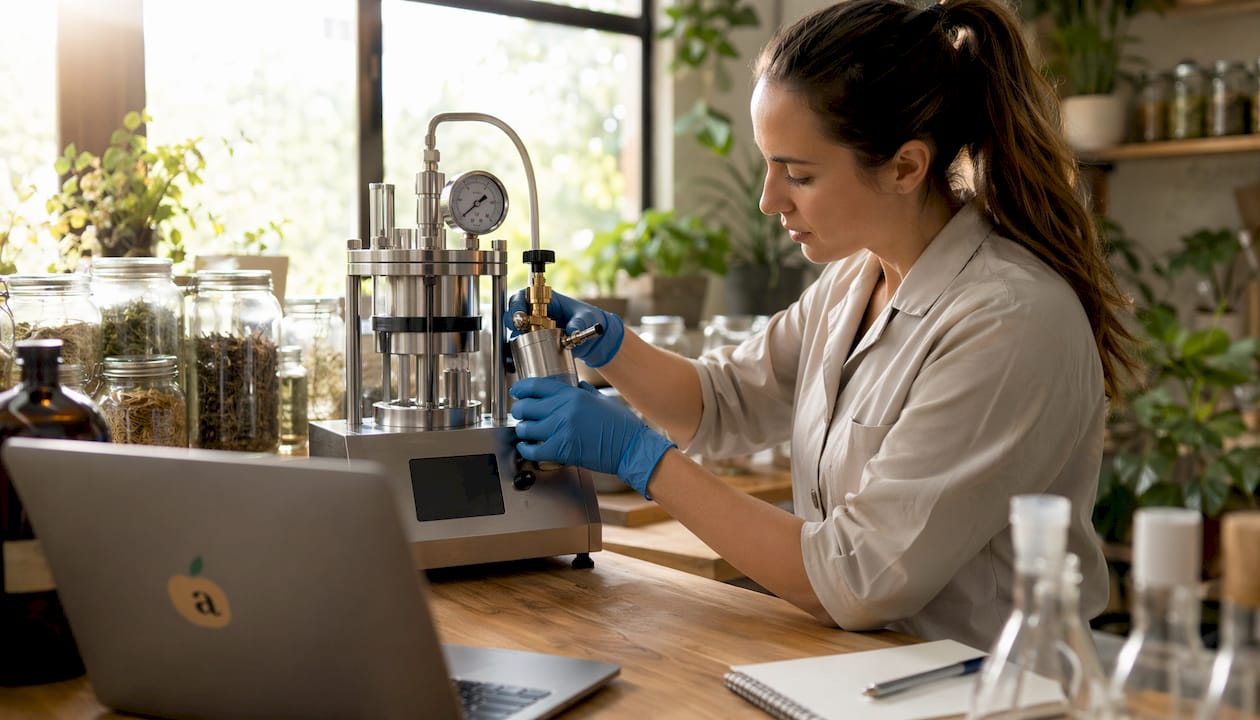
Hot compressed water extraction (HCWE) uses water at elevated temperature and pressure to dissolve plant bioactives. Research on ginger oleoresin shows that HCWE at 140°C and 3.5 MPa extracted 10.37% yield in just 30 minutes, compared to 7.57% in 480 minutes with conventional solvent extraction. That is a processing time reduction of over 93%, with no chemical residues and a higher yield.
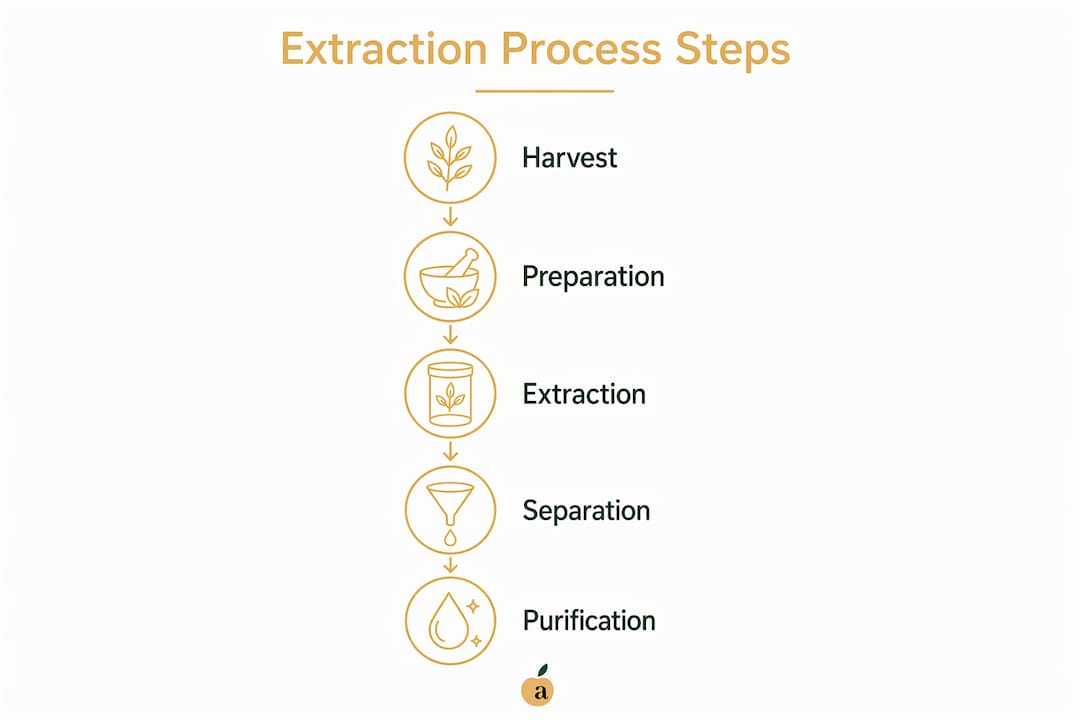
Enzyme-assisted extraction uses biological catalysts to break down plant cell walls, releasing bioactives without heat or chemical intervention. It suits delicate compounds that degrade under pressure or high temperatures.
Key operational parameters across all three methods include:
- Temperature: Controls compound solubility and selectivity. Lower temperatures protect heat-sensitive bioactives such as flavonoids and terpenes.
- Pressure: Determines solvent density in SFE and water behaviour in HCWE. Small pressure changes shift which compounds are extracted.
- Time: Longer runs increase yield but can degrade delicate molecules. Precision timing is critical.
- pH (enzyme methods): Enzyme activity depends on pH. Incorrect pH reduces efficiency and damages target compounds.
Pro Tip: Adjusting temperature and pressure in HCWE or SFE enables selective extraction of specific bioactives such as gingerols versus shogaols. A single set of parameters rarely suits every herb. Always calibrate per plant matrix.
How do solvent-free methods benefit herbal supplement quality and safety?
Solvent-free plant extraction delivers quality advantages that conventional ethanol or hexane methods cannot replicate. The benefits are direct and measurable.
- Zero solvent residues. SFE with CO2 leaves no chemical residues in the final product. This eliminates the risk of chemical contamination that undermines consumer trust and triggers regulatory action.
- Preservation of heat-sensitive compounds. Industry standards in 2026 favour solvent-free techniques precisely because they operate under milder thermal conditions. Thermolabile bioactives, including cannabinoids, flavonoids, and volatile terpenes, survive intact. Conventional solvent extraction often requires heat that degrades these compounds before they reach the capsule.
- Selective enrichment over bulk extraction. Solvent-free methods prioritise selective compound enrichment rather than maximum total yield. A lower total mass extract that is rich in the target bioactive delivers stronger therapeutic effect than a high-yield extract diluted with inert plant material. This is why raw herb preservation matters so much in supplement production.
- Full botanical compound profiles. Optimised low-temperature solvent-free systems preserve full-spectrum compound profiles, including minor cannabinoids and delicate terpenes that standard extraction destroys. Full-spectrum extracts produce broader physiological effects than isolated single compounds.
- Reduced regulatory barriers. Solvent-free methods reduce regulatory scrutiny because the chemical profile of the finished product is safer. Producers avoid the residual solvent testing requirements that add cost and delay to conventional extract approval. Understanding herbal supplement purity standards helps you assess whether a product genuinely meets these criteria.
- Greater batch consistency. Solvent-free processes shift control to precision engineering, enabling tighter automation and repeatable batch outcomes. Consistent dosing is the foundation of any reliable supplement.
What is the environmental impact of solvent-free herbs extraction?
The environmental case for solvent-free extraction is strong. Modern green extraction technologies aim for higher yields with reduced solvent use and lower energy requirements. Eliminating chemical solvents removes an entire waste stream from the manufacturing process.
Key environmental and economic considerations include:
- No solvent waste disposal. Conventional extraction generates litres of spent solvent per batch. Solvent-free methods produce none. This cuts disposal costs and eliminates the environmental liability of solvent runoff.
- Lower contamination risk. Without solvents on site, the risk of soil and water contamination during production drops to near zero.
- Energy trade-offs. SFE requires energy to maintain high pressure. HCWE requires energy to heat water. Both consume energy, but neither generates toxic by-products. Net environmental impact is lower than solvent-based alternatives.
- Higher capital expenditure. High-pressure vessels and specialised SFE equipment carry significant upfront costs. This limits wider adoption to high-value product sectors where the premium price of a clean extract justifies the investment.
- Operational savings over time. No solvent purchasing, no solvent storage infrastructure, and no residual solvent testing reduce ongoing operational costs. At sufficient production scale, these savings offset the initial capital outlay.
The economic reality is that solvent-free methods require higher upfront capital but align with consumer demand for clean labels and regulatory compliance. Producers targeting the premium herbal supplement market find the cost justified. Producers making commodity extracts at low margins often do not. Scale and product value determine whether solvent-free extraction makes financial sense.
Consumer eco-consciousness is also a genuine market force. Buyers who seek out high-potency plant extracts increasingly read labels for manufacturing claims. “Solvent-free” is becoming a purchasing signal, not just a technical specification.
How can you identify and choose solvent-free herbal supplements?
Recognising genuine solvent-free extraction claims requires more than reading the front of a label. Most producers who use SFE or HCWE state the extraction method explicitly on the product information or certificate of analysis. If neither document mentions the extraction method, ask the manufacturer directly.
Pro Tip: A certificate of analysis (CoA) from a third-party laboratory is the clearest proof of solvent-free extraction. It lists residual solvent levels. A genuine solvent-free extract shows none detected. If a brand cannot provide a CoA, treat the solvent-free claim with scepticism.
Practical guidance for choosing solvent-free supplements:
- Look for named extraction methods. Labels stating “supercritical CO2 extract” or “water extraction” are specific and verifiable. Vague terms like “natural extract” tell you nothing about the process.
- Avoid the yield misconception. Higher yield does not equal better quality in herbal extraction. A concentrated, selectively enriched extract at lower total mass outperforms a high-yield extract diluted with inert compounds. This misconception is widespread and costs consumers money.
- Check for standardised bioactive content. Reputable solvent-free extracts state the percentage of the target compound, such as 5% gingerols or 20% flavonoids. Standardisation confirms selective enrichment, not just bulk extraction.
- Prioritise no-filler formulations. Solvent-free extraction produces a concentrated extract. If a capsule contains fillers, binders, or flow agents alongside the extract, the purity advantage is partially undermined.
- Understand full-spectrum versus isolate. Full-spectrum solvent-free extracts preserve the complete compound profile of the plant. Isolates contain only one compound. For most herbal applications, full-spectrum delivers broader benefit.
Producers choosing to adopt solvent-free methods must invest in process control expertise. Selectivity in solvent-free extraction requires expert calibration. A single set of parameters does not suit every herb or every target compound. Equipment qualification, operator training, and documented process validation are non-negotiable for consistent output. Guidance on choosing raw herbal extract capsules covers these quality markers in practical detail.
Key takeaways
Solvent-free extraction is the most reliable method for producing pure, potent, and residue-free herbal supplements, with SFE and HCWE leading industry adoption in 2026.
| Point | Details |
|---|---|
| SFE dominates clean extraction | Over 90% of SFE applications use CO2, leaving zero chemical residues in finished herbal extracts. |
| HCWE cuts processing time sharply | HCWE extracted ginger oleoresin in 30 minutes versus 480 minutes with conventional solvent methods. |
| Selectivity beats bulk yield | Solvent-free methods enrich target bioactives rather than maximising total mass, improving therapeutic potency. |
| Environmental impact is lower | Eliminating solvents removes toxic waste streams and reduces contamination risk across the production site. |
| Capital cost is the main barrier | High upfront equipment costs limit adoption to high-value supplement sectors where clean-label pricing is viable. |
Why I think solvent-free extraction is reshaping herbal medicine
The shift toward solvent-free extraction is not a trend. It is a structural change in how serious producers think about quality. What strikes me most, having followed this space closely, is how the conversation has moved from “can we do this without solvents?” to “why would we use solvents at all?”
The producers who resist the change usually cite cost. That argument is getting weaker every year. As equipment becomes more accessible and consumer willingness to pay for clean-label products grows, the economics are shifting. The brands still defending solvent-based methods are largely defending a margin, not a quality position.
The harder challenge is expertise. Solvent-free extraction is precision engineering. You cannot hand it to an operator trained on conventional methods and expect consistent results. The calibration required for selective bioactive enrichment demands genuine process knowledge. That is where I see most producers struggle, not with the capital, but with the know-how.
The future belongs to producers who treat extraction as a science, not a commodity step. Consumers are catching up faster than many manufacturers expect. The question is no longer whether solvent-free extraction matters. The question is whether your supplement brand can prove it.
— Jade
Vitaminb17 and clean herbal extracts: what to read next
Vitaminb17 produces herbal supplements with no fillers, no binders, and no synthetic additives. Every product is built around the principle that purity and potency start at extraction.

If you want to understand how extraction method affects what you actually absorb, the plant-based supplement benefits guide is the clearest starting point. For those ready to act on this knowledge, the raw herbal extract capsules guide walks you through exactly what to look for on a label before you buy. Vitaminb17’s range, including Burdock Root and Apricot Kernels, reflects these standards directly.
FAQ
What is solvent-free extraction in herbal supplements?
Solvent-free extraction isolates bioactive compounds from plant material using physical processes such as supercritical CO2, hot compressed water, or enzymes, with no chemical solvents involved. The result is a residue-free extract with the plant’s natural compound profile intact.
Is solvent-free extraction more effective than conventional methods?
Solvent-free methods are more effective for preserving heat-sensitive compounds and producing residue-free extracts, though total yield may be lower. Selective compound enrichment improves therapeutic potency even when total extraction mass is smaller.
How do I know if a supplement uses solvent-free extraction?
Check the product label or certificate of analysis for named extraction methods such as “supercritical CO2 extract” or “water extract.” A third-party CoA showing zero residual solvents confirms the claim.
Why does solvent-free extraction cost more?
High-pressure vessels and specialised equipment carry significant upfront capital costs. These are offset over time by savings on solvent purchasing, waste disposal, and residual solvent testing, but the initial investment is substantial.
Does solvent-free extraction suit all herbs?
Most herbs benefit from solvent-free methods, but the optimal parameters differ by plant matrix and target compound. Expert calibration of temperature, pressure, and time is required for each herb to achieve selective enrichment rather than a generic bulk extract.


