

Nutrient cofactors are defined as non-protein molecules that enzymes require to catalyse biochemical reactions. Without them, critical metabolic pathways including ATP synthesis, homocysteine regulation, and antioxidant production simply stall. The role of nutrient cofactors supplements is to fill the gaps that diet alone often leaves, particularly for B vitamins such as B1, B2, B3, B6, B9, and B12, and minerals like magnesium and zinc. Understanding how these helper molecules work gives you a far stronger foundation for building any supplement regimen.
How do nutrient cofactors supplements work to enhance enzymatic activity?
Cofactors are non-protein molecules/11%3A_Nutrients_Important_for_Metabolism_and_Blood_Function/11.02%3A_Nutrients_Important_for_Metabolism) that bind to enzymes and make them functional. Without a cofactor present, many enzymes remain inactive regardless of how much substrate is available.
There are two main categories. Inorganic cofactors are metal ions such as magnesium, zinc, and iron. Organic cofactors, known as coenzymes, are carbon-based molecules that carry chemical groups between reactions.

Coenzymes like NAD, FAD, and CoQ10 shuttle electrons and functional groups through enzymatic reactions. NAD is derived from vitamin B3, FAD from vitamin B2, and Coenzyme Q10 supports mitochondrial energy production directly. These are not passive bystanders. They are active participants in every reaction they enter.
Nutrient interactions matter enormously here. Vitamin D pairs with magnesium for proper activation, while vitamins C and B2 both enhance iron absorption. Folate and B12 work together to regulate homocysteine metabolism. When one partner is missing, the entire pathway slows.
Cofactor deficiency does not always produce obvious symptoms immediately. Deficiencies in B vitamins and minerals/11%3A_Nutrients_Important_for_Metabolism_and_Blood_Function/11.02%3A_Nutrients_Important_for_Metabolism) lead to systemic problems including fatigue, neuropathy, and anaemia. These are signs that enzymatic activity has already been compromised for some time.
Key mechanisms by which cofactor supplements improve nutrient absorption and use include:
- Activating enzymes that convert precursor nutrients into usable forms
- Facilitating electron transport in mitochondria for energy production
- Supporting antioxidant pathways that protect cells from oxidative damage
- Enabling methylation reactions critical for DNA repair and gene expression
- Improving the bioavailability of co-administered nutrients through synergistic pairing
Pro Tip: Take magnesium alongside vitamin D supplements. Magnesium is required to convert vitamin D into its active hormonal form. Without it, even high-dose vitamin D supplementation delivers limited benefit.
Which key nutrient cofactors are most commonly supplemented?
B vitamins dominate the cofactor supplement market for good reason. Each one serves a distinct metabolic function, and deficiency in any single B vitamin can disrupt an entire chain of reactions.
| Cofactor | Primary role | Common deficiency sign |
|---|---|---|
| B1 (Thiamine) | Carbohydrate metabolism, nerve function | Fatigue, nerve pain |
| B2 (Riboflavin) | FAD synthesis, energy metabolism | Cracked lips, eye sensitivity |
| B3 (Niacin) | NAD synthesis, DNA repair | Skin rash, cognitive decline |
| B6 (Pyridoxine) | Amino acid metabolism, neurotransmitter synthesis | Mood changes, anaemia |
| B9 (Folate) | DNA synthesis, homocysteine regulation | Megaloblastic anaemia |
| B12 (Cobalamin) | Nerve myelin production, red blood cell formation | Neuropathy, fatigue |
| Magnesium | Over 300 enzymatic reactions | Muscle cramps, poor sleep |
| Zinc | Immune function, protein synthesis | Slow wound healing |
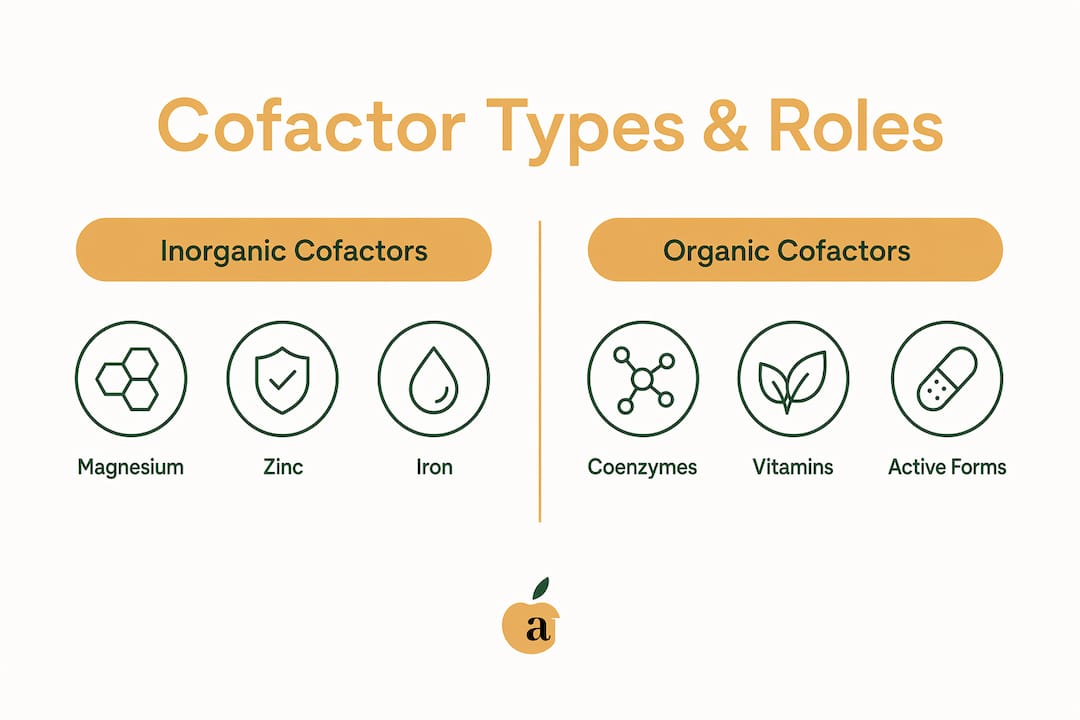
Mineral cofactors carry equal weight. Magnesium supports over 300 enzymatic reactions, making it one of the most broadly important minerals in human physiology. Zinc is required for immune function, protein synthesis, and DNA transcription. Iron is central to haemoglobin formation and oxygen transport.
The form of the supplement matters as much as the dose. Active coenzyme forms of B vitamins are critical for efficacy, particularly for people with genetic polymorphisms such as MTHFR variants that impair conversion. For example, methylfolate is the active form of B9 and bypasses the conversion step that MTHFR variants block. Choosing precursor forms in these cases delivers far less benefit.
Targeted supplementation addresses specific health goals. B6 upregulates the Nrf2 pathway, boosting antioxidant production including glutathione. It also elevates protective metabolites such as carnosine and taurine, which guard against age-related cognitive and musculoskeletal decline. This makes B6 particularly relevant for adults over 50 and those with high oxidative stress loads.
Safety limits are not optional. High-dose niacin and B6/11%3A_Nutrients_Important_for_Metabolism_and_Blood_Function/11.02%3A_Nutrients_Important_for_Metabolism) can cause flushing, hypotension, and peripheral nerve damage when taken above tolerable upper intake levels (UL). Clinical guidance consistently recommends staying within established recommended daily allowances (RDA) and UL thresholds.
What are the practical benefits and limitations of cofactor supplements?
The benefits of proper cofactor supplementation are well documented across several health domains. Energy metabolism improves when mitochondrial cofactors like CoQ10, B2, and B3 are adequately supplied. Cognitive function benefits from B6, B9, and B12 through their roles in neurotransmitter synthesis and myelin maintenance. Musculoskeletal health depends on magnesium and B6 for muscle contraction and nerve signalling.
Micronutrients affect transcriptional regulation and synaptic signalling beyond enzyme catalysis. This means their impact on brain health extends well past simple energy production. Deficiencies in B vitamins can alter gene expression and disrupt the communication between nerve cells.
The limitations are equally real. Genetic variation affects how well each person absorbs, transports, and activates cofactors. Genes influence cofactor utilisation, which means a standard supplement dose may be insufficient for one person and excessive for another. This variability is one reason why blanket supplement recommendations often fall short.
The most common mistake is treating cofactors in isolation. Isolated supplementation of one nutrient without its corresponding cofactors can worsen deficiency symptoms or block metabolic pathways entirely. Taking high-dose iron without adequate B2 and vitamin C, for instance, reduces absorption and may cause gastrointestinal irritation without delivering the intended benefit.
Key limitations to keep in mind:
- Nutrient antagonism: excess zinc competes with copper absorption; excess calcium blocks magnesium uptake
- Genetic variability means standard doses do not produce uniform results across individuals
- Fat-soluble cofactors require dietary fat for absorption and are affected by digestive health
- High-dose single cofactors can induce secondary deficiencies in related nutrients
Pro Tip: Learn how digestion affects supplement uptake before choosing your cofactor stack. Poor gut function reduces absorption of even the best-formulated supplements.
How can you use nutrient cofactor supplements safely and effectively?
Effective cofactor supplementation starts with identifying your actual needs. A blood panel covering B12, folate, vitamin D, ferritin, magnesium, and zinc gives you a baseline. Supplementing without this data means guessing, and guessing with nutrients that have defined upper limits carries real risk.
Follow these steps to build a safe and effective cofactor protocol:
- Establish a baseline. Get blood work done before starting any new supplement regimen. Focus on the cofactors most relevant to your symptoms or health goals.
- Choose active forms. Select methylfolate over folic acid, methylcobalamin over cyanocobalamin, and magnesium glycinate over magnesium oxide. Active and chelated forms absorb more reliably.
- Pair nutrients correctly. Take vitamin D with magnesium and vitamin K2. Take iron with vitamin C and B2. Avoid taking zinc and copper at the same time without professional guidance on ratios.
- Respect upper intake levels. Stay within established RDA and UL guidelines. More is not better with cofactors. Excess B6 causes nerve damage. Excess niacin causes flushing and liver stress.
- Assess your genetics if possible. MTHFR, COMT, and other gene variants affect how you process B vitamins and other cofactors. A simple genetic test can inform which forms and doses suit you best.
- Review your full supplement stack. Stacking supplements effectively requires understanding which combinations support each other and which compete. A poorly assembled stack can cancel out its own benefits.
- Consult a qualified practitioner. A nutritional therapist or GP with an interest in functional medicine can interpret your blood work and genetic data together, giving you a personalised protocol rather than a generic one.
Diet remains the foundation. Supplements fill gaps. They do not replace a varied diet rich in whole foods, and they work best when used to address specific, identified shortfalls rather than as a general insurance policy.
Key takeaways
Nutrient cofactors are the biochemical keys that unlock enzyme function, and supplementing them correctly determines whether your entire supplement regimen works or stalls.
| Point | Details |
|---|---|
| Cofactors activate enzymes | Without cofactors, enzymes remain inactive regardless of substrate availability. |
| Active forms matter | Choose methylfolate and methylcobalamin over precursor forms, especially with MTHFR variants. |
| Synergy is non-negotiable | Pair vitamin D with magnesium, iron with vitamin C, and folate with B12 for full effect. |
| Isolation causes imbalance | Supplementing one cofactor in high doses can deplete related nutrients and worsen deficiency. |
| Safety limits are fixed | Niacin and B6 above tolerable upper intake levels cause nerve damage and cardiovascular stress. |
Why I think most people are using cofactor supplements backwards
Most people I speak with about supplements are focused entirely on the headline nutrient. They take vitamin D for bone health, iron for fatigue, or B12 for energy. What they rarely consider is whether the cofactors needed to activate those nutrients are present at all.
I have seen this pattern repeatedly. Someone takes high-dose vitamin D for months with no measurable improvement in their levels. The missing piece is almost always magnesium. The body cannot convert vitamin D into its active hormonal form without it. The supplement is not failing. The cofactor is absent.
The same logic applies to iron supplementation. Iron without adequate B2 and vitamin C is poorly absorbed and often causes digestive discomfort. People blame the supplement when the real problem is the missing cofactor context.
What concerns me most is the “more is better” mindset that still dominates supplement culture. High-dose single nutrients feel decisive. They feel like action. But isolated high-dose supplementation without the corresponding cofactor network can actively worsen the deficiency it is meant to address.
The future of cofactor supplementation lies in personalisation. Genetic testing for MTHFR and related variants is becoming accessible and affordable. Combining that data with blood work gives a genuinely precise picture of which cofactors you need, in which forms, and at what doses. That is the standard worth working towards.
Quality matters too. A supplement with fillers, binders, or synthetic additives introduces variables that compromise the very reactions you are trying to support. Pure, clean formulations give you the clearest signal about what is actually working.
— Jade
Vitaminb17 and your nutrient cofactor supplement needs
Vitaminb17 builds its range around one principle: pure ingredients, no fillers, no binders, and no synthetic additives. That matters when you are working with cofactors, because impurities and excipients can interfere with the very enzymatic reactions you are trying to support.

Whether you are looking at single-ingredient supplements to address a specific cofactor gap, or exploring plant-based supplement options for broader nutritional support, Vitaminb17 offers standardised extracts with consistent dosing. Each product is formulated to deliver what it states on the label, without compromise. If you want to understand exactly what you are putting into your body and why it works, Vitaminb17 is the right place to start.
FAQ
What is the role of nutrient cofactors in the body?
Nutrient cofactors are non-protein molecules that bind to enzymes and make them active. Without them, enzymes cannot catalyse the biochemical reactions needed for energy production, DNA repair, and nutrient metabolism.
How do cofactor supplements improve nutrient absorption?
Cofactor supplements improve absorption by providing the molecular partners that activate nutrient conversion and transport. For example, magnesium activates vitamin D, and vitamin C enhances iron uptake.
Which B vitamins act as the most important cofactors?
B2, B3, B6, B9, and B12 are the most metabolically critical. They form coenzymes including FAD, NAD, and active folate that drive energy metabolism, antioxidant production, and nerve function.
Can you take too many cofactor supplements?
Yes. Excess niacin and B6/11%3A_Nutrients_Important_for_Metabolism_and_Blood_Function/11.02%3A_Nutrients_Important_for_Metabolism) above tolerable upper intake levels cause nerve damage, flushing, and cardiovascular stress. Always stay within established RDA and UL guidelines.
Do genetic factors affect how cofactor supplements work?
Yes. Genetic variants such as MTHFR affect the conversion of precursor vitamins into active coenzyme forms. People with these variants benefit from taking active forms like methylfolate rather than standard folic acid.


