

Enzymes are specialised proteins that catalyse the breakdown of plant proteins, starches, fats and certain cell-wall components, converting herb constituents into forms your gut can absorb. This happens through a chain of specific catalysts: bromelain and papain cleave plant proteins, human pancreatic lipase handles fats, and amylase breaks down starches into usable sugars. Each enzyme works on one substrate, at a particular pH, in a particular part of the digestive tract.
Three facts worth holding onto before you read further:
- Plant enzymes and human enzymes are not interchangeable. They overlap in function but differ in origin, structure, and where they act.
- Most healthy adults digest herbs perfectly well without supplemental enzymes. Johns Hopkins Medicine notes that over-the-counter enzymes are typically for occasional symptoms, not a baseline requirement.
- Heat destroys enzyme activity quickly, so raw versus cooked preparation genuinely changes how much enzymatic action a herb delivers.
Key Takeaways
Enzymes catalyse the breakdown of proteins, fats, and starches in herbs, but plant cell walls remain largely resistant to digestion by both human and plant enzymes alike.
| Point | Details |
|---|---|
| Core enzyme roles | Proteases, amylases, and lipases each target a specific plant macronutrient; none substitutes for another. |
| Top herb sources | Pineapple (bromelain), papaya (papain), ginger (zingibain), and aloe vera (lipase, amylase) lead the list. |
| When to see a clinician | Unexplained weight loss, oily stools, or blood in stool are red flags that need medical assessment, not a supplement trial. |
| Food-first action | Eat these herbs fresh or lightly processed, since heat denatures most of their enzyme activity within minutes. |
Table of Contents
- What is the role of enzymes in herb digestion, biochemically?
- Which herbs contain digestive enzymes, and in what form?
- How do plant, human, and microbial enzymes differ?
- Do you need extra digestive support?
- What does the evidence actually say about enzyme supplements?
- How can you use enzyme-rich herbs safely and effectively?
- Where does the research on herb enzymes fall short?
- What actually matters when you’re choosing an enzyme-active herb?
- Frequently asked questions
- Sources
What is the role of enzymes in herb digestion, biochemically?
Digestion is a division of labour. Different enzyme classes attack different molecules, and understanding which does what explains why some herbs matter more than others for gut comfort.
Proteases break peptide bonds in proteins, reducing long chains into amino acids and small peptides. Amylases hydrolyse starch into simpler sugars like maltose and glucose. Lipases split fats into fatty acids and glycerol. Cellulases and hemicellulases target the structural carbohydrates in plant cell walls, cellulose and hemicellulose, though the human gut has very limited capacity to produce these itself. A related enzyme, alpha-galactosidase, breaks down certain oligosaccharides found in legumes and some vegetables that would otherwise pass through undigested and ferment.
Substrate and enzyme have to match. A protease will not touch starch; an amylase will not touch fat. This is why herbs offering multiple enzyme types, such as aloe vera with both lipase and amylase activity, are unusual and worth noting.
Where this happens in the body matters as much as what happens:
- Mouth: salivary amylase begins starch breakdown, though contact time is brief.
- Stomach: strongly acidic (pH 1.5 to 3.5), where pepsin starts protein digestion; most plant enzymes are denatured here unless protected.
- Pancreas and small intestine: the main digestive site, with pancreatic proteases, amylase, and lipase working at a near-neutral pH around 7 to 8.
- Colon: home to microbial fermentation of fibre that escapes upper-gut digestion.
Temperature and pH dependence explain a lot of confusion around supplements. An enzyme extracted from a herb and swallowed as a capsule has to survive stomach acid to do anything useful in the small intestine, which is one reason formulation and delivery method matter more than raw enzyme content alone.
Which herbs contain digestive enzymes, and in what form?
Only a handful of common herbs and fruits carry meaningful digestive enzyme activity, and the difference between fresh and processed forms is often the difference between an active enzyme and an inert one.
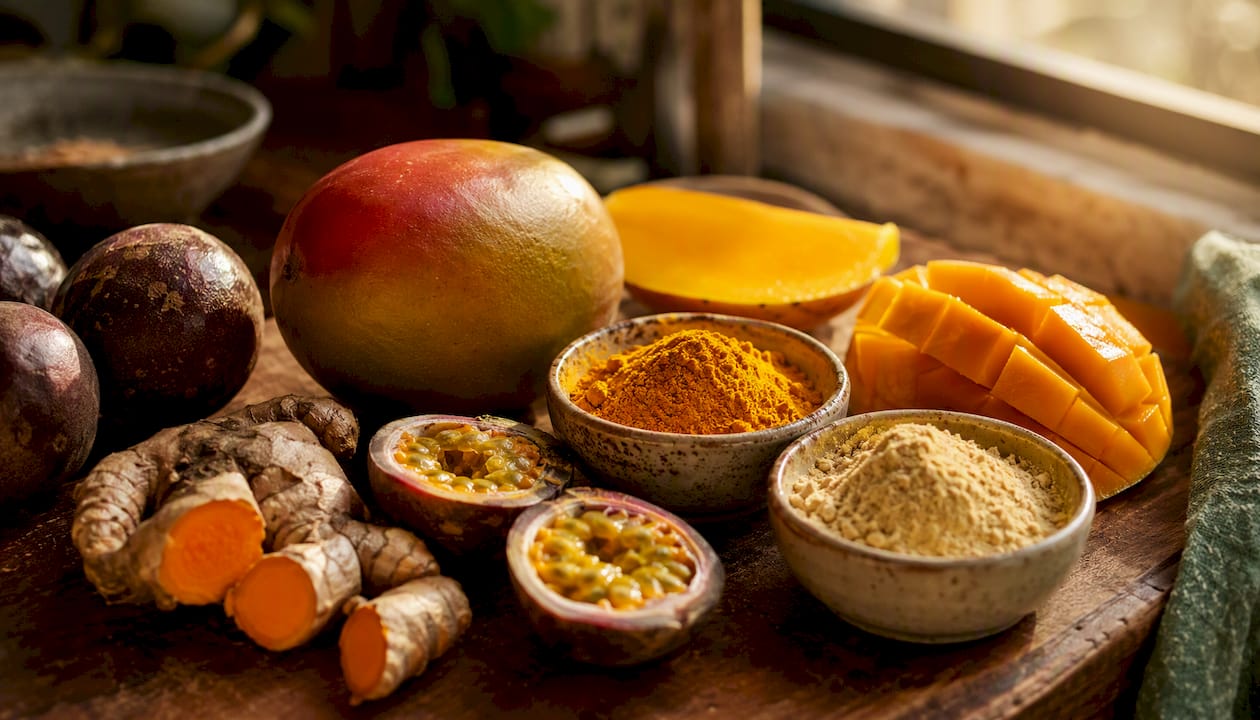
| Herb/botanical | Primary enzyme(s) | Main substrate | Typical usable form |
|---|---|---|---|
| Pineapple | Bromelain | Proteins | Fresh fruit, juice, standardised extract |
| Papaya | Papain | Proteins | Fresh fruit, dried leaf, extract |
| Ginger | Zingibain and related proteases | Proteins | Fresh root, grated, juice |
| Aloe vera | Lipase, amylase | Fats, starches | Fresh gel, processed juice |
| Legumes/certain plants | Alpha-galactosidase | Oligosaccharides | Supplement extract (rarely food-native in active form) |
| Fungal/bacterial sources | Cellulase | Cellulose | Supplement extract only |
Bromelain and papain are the best-documented plant proteases, both drawn from tropical fruit and both degraded significantly by cooking. Ginger’s proteases behave similarly. Aloe vera is the outlier here, offering two enzyme types rather than one, though its lipase and amylase activity is modest compared with the fruit-derived proteases.
Cellulase does not occur natively in these common herbs in a form useful to the human gut; where it appears in supplements it is typically sourced from fungi or bacteria, not from the herb itself.
Pro Tip: Heat is the enemy of enzyme activity. Cooking pineapple, papaya, or ginger denatures most of their protease content within minutes at typical cooking temperatures, so if you want the enzymatic benefit, eat them raw or choose a low-temperature, standardised extract rather than a cooked or heavily processed preparation.
How do plant, human, and microbial enzymes differ?
None of these three systems works alone, and confusing them is where a lot of supplement marketing goes wrong.
- Plant enzymes (bromelain, papain, zingibain) work across a fairly broad pH range and can begin protein breakdown before food even reaches the stomach in some cases, but they are present in small, variable amounts in food and are highly heat-sensitive.
- Human enzymes (salivary amylase, gastric pepsin, pancreatic proteases/amylase/lipase) are produced in controlled quantities at specific digestive sites, operate at tightly regulated pH levels, and form the backbone of normal digestion regardless of what herbs you eat.
- Microbial enzymes, produced by gut bacteria in the colon, specialise in fermenting fibre and resistant carbohydrates that human enzymes cannot touch.
Plant cell walls, built from cellulose, hemicellulose, pectin and lignin, resist human digestion almost entirely. Some gut bacteria can ferment these components into short-chain fatty acids, but the energy yield for humans is small compared with herbivores, whose enlarged fermentation chambers extract far more value from the same material.
There is genuine evidence that plant enzymes can get a head start on digestion under the right conditions. In vitro studies on fresh grasses found that plant proteases initiated proteolysis of herbage proteins within the first 12 to 24 hours, before microbial activity took over. That is a ruminant digestion model, not a human gut, so the finding shows what plant enzymes are biochemically capable of rather than proving the same handoff happens reliably inside a human stomach.
Separately, animal research has shown that dietary compounds in ginger and other spices can increase the host’s own intestinal lipase and disaccharidase activity in rats, a different mechanism entirely: not the herb’s enzymes doing the work, but the herb stimulating your body to produce more of its own.
Do you need extra digestive support?
Occasional bloating after a big bean salad is normal. A pattern of symptoms every time you eat plant-rich meals is worth paying attention to.
Common, usually manageable signs include:
- Persistent gas or bloating after meals heavy in vegetables, legumes, or raw produce
- Loose stools or diarrhoea that tracks with specific food patterns
- Mild reflux after large or fibre-dense meals
- General sluggishness or discomfort an hour or two after eating
Red flags that call for a clinician rather than a dietary tweak include unexplained weight loss, oily or floating stools, blood in stool, or malabsorption symptoms that persist for weeks regardless of what you eat. Persistent oily stools in particular can point to fat malabsorption, which is a different clinical picture from simple bloating and deserves proper assessment rather than a supplement trial.
Pro Tip: Change one variable at a time. If you cut out raw cruciferous vegetables and add a fibre supplement in the same week, you will not know which change helped. Keep a simple log of what you ate and how you felt for two weeks before drawing conclusions.
What does the evidence actually say about enzyme supplements?
The honest summary is this: enzyme supplementation is a well-supported medical treatment for a small, defined group of people, and an unproven but generally low-risk option for everyone else. The evidence does not currently justify routine use in healthy adults, but it does not condemn cautious, informed use either.
Johns Hopkins Medicine states plainly that most healthy adults do not require routine enzyme supplements. Prescription pancreatic enzyme replacement therapy exists for diagnosed pancreatic insufficiency, a genuine medical condition confirmed by testing, not a guess based on bloating. Over-the-counter enzyme products occupy a different, far less regulated category, generally used for occasional symptom relief rather than treating a diagnosed deficiency.
The evidence base breaks down roughly like this: clinical human trials support PERT for confirmed insufficiency; animal and in vitro studies support mechanistic plausibility for spice-driven enzyme modulation; and meta-analyses in ruminants show enzyme effects on digestibility are real but inconsistent, varying by enzyme type, dose, and substrate. None of these tiers currently supports a blanket recommendation for healthy adults to take enzyme supplements daily.
Safety considerations worth knowing before trying any enzyme-containing herb or supplement:
- Bromelain can interact with anticoagulant medications and increase bleeding risk.
- People allergic to pineapple, papaya, or latex sometimes show cross-reactivity to related plant proteases.
- Anyone with a history of pancreatitis, active peptic ulcers, or on prescribed digestive medication should check with a clinician before adding enzyme supplements.
- Pregnant readers should treat concentrated herbal enzyme extracts with the same caution as any concentrated botanical, discussing use with a midwife or doctor first.
This article gives general information and is not a substitute for professional medical advice. If you have a diagnosed condition or take regular medication, confirm with a clinician before starting any enzyme-containing supplement.
How can you use enzyme-rich herbs safely and effectively?
Food-first is the sensible starting point for most healthy adults, with supplements reserved for genuine gaps.
A practical checklist:
- Choose fresh pineapple, fresh papaya, or freshly grated ginger over cooked, canned, or heavily processed versions.
- Aloe gel taken from the whole leaf retains more activity than commercial aloe juice that has been pasteurised.
- Avoid sugary processed “digestive” drinks that dilute whatever enzyme content the original plant had.
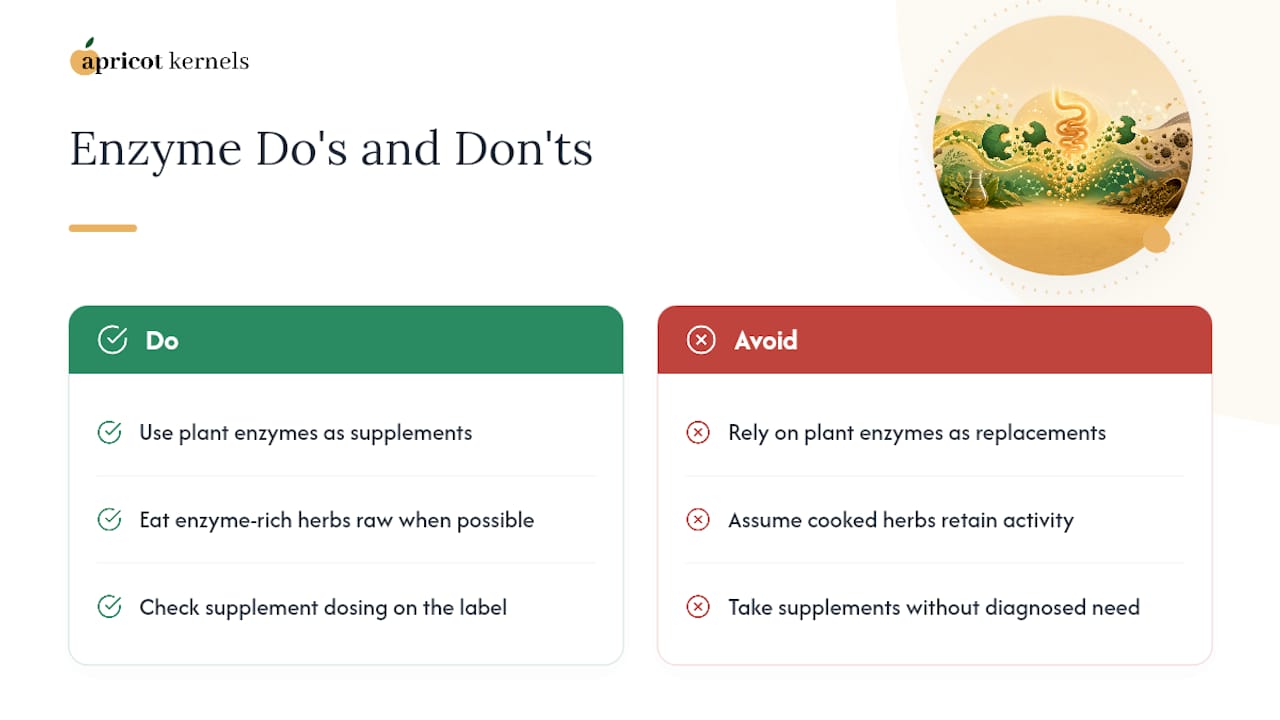
- If you take supplements, look for standardised activity units on the label rather than a vague milligram weight, since enzyme potency is not the same as raw mass.
Do preserve raw preparation when enzyme activity is the point of eating the herb. Do not make several dietary changes simultaneously while adjusting medication doses, since it becomes impossible to trace cause and effect. Do check whether a supplement discloses its processing method: low-temperature, solvent-free extraction preserves more of a herb’s original character than high-heat drying.
A simple three-step trial:
- Pick one variable (fresh pineapple after meals, or a single standardised extract) and use it consistently for two weeks.
- Track outcomes using a basic log: bloating, stool consistency, energy after meals.
- Reassess and stop if needed. If nothing improves after two to three weeks, or if symptoms worsen, stop and speak to a clinician rather than layering on a second supplement.
Pro Tip: If you are already taking other herbal extracts, check for interactions before adding an enzyme-focused one. Our guide on how to stack herbal supplements effectively covers timing and combinations worth avoiding.
Where does the research on herb enzymes fall short?
Reading enzyme research critically saves you from acting on weak evidence dressed up as strong evidence.
The main gaps:
- Few large human randomised controlled trials exist specifically testing enzyme-rich herbs for digestive benefit in healthy adults. Much of the strongest mechanistic data comes from rats or in vitro incubations, not people.
- Supplement formulations vary wildly between brands, with no consistent standard for reporting enzyme activity units, making cross-study or cross-product comparison difficult.
- Ruminant data does not transfer cleanly to humans. Findings on plant proteases initiating proteolysis in grazing animals are biochemically interesting but describe a different gut system entirely.
- Reporting quality is inconsistent. Many product claims cite in vitro results without clarifying that lab-dish activity does not guarantee the same effect after stomach acid exposure.
When you read a new study or a headline claim about a herb’s enzyme content, check three things: was it tested in humans or animals, was the enzyme activity measured in standardised units, and does the author disclose funding from a supplement manufacturer. Reviews in established clinical or nutrition journals, rather than brand blogs, remain the more reliable source for tracking genuine progress in this field.
What actually matters when you’re choosing an enzyme-active herb?
Most of the enzyme conversation online skips straight to supplements, which misses the more useful question: is the herb even active by the time it reaches you?
Freshness and processing determine more of the outcome than the herb species itself. A pineapple picked ripe and eaten raw carries meaningfully more active bromelain than the same fruit after canning, and a ginger root grated fresh into a meal delivers different protease activity than a ginger extract that has sat through high-heat processing. If you’re choosing between forms, the processing method deserves as much scrutiny as the ingredient list.
Standardisation is the other detail worth insisting on. A label that states activity units, rather than just a milligram weight of “ginger extract,” tells you something the weight alone cannot: that a batch has been tested and calibrated to deliver a consistent dose. Solvent-free, low-temperature extraction tends to preserve more of a herb’s original enzymatic and phytochemical character than hot-ethanol processing, though disclosure of method varies enormously between manufacturers, and few volunteer this information unless asked.
None of this means supplements are unnecessary window dressing. It means the honest answer to “should I take an enzyme supplement” is usually “check your symptoms and your food choices first, and if you do supplement, buy from a source that tells you exactly what you’re getting.”
Frequently asked questions
What is the role of enzymes in herb digestion?
Enzymes catalyse the breakdown of proteins, starches, and fats found in herbs, converting them into smaller molecules your gut can absorb. Some herbs, like pineapple and papaya, also contribute their own proteases that assist this process.
Can plant enzymes replace human digestive enzymes?
No. Plant enzymes like bromelain and papain work on specific substrates under certain conditions, but human pancreatic enzymes remain the primary system responsible for digesting a normal diet, plant enzymes supplement rather than substitute for that system.
Which herbs have the strongest digestive enzyme activity?
Pineapple (bromelain) and papaya (papain) have the best-documented protease activity among common food sources, with ginger’s zingibain and aloe vera’s lipase and amylase content also contributing meaningfully.
Does cooking destroy the enzymes in herbs?
Yes, in most cases. Heat denatures the protein structure that gives enzymes their catalytic function, so raw pineapple, papaya, and ginger retain far more enzyme activity than their cooked equivalents.
Do healthy adults need enzyme supplements?
Generally not. Clinical guidance from Johns Hopkins Medicine indicates most healthy adults digest food adequately without supplemental enzymes, with prescription enzyme therapy reserved for diagnosed pancreatic insufficiency.
If bloating, irregular digestion, or absorption concerns are part of why you’re reading this, it is worth checking whether the herbal extracts you already take are dosed strongly enough to matter. Our buyer’s guide to spotting underdosed herbal supplements walks through exactly what to look for on a label, and Vitaminb17’s own high-potency plant extracts are formulated without fillers or binders, so what you read on the label is what you actually get.
Sources
- Digestive enzymes and digestive enzyme supplements | Johns Hopkins Medicine
- Influence of dietary spices or their active principles on digestive enzymes of small intestinal mucosa in rats
- Plant cell wall degradation and herbivore digestion (review)
- A role for plant enzymes in the early stages of herbage protein digestion in ruminants


