

Digestion is defined as the process by which the body breaks down food and supplements into molecules small enough to enter the bloodstream. The role of digestion in supplement absorption is the single greatest determinant of whether a supplement actually works. You can take the highest quality capsule available, but if your digestive system cannot break it down and transport its contents across the intestinal wall, the dose is largely wasted. Understanding the physiology behind this process, from enzymatic activity to gut barrier integrity, gives you a real advantage when choosing and timing your supplements.
How does digestion break down supplements for absorption?
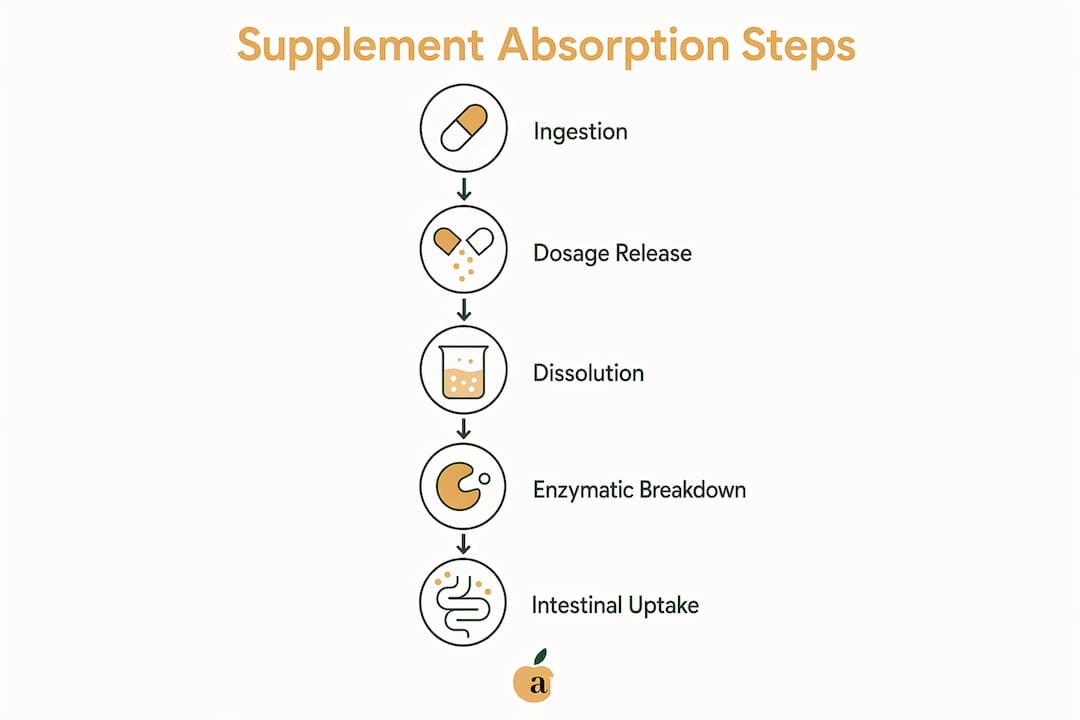
Supplement absorption is a multi-step biological process that includes release from the dosage form, dissolution, intestinal transport, and survival through systemic metabolism. Each stage is a potential bottleneck. A capsule that does not dissolve properly in the stomach never reaches the intestinal wall, regardless of what is inside it.
The mouth and stomach
Digestion begins in the mouth, where salivary amylase starts breaking down carbohydrate-based coatings on tablets and capsules. The stomach then takes over with hydrochloric acid and pepsin, which dissolve the dosage form and begin breaking down proteins. Stomach acid is particularly important for minerals like iron and calcium, which require an acidic environment to become soluble. Without adequate acid, these minerals pass through largely unabsorbed.

The small intestine
The small intestine is where the majority of nutrient uptake occurs. Pancreatic enzymes, including lipase, protease, and amylase, complete the breakdown of fats, proteins, and carbohydrates respectively. Fat-soluble supplements such as vitamins A, D, E, and K require bile salts from the liver to form micelles, tiny fat droplets that carry nutrients across the intestinal lining. Water-soluble supplements like vitamin C and B vitamins cross the intestinal wall more directly, but still depend on specific transport proteins.
Supplement form matters
- Capsules (especially vegetable-based) dissolve faster than compressed tablets, giving enzymes quicker access to the active ingredient.
- Liquid supplements bypass the dissolution stage entirely, reaching the intestinal wall sooner.
- Enteric-coated tablets are designed to survive stomach acid and release in the small intestine, which suits acid-sensitive compounds like certain probiotic strains.
- Standardised extracts in capsule form, such as those used by Vitaminb17, deliver consistent concentrations of active compounds with no fillers to slow dissolution.
Pro Tip: Take fat-soluble supplements like vitamin D or vitamin K with a meal that contains healthy fats. This triggers bile release and significantly improves uptake.
How does gut health affect supplement absorption efficiency?
The gut microbiome is a community of trillions of bacteria, fungi, and other microorganisms living in the intestinal tract. These organisms directly influence how well your body absorbs nutrients from supplements. A balanced microbiome supports a healthy intestinal barrier, which is the physical gateway through which nutrients pass into the bloodstream.
Fermentable dietary fibre modulates gut microbiota composition, which in turn affects nutrient absorption and intestinal health. When beneficial bacteria ferment fibre, they produce short-chain fatty acids that strengthen the gut lining and reduce inflammation. A stronger gut lining means fewer gaps in the intestinal barrier and more efficient nutrient transport.
Inflammation is the enemy of absorption. When the gut wall is inflamed, tight junctions between intestinal cells loosen. Nutrients leak out before they can be transported properly, and the body’s ability to regulate what crosses the barrier is compromised. This is why intestinal barrier health is a key limiting factor in supplement efficacy, not just the dose you take.
Effective supplementation depends on intestinal barrier health rather than simply higher supplement doses. An inflamed or damaged gut barrier reduces absorption regardless of the quality or quantity of the supplement consumed.
Key microbiome factors that influence absorption include:
- Gut flora diversity: A diverse microbiome produces a wider range of enzymes and metabolites that aid nutrient breakdown.
- Probiotic strain survival: Probiotic delivery requires resistance to gastric acidity and bile salts. Encapsulation technologies improve strain survival during digestion.
- Prebiotic fibre intake: Feeds beneficial bacteria, supporting the conditions that favour nutrient uptake.
- Antibiotic use: Disrupts microbiota balance and can temporarily reduce the gut’s capacity to absorb certain nutrients.
Research analysing 313 trials with 46,826 participants found that probiotic supplementation shows significant benefits for conditions like diarrhoea and eczema, but does not guarantee permanent colonisation in the gut microbiome. This means consistent probiotic intake matters more than a single course. For guidance on how probiotics interact with the digestive process, the role of probiotics in digestion is well documented in clinical literature.
What factors affect how well supplements are absorbed?
Supplement absorption efficiency depends on multiple factors beyond dosage amount, including supplement form, food interactions, timing, stress, and gut health. Knowing which factors work against you is as useful as knowing which ones help.
- Meal timing and dietary composition. Fat-soluble vitamins absorb poorly on an empty stomach. Minerals like zinc and iron compete for the same transport proteins, so taking them together reduces the uptake of both. Taking iron with vitamin C, on the other hand, converts it to a more absorbable form.
- Stress and digestive function. Chronic stress reduces blood flow to the digestive tract and suppresses enzyme secretion. This slows the entire digestive process and reduces the time nutrients spend in contact with the intestinal wall. Even a single stressful episode before a meal can measurably reduce digestive output.
- Supplement dosage and hormone response. High, infrequent oral iron doses raise hepcidin hormone levels, which actively reduces iron absorption and increases unabsorbed iron in the colon. This can disrupt gut microbiota and cause discomfort. Smaller, more frequent doses avoid this hormonal block.
- Age and medical conditions. Stomach acid production declines with age, reducing the absorption of B12, calcium, and iron. Conditions like pancreatic insufficiency reduce enzyme output significantly. People with these conditions require clinical support, not simply higher supplement doses.
- Supplement interactions. Calcium blocks iron absorption when taken together. Magnesium and zinc compete at the same intestinal transporter. Spacing these supplements by at least two hours removes the competition.
Pro Tip: Take your most important supplement first thing in the morning or at a consistent time each day. Consistency in timing trains your digestive system and supports steady blood levels of the active compound.
Practical ways to improve supplement absorption through digestion
Better digestion produces better absorption. The strategies below are grounded in physiology, not guesswork.
- Choose the right supplement form. Liquid or capsule forms generally outperform compressed tablets for speed of dissolution. Vitaminb17 uses encapsulated standardised extracts with no fillers or binders, which means the active compound reaches the intestinal wall without interference.
- Time supplements with appropriate meals. Fat-soluble compounds need dietary fat. Water-soluble vitamins absorb well with or without food, but taking them with a small meal reduces stomach irritation.
- Support your microbiome. Eat fermentable fibre daily from sources like oats, leeks, and garlic. This feeds the beneficial bacteria that maintain gut barrier integrity.
- Avoid large single doses of minerals. Split doses across the day to prevent hormonal absorption blocks, particularly with iron and zinc.
- Manage stress before meals. Even five minutes of calm before eating improves digestive enzyme output and blood flow to the gut.
The table below summarises how supplement form and timing interact with digestive physiology:
| Supplement type | Best timing | Key digestive factor |
|---|---|---|
| Fat-soluble vitamins (A, D, E, K) | With a fat-containing meal | Bile release from liver |
| Water-soluble vitamins (B, C) | Any time, preferably with food | Intestinal transport proteins |
| Minerals (iron, zinc, calcium) | Separate from each other | Transporter competition |
| Herbal extracts (capsule form) | With water, before or with meals | Dissolution speed, no fillers |
| Probiotics (encapsulated) | With or just before a meal | Gastric acid resistance |
Integrating herbal supplements into meal prep is one of the most practical ways to align timing with digestive readiness. For a broader view of how dosing relates to actual nutrient uptake, the guide on maximising supplement absorption covers the full picture.
Digestive enzyme supplements are clinically recommended mainly for pancreatic insufficiency. Most people with healthy digestion have sufficient enzyme capacity and gain little from supplementation. The pancreas can produce up to ten times the necessary digestive enzymes under normal conditions, which means a functional reserve exists before deficiency symptoms appear. For those who do need enzyme support, clinical-grade digestive enzyme blends are well documented in nutritional research.
Key takeaways
Digestion is the primary bottleneck in supplement efficacy, and improving digestive function consistently produces better results than simply increasing the dose.
| Point | Details |
|---|---|
| Digestion determines absorption | Supplements must dissolve, be enzymatically broken down, and cross the intestinal wall to work. |
| Gut barrier integrity is critical | Inflammation in the gut lining reduces absorption regardless of supplement quality or dose. |
| Timing and form both matter | Fat-soluble supplements need dietary fat; capsules dissolve faster than compressed tablets. |
| Mineral competition reduces uptake | Iron, zinc, and calcium share transporters; space them by at least two hours for best results. |
| Microbiome health supports uptake | Fermentable fibre feeds beneficial bacteria that maintain the gut conditions needed for absorption. |
Why digestion is the part of supplementation most people ignore
People spend a great deal of time researching which supplement to buy and very little time thinking about whether their body can actually absorb it. I have seen this pattern repeatedly. Someone invests in a high-quality herbal extract, takes it diligently for weeks, and reports no noticeable effect. The supplement is not the problem. The digestive environment is.
The most common oversight is treating the gut as a passive tube. It is not. The gut actively regulates what enters the bloodstream, and that regulation depends on enzyme output, microbiome balance, and the physical integrity of the intestinal wall. Stress, poor diet, and inconsistent meal timing all degrade that regulation quietly, without obvious symptoms.
I am also sceptical of the trend towards enzyme supplements for general wellness. The evidence is clear: enzyme supplements benefit those with clinical deficiency, not healthy individuals looking for a shortcut. Spending money on enzyme capsules when your pancreas is functioning normally is a distraction from what actually moves the needle: consistent fibre intake, stress management, and choosing supplement forms that dissolve efficiently.
The brands worth trusting are those that formulate with absorption in mind. No fillers. No binders. Standardised extracts in clean capsules. That is not marketing language. It is the difference between a supplement that reaches your bloodstream and one that does not.
— Jade
Pure supplements that work with your digestion
Your digestive system does the work. The supplement just needs to get out of the way.

Vitaminb17 formulates every product with absorption in mind. No fillers, no binders, and no synthetic additives means nothing interferes between the capsule and your intestinal wall. From Burdock Root Capsules to Ginger Root Extract, each product uses standardised extracts in clean vegetable capsules that dissolve quickly and deliver consistent doses. If you want to understand how supplement quality affects what your body actually absorbs, the guide on maximising natural absorption is the right place to start. Pure. Raw. Strong.
FAQ
What is the role of digestion in supplement absorption?
Digestion breaks supplements down from their dosage form into molecules small enough to cross the intestinal wall and enter the bloodstream. Without complete dissolution and enzymatic breakdown, even high-quality supplements pass through the body largely unused.
Does gut health affect how well supplements work?
A healthy gut barrier and balanced microbiome directly improve nutrient uptake. Inflammation in the gut lining reduces absorption efficiency regardless of the supplement dose or quality.
Should I take digestive enzyme supplements to improve absorption?
Digestive enzyme supplements are clinically recommended for pancreatic insufficiency, not for healthy individuals. The pancreas produces up to ten times the required enzymes under normal conditions, so most people do not benefit from additional enzyme supplementation.
Does meal timing affect supplement absorption?
Meal timing significantly affects absorption. Fat-soluble vitamins require dietary fat to absorb properly, while minerals like iron and calcium compete for the same intestinal transporters and should be taken separately.
Can high doses of supplements reduce their own absorption?
High, infrequent iron doses raise hepcidin levels, which actively blocks further iron absorption and increases unabsorbed iron in the colon. Splitting doses across the day avoids this hormonal response and improves overall uptake.


