

Pumpkin seed extract is worth taking if you want plant-based support for lower urinary tract comfort or a clean source of magnesium and zinc. The European Medicines Agency classifies Cucurbita pepo L. semen as a traditional herbal medicinal product for this purpose, giving it a firmer regulatory footing than most botanical supplements. For UK shoppers wanting a single-ingredient, high-potency option, Vitaminb17 Pumpkin Seed Extract Capsules 2000mg Pure Raw is the practical buy.
- Core verdict: Standardised pumpkin seed extract reliably supports urinary comfort and delivers plant-based minerals when dosed correctly.
- Regulatory basis: EMA community herbal monograph recognises traditional use for lower urinary tract symptoms.
- Recommended product: Vitaminb17 Pumpkin Seed Extract Capsules 2000mg Pure Raw. No fillers. No binders. Single ingredient.
- Safety note: Generally well tolerated, but check with a clinician before use if you are pregnant, under 18, or taking prescription medicines.
Table of Contents
- What is pumpkin seed extract and which compounds matter?
- What does the science say about pumpkin seed extract?
- Who may benefit and who should seek advice first?
- How do you choose a quality pumpkin seed supplement?
- How do you take pumpkin seed extract and what should you expect?
- What are the safety considerations and interactions?
- Vitaminb17 pumpkin seed extract capsules 2000mg pure raw
- Key takeaways
- A note on evidence-first supplement selection
- Further reading and sources
What is pumpkin seed extract and which compounds matter?
The botanical source is Cucurbita pepo L. semen — the seed of the common pumpkin. Supplements are produced from this seed in several forms, each concentrating different active compounds. Understanding the difference helps you read labels accurately.
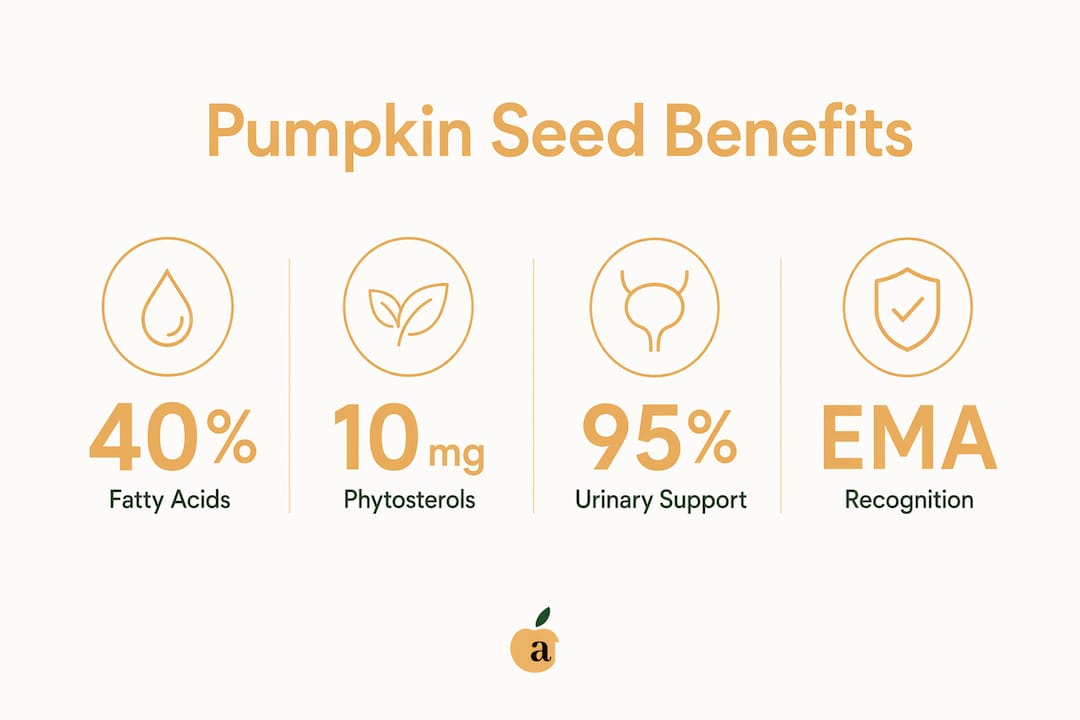
Pumpkin seeds are rich in phytosterols, lignans, unsaturated fatty acids, tocopherols (vitamin E) and tryptophan. These are the compound classes that drive the health effects you are buying for. They also provide significant magnesium and zinc, two minerals frequently low in plant-forward diets.
The extract form determines which actives are concentrated:
- Fatty oil (cold-pressed): concentrates unsaturated fatty acids, tocopherols and phytosterols. Rich, dense, and well studied for urinary and cardiovascular support.
- Soft ethanol extract (DER 15–25:1): concentrates phytosterols and lignans. Higher potency per gram than whole seed powder.
- Dry ethanol extract (DER 15–30:1): similar to soft extract but lower moisture; easier to encapsulate at consistent mg per capsule.
- Comminuted whole seed: least processed; lower concentration of actives per capsule but retains the full seed profile.
The secondary metabolites — phytosterols and lignans in particular — are what functional-food researchers increasingly credit for the therapeutic effects, working alongside the fatty acid and antioxidant profile for broader benefits.
What does the science say about pumpkin seed extract?
The EMA’s position is the clearest regulatory signal available. The HMPC community herbal monograph formally recognises pumpkin seed preparations for the traditional use relief of lower urinary tract symptoms in adults.
“Traditional herbal medicinal product for relief of lower urinary tract symptoms (LUTS). The use is based on traditional use only.” — EMA Community Herbal Monograph on Cucurbita pepo L., semen
Clinical trials and reviews show the most consistent benefits come from standardised fatty acid and phytosterol content in seed oil extracts. Unstandardised products produce variable results because the active load per capsule is unpredictable. Researchers also note that pharmacokinetic data and precise dose-response mapping remain incomplete, so expectations should be realistic: this is a traditional-use classification, not a licensed medicine claim.
The EMA monograph specifies posology for each extract form:
| Extract form | Single dose | Daily dose |
|---|---|---|
| Comminuted herbal substance | 5 g | Up to 15 g |
| Soft extract (DER 15–25:1) | 500 mg | 1,000 mg (twice daily) |
| Dry extract (DER 15–30:1) | 105 mg | — |
| Fatty oil | 1–1.2 g | 3–3.6 g (three times daily) |
Nutritionally, pumpkin seeds provide antioxidant and cardiometabolic support through their fatty acid profile and phytosterol content. For plant-forward shoppers, that combination of urinary comfort support plus mineral density makes seed extract a practical dual-purpose supplement.
Who may benefit and who should seek advice first?
Not every supplement suits every person. Pumpkin seed extract has a clear target user, and equally clear groups who should pause before buying.
- Men with benign lower urinary tract discomfort are the primary evidence-supported group. Phytosterols and zinc in the seed are thought to support prostate comfort and bladder function.
- Plant-based eaters seeking magnesium and zinc benefit from the seed’s mineral density without animal products. A magnesium supplement guide can help you understand whether a combined approach makes sense for your intake gaps.
- People wanting antioxidant support gain from the tocopherol and phytosterol profile, which contributes to oxidative stress mitigation.
Seek medical advice before using pumpkin seed extract if you fall into any of the following groups:
- Children and adolescents under 18. The EMA advises against unsupervised use due to insufficient safety data for this age group.
- Pregnant or breastfeeding people. The EMA recommends clinical oversight; safety data is limited.
- Anyone with unexplained urinary symptoms — blood in urine, fever, sudden weight loss, or severe pain. These need clinical investigation, not self-treatment.
- People on prescription medicines, particularly anticoagulants or drugs sensitive to fatty acid changes. Check with your GP or pharmacist first.
For broader context on plant-based supplement benefits, including where pumpkin seed extract fits within a plant-forward supplement strategy, the Vitaminb17 guide covers the full picture.
How do you choose a quality pumpkin seed supplement?
Label reading is the skill that separates a useful purchase from a wasted one. Here is what to check:
| Buying criterion | What to look for |
|---|---|
| Ingredient list | Single-ingredient: pumpkin seed extract only |
| Extract type | Stated as soft, dry, or fatty oil with DER ratio |
| Mg per capsule | Sufficient to reach EMA posology ranges per serving |
| Standardisation | DER stated, or phytosterol/fatty acid content declared |
| Third-party testing | Batch certificate of analysis (COA) from ISO or UKAS-accredited lab |
| Excipients | No fillers, binders, or synthetic additives |
| Capsule type | Vegan capsule if required |
| Packaging | Opaque or dark-glass container; clear lot number and expiry |

Pro Tip: To check whether a capsule is genuinely dosed, divide the stated mg per capsule by the DER ratio. A 2000mg capsule with a DER of 10:1 delivers the equivalent of 20g of whole seed — a meaningful dose. A product listing “pumpkin seed powder 200mg” with no DER is almost certainly under-dosed. The Vitaminb17 guide on recognising underdosed herbal supplements walks through this maths in full.
High-potency standardised extracts consistently outperform whole-seed powders in clinical settings because the active load per capsule is predictable. Labels that give DER or active marker amounts give you confidence you are buying what the trials used.
How do you take pumpkin seed extract and what should you expect?
Dosing depends on the extract form in your capsule. Use the EMA posology table above as your reference point, then match it to your product’s stated extract type.
- Start low. Begin with the lowest single dose your product allows. For a dry extract capsule, that is typically one capsule (105 mg) three times daily with food, as specified in the EMA monograph.
- Build to the target dose over one to two weeks, particularly if you are new to concentrated herbal extracts. Guidance on building tolerance safely is worth reading before you begin.
- Take with food. Fatty acids and fat-soluble compounds absorb better alongside a meal containing some dietary fat.
- Monitor for four to eight weeks. Urinary comfort improvements tend to emerge gradually. Set a realistic review point at eight weeks.
- Reassess at 12 weeks. If no benefit is apparent after three months at the correct dose, stop and consult a clinician rather than increasing the dose further.
- Do not exceed the EMA daily totals for your extract type without clinical guidance.
For a soft extract capsule (500 mg twice daily), the daily total is 1,000 mg as recognised by the EMA. For fatty oil capsules, the EMA range is 1–1.2 g three times daily, totalling up to 3.6 g per day.
What are the safety considerations and interactions?
Pumpkin seed extract has a strong tolerability record. The EMA monograph records mild gastrointestinal complaints in approximately 4% of users and finds no cases of overdose with standardised preparations used as directed.
“No cases of overdose have been reported with standardised pumpkin seed preparations used according to label directions.” — EMA Assessment Report, Cucurbita pepo L., semen
Interactions are a practical concern with any concentrated herbal extract. Pumpkin seed oil’s fatty acid profile may theoretically interact with anticoagulant medicines or drugs sensitive to changes in fatty acid metabolism. This is not a reason to avoid the supplement, but it is a reason to mention it to your pharmacist or GP before starting.
Pregnancy and breastfeeding: avoid unsupervised use. Under 18: not recommended without clinical oversight. These are EMA positions, not precautionary filler.
If you experience any unexpected reaction, stop the supplement immediately. In the UK, adverse events from herbal products can be reported via the MHRA Yellow Card scheme. This is general information, not personalised medical advice; confirm your specific situation with a qualified clinician.
For complementary urinary comfort support, herbal teas for urinary tract health can be used alongside a supplement programme, though they are not a substitute for standardised extract dosing.
Vitaminb17 pumpkin seed extract capsules 2000mg pure raw
Pure. Raw. No fillers. No binders. That is the Vitaminb17 standard, and the Pumpkin Seed Extract Capsules 2000mg Pure Raw deliver it.

| Specification | Detail |
|---|---|
| Capsule strength | 2000mg per capsule |
| Ingredient | Pure pumpkin seed extract only |
| Extract type | Pure raw (single-ingredient) |
| Additives | None — no fillers, binders, or synthetic additives |
| Suitable for | Vegans |
| Availability | UK direct-to-consumer, online order |
This product meets every point on the buying checklist above: single ingredient, high mg per capsule, no excipients, and vegan-suitable. At 2000mg per capsule, it sits well above the soft extract posology range and delivers a potent raw extract dose per serving.
Ready to buy? Order directly from the Vitaminb17 product page and get a pure, high-potency pumpkin seed extract capsule shipped to your door. No subscriptions. No compromise on purity.
Key takeaways
Pumpkin seed extract is a well-tolerated, EMA-recognised traditional herbal supplement for urinary comfort and plant-based mineral support, best taken as a standardised, single-ingredient capsule with a declared extract ratio.
| Point | Details |
|---|---|
| EMA classification | Recognised traditional herbal medicinal product for lower urinary tract symptom relief in adults. |
| Standardisation matters | Products stating DER or phytosterol content match what clinical trials used; unlabelled powders do not. |
| Safety profile | Mild GI complaints in approximately 4% of users; no overdose cases recorded with standardised preparations. |
| Who to avoid | Not recommended unsupervised for under-18s, pregnant or breastfeeding people, or those on anticoagulants without GP advice. |
| Vitaminb17 option | 2000mg pure raw capsules, single ingredient, no fillers, vegan-suitable, available direct in the UK. |
A note on evidence-first supplement selection
The supplement market is full of products that look identical on the outside. What separates a useful capsule from a useless one is almost always what the label does not say: no DER, no extract type, no third-party testing statement. Those omissions are not accidental.
Vitaminb17 builds its range around the opposite principle. Pure ingredients. Stated potency. No additives to hide behind. That approach matters most with botanicals like pumpkin seed, where the active load per capsule is the whole point. An under-dosed product is not a cheaper version of the real thing; it is a different product entirely.
The EMA monograph gives pumpkin seed extract a credible regulatory footing, but it also sets a clear bar: the posology ranges only apply to preparations with known extract ratios. If your capsule does not state a DER or standardised active content, you cannot know whether you are hitting those ranges. Choose accordingly.
This article is educational and does not constitute personalised medical advice. Consult a qualified clinician for your specific situation.
Further reading and sources
- EMA Community Herbal Monograph on Cucurbita pepo L., semen — Primary regulatory source; covers classification, posology, safety and contraindications for all extract forms.
- Phytochemical composition, health benefits, functional properties, and food applications of pumpkin seeds — Peer-reviewed review covering phytosterols, lignans, antioxidants, fatty acids and nutritional applications.
- Pumpkin seeds as a nutraceutical used in various lifestyle disorders — Bentham Science review on standardised extracts, clinical consistency and evidence gaps.
- Pumpkin seeds: benefits, nutrition and recipes — Purition UK — Practical overview of mineral density (magnesium, zinc) and plant-forward dietary relevance.
- The beneficial effects of pumpkin seed oil for men’s health — ResearchGate — Clinical review of pumpkin seed oil trials for BPH, overactive bladder and androgenic alopecia.
- MHRA Yellow Card scheme — UK adverse event reporting for medicines and herbal products.
- Vitaminb17 — Pumpkin Seed Extract Capsules 2000mg Pure Raw — Product page for the recommended UK high-potency option.


