

Turmeric, garlic, ginger, rosemary, oregano, Astragalus membranaceus, Rhodiola rosea, burdock root, celery seed, and sea kelp are the ten most potent herbs for cellular health, each backed by scientific research confirming their roles in antioxidant defence, immune modulation, and cellular regeneration. These are not gentle wellness additions. These are active botanical compounds that work at the molecular level, protecting your cells from oxidative damage, reducing chronic inflammation, and supporting the mitochondria that power every biological process in your body.
Here is a quick reference of what each herb brings to the table:
- Turmeric (Curcuma longa): curcumin protects mitochondria from oxidative damage and reduces cellular inflammation
- Garlic (Allium sativum): allicin and organosulphur compounds modulate immune cell activity and reduce oxidative stress
- Ginger (Zingiber officinale): gingerols and shogaols suppress pro-inflammatory cytokines and support cellular repair
- Rosemary (Salvia rosmarinus): carnosic and rosmarinic acids activate the NRF2 antioxidant pathway
- Oregano (Origanum vulgare): rosmarinic acid and carvacrol trigger NRF2-driven enzyme production, including HO-1 and NQO1
- Astragalus membranaceus: modulates telomerase activity, autophagy, and mitochondrial function to reduce cellular senescence
- Rhodiola rosea: rosavins enhance mitochondrial oxygen utilisation and counter age-related energy decline
- Burdock root (Arctium lappa): arctigenin and inulin support liver cell detoxification and reduce systemic inflammation
- Celery seed (Apium graveolens): phthalides and luteolin reduce uric acid build-up and support anti-inflammatory pathways
- Sea kelp (Laminaria spp.): fucoidan and iodine support thyroid-regulated cellular metabolism and immune function
How do potent herbs actually enhance cellular health at a molecular level?
The most important cellular pathway these herbs activate is NRF2, the nuclear factor erythroid 2-related factor 2. NRF2 acts as a master switch for your body’s antioxidant defence system. When activated, it triggers the production of protective enzymes including haem oxygenase-1 (HO-1) and NAD(P)H quinone oxidoreductase 1 (NQO1), which neutralise free radicals before they can damage DNA, proteins, or cell membranes. Rosemary and oregano are among the strongest NRF2 activators in the botanical world, with their polyphenols driving this pathway with measurable potency.
Mitochondrial support is the second major mechanism. Mitochondria generate ATP, the energy currency of every cell, and their decline with age is directly linked to fatigue, immune weakness, and accelerated cellular ageing. Curcumin from turmeric protects mitochondria from oxidative damage and inflammation, preserving their capacity to produce energy efficiently. Rhodiola rosea works differently, enhancing the mitochondria’s ability to use oxygen, which stabilises energy output under physical or cognitive stress.
Immunomodulation is the third pillar. Several of these herbs do not simply suppress inflammation. They regulate it, calibrating the immune response up or down depending on what the body needs. Astragalus membranaceus is the clearest example: in vivo and in vitro studies confirm its ability to improve immune function, reduce inflammation, and support cellular healing across liver, cardiovascular, and immune cell types simultaneously.
| Herb | Primary pathway | Key bioactive compounds |
|---|---|---|
| Turmeric | Mitochondrial protection, NRF2 | Curcumin |
| Garlic | Immune modulation, antioxidant | Allicin, organosulphur compounds |
| Ginger | Anti-inflammatory, cytokine suppression | Gingerols, shogaols |
| Rosemary | NRF2 activation, HO-1, NQO1 | Carnosic acid, rosmarinic acid |
| Oregano | NRF2 activation, antimicrobial | Rosmarinic acid, carvacrol |
| Astragalus membranaceus | Telomerase, autophagy, mitophagy | Astragalosides, polysaccharides |
| Rhodiola rosea | Mitochondrial oxygen use, adaptogenic | Rosavins, salidroside |
| Burdock root | Detoxification, anti-inflammatory | Arctigenin, inulin |
| Celery seed | Uric acid reduction, anti-inflammatory | Phthalides, luteolin |
| Sea kelp | Thyroid metabolism, immune support | Fucoidan, iodine |
Research highlight: Astragalus membranaceus modulates telomerase activity, autophagy, and mitochondrial function, with studies confirming Parkin-mediated mitophagy activation in smooth muscle cells. This positions it as one of the few herbs with direct evidence of action against cellular senescence.
Detailed profiles of the ten key herbs for cellular and immune support
Turmeric (Curcuma longa)
Curcumin is turmeric’s primary active compound, and its cellular effects are well-documented. It reduces mitochondrial oxidative damage, suppresses NF-κB inflammatory signalling, and supports cellular energy production. The challenge is absorption: curcumin has low bioavailability on its own, but combining it with piperine (from black pepper) raises absorption substantially.
- Active compounds: curcumin, demethoxycurcumin, bisdemethoxycurcumin
- Cellular role: mitochondrial protection, anti-inflammatory, antioxidant
- Typical dosage: 500–1,000mg of standardised curcumin extract daily
- Safety note: avoid high doses alongside blood-thinning medications such as warfarin
Pro Tip: Always choose a turmeric supplement standardised to at least 95% curcuminoids, and take it with a meal containing healthy fat to maximise absorption.
Garlic (Allium sativum)
Allicin, formed when raw garlic is crushed or chopped, is the compound responsible for garlic’s immune and antioxidant activity. It stimulates natural killer cell activity, supports macrophage function, and reduces oxidative stress markers in immune cells. Aged garlic extract offers a gentler, odourless alternative with comparable immunomodulatory effects.
- Active compounds: allicin, S-allylcysteine, organosulphur compounds
- Cellular role: immune cell activation, antioxidant, antimicrobial
- Typical dosage: 600–1,200mg of aged garlic extract daily, or one to two raw cloves
- Safety note: may enhance the effects of anticoagulant drugs; consult a GP if relevant
Ginger (Zingiber officinale)
Gingerols and shogaols are ginger’s most active cellular compounds. They inhibit the production of pro-inflammatory cytokines including TNF-α and IL-6, which are key drivers of chronic cellular inflammation. Ginger also supports digestive cell health by protecting the gut lining from oxidative insult, which has downstream effects on systemic immune function.
- Active compounds: gingerols, shogaols, paradols
- Cellular role: cytokine suppression, gut cell protection, antioxidant
- Typical dosage: 1–3g of dried ginger or 250–500mg of standardised extract daily
- Safety note: high doses may interact with antiplatelet drugs
Rosemary (Salvia rosmarinus)
Rosemary’s carnosic acid and rosmarinic acid are potent NRF2 activators. When these polyphenols trigger NRF2, the resulting enzyme cascade, including HO-1 and NQO1, neutralises reactive oxygen species before they reach the cell nucleus. Dried rosemary delivers these compounds in concentrated, consistent doses without requiring large quantities of fresh herb.
- Active compounds: carnosic acid, rosmarinic acid, ursolic acid
- Cellular role: NRF2 activation, antioxidant enzyme induction, neuroprotection
- Typical dosage: 1–2 teaspoons of dried rosemary daily in food, or 400–750mg extract
- Safety note: avoid therapeutic doses during pregnancy; may interact with ACE inhibitors
Oregano (Origanum vulgare)
Oregano matches rosemary in NRF2 activation potency, with rosmarinic acid and carvacrol both contributing to its antioxidant and anti-inflammatory profile. Carvacrol also demonstrates direct antimicrobial activity, which supports immune cell function by reducing the bacterial load that triggers chronic low-grade inflammation.
- Active compounds: rosmarinic acid, carvacrol, thymol
- Cellular role: NRF2 activation, antimicrobial, anti-inflammatory
- Typical dosage: 1–2 teaspoons dried oregano daily in food, or 200–500mg oil of oregano extract
- Safety note: oil of oregano is highly concentrated; dilute before use and avoid prolonged high-dose supplementation
Pro Tip: Dried oregano and rosemary used together in cooking deliver a combined NRF2-activating effect. Use them liberally in roasted vegetables, soups, and marinades for consistent daily intake without supplementation.
Astragalus membranaceus
Astragalus stands apart from most herbs because its effects operate at the level of cellular ageing itself. Its astragalosides, particularly cycloastragenol, activate telomerase, the enzyme that maintains telomere length. Shorter telomeres are directly associated with accelerated cellular senescence. Beyond telomere support, Astragalus modulates autophagy and Parkin-mediated mitophagy, clearing damaged mitochondria from vascular and liver cells.
- Active compounds: astragalosides, polysaccharides, flavonoids
- Cellular role: telomerase activation, mitophagy, immune modulation
- Typical dosage: 500–1,500mg of standardised root extract daily
- Safety note: may interact with immunosuppressant drugs; not recommended alongside cyclophosphamide
Rhodiola rosea
Rhodiola is classified as an adaptogen, meaning it helps cells maintain stability under physical and psychological stress. Its rosavins and salidroside enhance mitochondrial oxygen utilisation, which translates to more stable energy production and reduced fatigue at a cellular level. This is particularly relevant as mitochondrial efficiency naturally declines with age.
- Active compounds: rosavins, salidroside
- Cellular role: mitochondrial energy support, adaptogenic, neuroprotective
- Typical dosage: 200–600mg of standardised extract (3% rosavins, 1% salidroside) daily
- Safety note: may cause mild insomnia if taken late in the day; avoid combining with stimulants
Burdock root (Arctium lappa)
Burdock root’s primary cellular contribution is hepatoprotective: arctigenin supports liver cell detoxification pathways and reduces hepatic inflammation. Inulin, a prebiotic fibre in burdock, feeds beneficial gut bacteria, which in turn produce short-chain fatty acids that reduce systemic inflammatory signalling. For those seeking a pure burdock root supplement, standardised capsule forms offer consistent dosing without fillers.
- Active compounds: arctigenin, inulin, chlorogenic acid
- Cellular role: liver cell detoxification, anti-inflammatory, prebiotic support
- Typical dosage: 1,000–4,500mg of root extract daily
- Safety note: avoid if allergic to plants in the Asteraceae family (e.g., ragweed, chrysanthemum)
Celery seed (Apium graveolens)
Celery seed’s phthalides reduce uric acid production by inhibiting xanthine oxidase, the enzyme responsible for uric acid synthesis. Elevated uric acid drives inflammatory cell damage in joints and kidneys. Luteolin, another key compound, suppresses NF-κB signalling and reduces oxidative stress in immune and epithelial cells.
- Active compounds: phthalides, luteolin, apigenin
- Cellular role: uric acid reduction, anti-inflammatory, antioxidant
- Typical dosage: 500–1,000mg of seed extract daily
- Safety note: avoid during pregnancy; may interact with thyroid medications and diuretics
Sea kelp (Laminaria spp.)
Sea kelp provides iodine, which is essential for thyroid hormone synthesis. Thyroid hormones regulate the metabolic rate of virtually every cell in the body, so iodine deficiency directly impairs cellular energy production. Fucoidan, a sulphated polysaccharide unique to brown seaweeds, also demonstrates immunomodulatory and antioxidant activity in cell studies.
- Active compounds: fucoidan, iodine, alginates, vitamins B12 and K
- Cellular role: thyroid-regulated metabolism, immune modulation, antioxidant
- Typical dosage: 150–500mcg iodine equivalent daily from kelp extract
- Safety note: excess iodine can disrupt thyroid function; do not exceed recommended doses, and avoid if you have hyperthyroidism
How to add these herbs to your daily routine without overcomplicating it
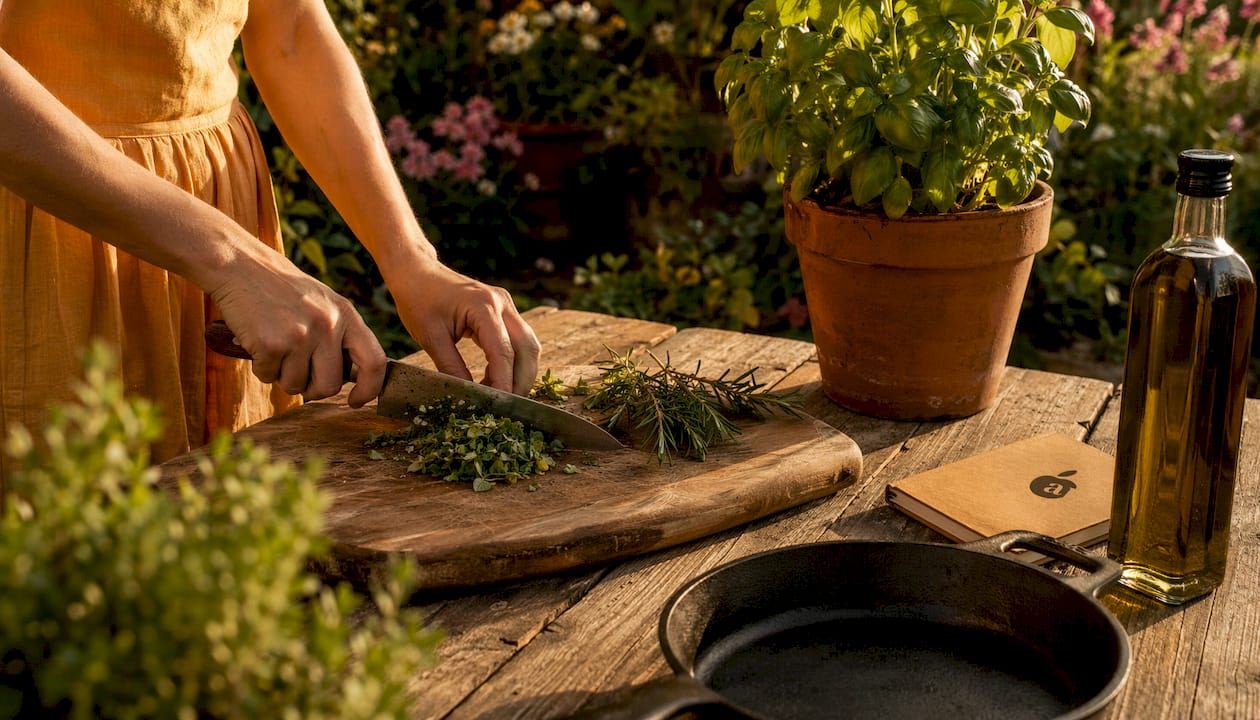
The simplest approach is to separate culinary herbs from therapeutic supplements. Turmeric, ginger, rosemary, oregano, and garlic all work well as daily food ingredients, delivering consistent low-level exposure to their active compounds without requiring capsules. The remaining five, particularly Astragalus, Rhodiola, burdock root, celery seed, and sea kelp, are harder to consume in meaningful doses through food alone and are better suited to standardised extract supplements.
Timing matters more than most people realise. Fat-soluble compounds like curcumin absorb best with meals containing healthy fats. Rhodiola is best taken in the morning or early afternoon because its stimulating effect on mitochondrial energy can interfere with sleep if taken in the evening. Astragalus and burdock root are generally well tolerated at any time of day.
- Morning: Rhodiola rosea (200–400mg with breakfast), Astragalus (500mg with food)
- With lunch or dinner: turmeric with black pepper and fat, garlic in cooking, rosemary and oregano on food
- Evening: burdock root, celery seed, sea kelp (all gentle enough for evening use)
Pro Tip: Pair curcumin supplements with a meal containing olive oil or avocado, and always choose a product that includes piperine. Without fat and piperine, most of the curcumin passes through unabsorbed. Understanding natural supplement absorption can make a real difference to the results you get.
Sourcing quality herbs in the UK requires attention to labelling. Look for supplements that state the extract ratio or standardised percentage of active compounds, such as “standardised to 95% curcuminoids” or “3% rosavins.” Products with no fillers, no binders, and no synthetic additives deliver the active compound without dilution. Vitaminb17 produces standardised single-ingredient extracts with no added fillers, which is exactly the format that delivers reliable cellular support.
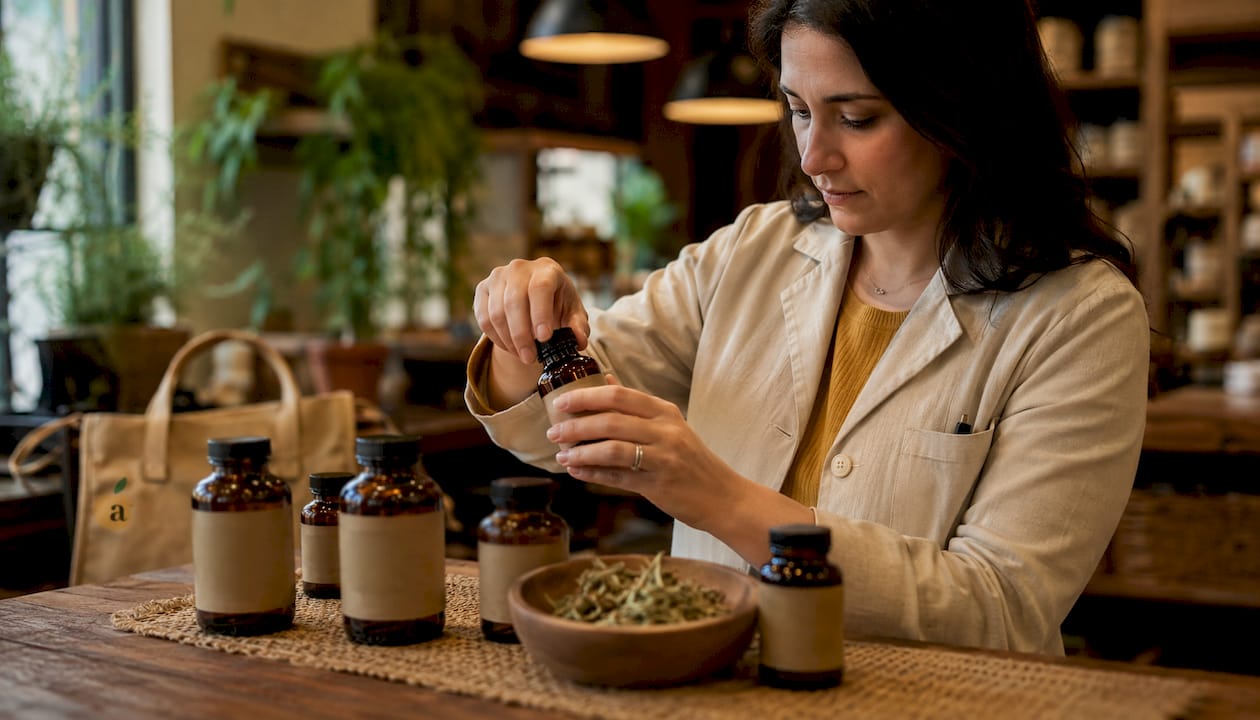
For whole-food approaches, UK-based health food retailers and online suppliers stock dried organic rosemary, oregano, turmeric root, and ginger root year-round. Fresh burdock root (also sold as gobo in Japanese food shops) is available in larger cities. Sea kelp flakes from British coastal suppliers offer a food-grade iodine source without the concentration risk of high-dose supplements.
When combining multiple herbs, building tolerance gradually is sensible practice. Introduce one new herb at a time over two to four weeks, monitor for any digestive sensitivity or interaction effects, and then add the next. This approach also makes it easier to identify which herb is producing which effect.
What does the latest research say about herbs, cellular longevity, and regeneration?
The most significant recent development in herbal cellular research is the growing understanding of senolytics: compounds that selectively clear senescent cells, the dysfunctional “zombie cells” that accumulate with age and drive chronic inflammation. Fisetin, a flavonoid found in strawberries and apples, shows superior senolytic activity compared to other flavonoids, selectively eliminating senescent cells and reducing neuroinflammation markers in laboratory models.
Quercetin, found in onions, capers, and kale, works alongside fisetin through a complementary mechanism. Both compounds have better cellular uptake when consumed through whole foods rather than isolated supplements, partly because whole-food matrices contain absorption co-factors that capsule forms lack. Bioavailability improves further when these flavonoids are consumed with dietary fat and piperine, the active compound in black pepper.
| Compound | Source | Mechanism | Observed benefit |
|---|---|---|---|
| Fisetin | Strawberries, apples | Senolytic, neuroprotective | Reduces senescence markers, extends lifespan in models |
| Quercetin | Onions, kale, capers | Senolytic, anti-inflammatory | Clears senescent cells, reduces oxidative stress |
| Curcumin | Turmeric | Mitochondrial protection, NRF2 | Preserves cellular energy production |
| Rosavins | Rhodiola rosea | Mitochondrial oxygen use | Counters age-related energy decline |
| Astragalosides | Astragalus membranaceus | Telomerase activation, mitophagy | Reduces vascular and liver cell senescence |
The adaptogen research is equally compelling. As mitochondrial function declines with age, adaptogens like Rhodiola rosea enhance oxygen usage and stabilise energy production, helping counter age-related fatigue at the cellular level. This is not a temporary stimulant effect. Consistent use of rosavins and salidroside supports the mitochondrial machinery itself, which is a fundamentally different mechanism from caffeine or other energy compounds.
Research highlight: Longevity research consistently points to consistent, lifelong intake of active compounds like fisetin and quercetin from whole foods as the most reliable way to maintain cellular renewal and suppress senescent cell accumulation over time.
The synergy between whole-food consumption and isolated supplements is an active area of debate. Whole foods deliver co-factors, fibre, and secondary metabolites that enhance the primary compound’s activity. Isolated supplements offer standardised, predictable dosing. The most evidence-backed approach combines both: use culinary herbs daily for broad-spectrum phytochemical exposure, and use standardised extracts for compounds like astragalosides or rosavins that are difficult to obtain in therapeutic quantities through diet alone. Vitaminb17’s high-potency plant extracts are designed precisely for this purpose, delivering concentrated active compounds without the guesswork of variable food sources.
Choosing quality herbal supplements in the UK: what you need to know
Pure. Raw. No fillers. No binders. These are not marketing phrases. They are the criteria that separate a supplement that works from one that does not. Underdosed or adulterated herbal products are common in the UK market, and the difference between a 4,500mg burdock root extract and a 200mg product padded with maltodextrin is the difference between a therapeutic dose and a placebo.

Vitaminb17 produces single-ingredient herbal extracts standardised for potency, with no synthetic additives. Whether you are starting with burdock root for liver cell support or Rhodiola rosea for mitochondrial energy, the range covers the most clinically relevant herbs in clean, concentrated forms. Check the buyer’s guide to underdosed supplements before purchasing any herbal product, and always verify the standardised extract percentage on the label.
Key takeaways
The most potent herbs for cellular health work through three core mechanisms: NRF2 pathway activation, mitochondrial support, and immune modulation, and combining culinary and supplemental forms delivers the broadest cellular benefit.
| Point | Details |
|---|---|
| NRF2 activation | Rosemary and oregano are among the strongest botanical NRF2 activators, triggering HO-1 and NQO1 enzyme production. |
| Mitochondrial support | Curcumin and Rhodiola rosea protect and enhance mitochondrial function, countering age-related cellular energy decline. |
| Cellular senescence | Astragalus membranaceus reduces senescence in vascular and liver cells via telomerase activation and Parkin-mediated mitophagy. |
| Absorption and bioavailability | Curcumin, fisetin, and quercetin absorb best with dietary fat and piperine; whole-food sources provide synergistic co-factors. |
| Supplement quality | Standardised extracts with no fillers deliver reliable active compound doses; always verify the standardised percentage on UK product labels. |


