

Stacking herbal supplements effectively is the intentional combination of herbs and nutrients to maximise benefits while minimising risks and unwanted interactions. The practice, sometimes called supplement stacking or phytonutrient layering in clinical nutrition circles, requires more than simply taking several capsules at once. Done well, it produces genuine herbal supplement synergy where each ingredient supports the others. Done carelessly, it creates additive risks that even experienced health-conscious individuals overlook. This guide gives you a clear, stepwise method to build a safe and effective herbal stack from the ground up.
What does it mean to stack herbal supplements effectively?
Stacking herbal supplements effectively means selecting, timing, and dosing multiple herbs and nutrients so they work together rather than against each other. The foundation always comes first. Recommended foundational supplements include vitamin D3, K2, omega-3s, and magnesium before you add any target-specific herbs. These cover widespread nutritional gaps and create a stable base for more targeted additions. Building on a weak foundation is the most common mistake beginners make.
The concept draws from both Eastern and Western traditions. Eastern herbal practice blends herbs for balance across body systems, while Western nutrition tends to isolate single nutrients for specific effects. Combined approaches increase complexity and require a full audit of everything you currently take before you add anything new. That audit is not optional. It is the starting point.

What are the essential safety principles when combining herbal supplements?
Safety is the non-negotiable first principle. A registered dietitian’s warning is clear: the natural label is not a guarantee of safety. Potent herbal supplements behave pharmacologically like drugs and require the same caution you would apply to a prescription.
The single most important rule is to introduce one new supplement at a time and wait 2–4 weeks before adding another. This window lets you observe any reactions, assess efficacy, and identify which ingredient is responsible if something changes. Adding three new herbs in one week makes it impossible to know what is working or what is causing a problem.
Additive risks are real and specific. Stacking blood-thinning herbs such as ginkgo, garlic, turmeric, and high-dose fish oil significantly increases the risk of internal bleeding and bruising, particularly when combined with anticoagulant medications. These herbs each have mild antiplatelet effects individually. Together, those effects multiply.
Two further risk categories deserve attention:
- Sedative stacking: Combining herbs such as valerian, CBD, and kava root can cause excessive drowsiness, impaired coordination, and respiratory depression in sensitive individuals.
- Stimulant stacking: Pairing green tea extract, guarana, and yohimbe can place significant strain on the cardiovascular system, raising heart rate and blood pressure beyond safe levels.
- Hepatic stress: Mixing herbs with additive liver stress potential, such as concentrated green tea extract and kava root, carries an emerging moderate risk. Liver health should be monitored when combining these ingredients.
- Proprietary blends: Many commercial blends hide actual dosages behind a single total weight figure. Proprietary blends can hide dosages, risking overdosing on active compounds without realising it.
“Potent herbal supplements behave pharmacologically like drugs. Treat them accordingly, check for interactions with medications and other herbs before you stack anything new.” — Formulate Health
Pro Tip: Keep a supplement diary from day one. Record the name, dose, timing, and any physical or mood changes you notice. This log becomes your most reliable safety tool.
How should timing and dosing work for maximum herbal supplement synergy?
Timing is where most people lose the benefit they paid for. Getting this right separates an effective herbal stack from an expensive habit with mixed results.
- Take fat-soluble vitamins with a fatty meal. Fat-soluble vitamins A, D, E, and K require dietary fat for absorption. Taking vitamin D3 or vitamin K2 on an empty stomach wastes a significant portion of the dose.
- Space competing minerals by at least 2 hours. Calcium, magnesium, and zinc share the same intestinal uptake pathways. Spacing minerals by 2 or more hours enhances bioavailability because they are no longer competing for the same transporters. Taking magnesium glycine and calcium carbonate together at breakfast is a common and costly error.
- Take stimulant herbs early in the day. Green tea extract, guarana, and ginseng taken after 2pm frequently disrupt sleep. Electrolytes and recovery-focused herbs work well post-exercise.
- Take sedative or calming herbs in the evening. Valerian root and passionflower are best taken 30–60 minutes before bed to align with their intended effect.
- Cycle your herbs to prevent habituation. Cycling supplements, for example 5 days on and 2 days off, or 8 weeks on and 3 weeks off, prevents receptor habituation and maintains efficacy over time. Adaptogens such as ashwagandha and rhodiola are particularly prone to diminishing returns without cycling.
Pro Tip: Use a weekly pill organiser or a supplement tracker app to maintain consistent doses and avoid accidental doubling up. Weekly organisers and tracker apps are a practical gold standard for anyone managing more than three supplements.
How to build, track, and adjust your herbal supplement stack step by step
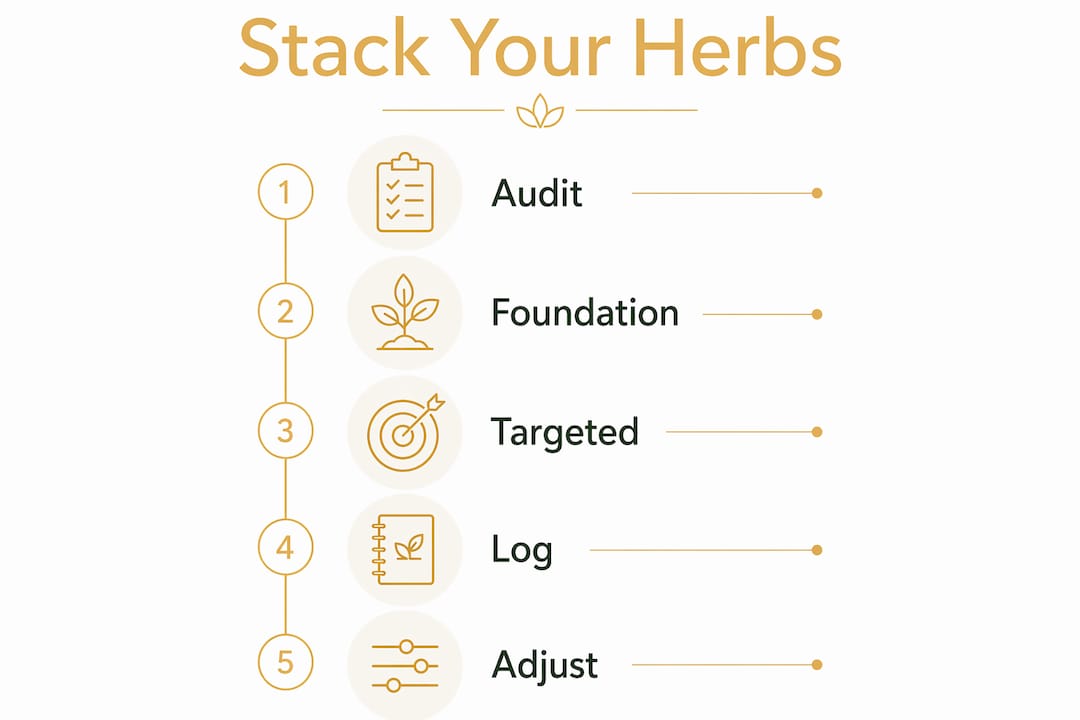
A structured approach removes guesswork and keeps your stack safe as it grows.
Step 1: Audit what you already take. List every supplement, medication, and fortified food in your current routine. Note the dose and timing of each. This baseline prevents accidental doubling of nutrients and flags potential interactions before they happen.
Step 2: Start with foundational supplements. Add vitamin D3, K2, omega-3s, and magnesium before any targeted herbs. These address the most common deficiencies and support the body systems that herbal extracts will later target.
Step 3: Add targeted herbs one at a time. Choose herbs based on a specific goal, whether that is immune support, digestion, or stress management. Introduce one herb, observe for 2–4 weeks, then decide whether to continue or adjust before adding the next.
Step 4: Log everything. Record dose, timing, food consumed alongside, and any changes in energy, sleep, digestion, or mood. Maintaining detailed logs of dosages and effects is the gold standard practice for safe, long-term stacking.
Step 5: Adjust and cycle. After 8 weeks, review your log. Remove anything that shows no benefit. Cycle herbs that show signs of reduced effect.
| Stage | Action | Purpose |
|---|---|---|
| Audit | List all current supplements and medications | Identify gaps and interaction risks |
| Foundation | Add D3, K2, omega-3, magnesium | Cover core deficiencies first |
| Targeted addition | Introduce one herb at a time, 2–4 week gaps | Isolate effects and reactions |
| Logging | Record dose, timing, and responses daily | Build evidence for adjustments |
| Cycling | Rotate or pause herbs every 5–8 weeks | Prevent tolerance and maintain efficacy |
Which herbal combinations should be avoided or used with caution?
Some combinations are genuinely high risk. Knowing them protects you before you make an expensive or dangerous mistake.
- Multiple blood-thinning herbs together: Ginkgo, garlic, turmeric, and high-dose fish oil each thin the blood mildly. Stacking two or more creates an additive antiplatelet effect that can cause bruising, prolonged bleeding from cuts, or internal bleeding. If you take warfarin or aspirin, this combination is particularly dangerous.
- Several sedatives at once: Valerian, kava root, and CBD taken together can produce excessive sedation. The combined effect is not simply additive. It can be disproportionately strong in some individuals.
- Multiple stimulants: Green tea extract, guarana, and yohimbe together raise the risk of palpitations, anxiety, and elevated blood pressure. Yohimbe in particular has a narrow therapeutic window.
- Hepatotoxic herbs in combination: Concentrated green tea extract and kava root both carry liver stress potential. Combining them increases that risk meaningfully.
“Simpler is safer. A stack of two or three well-chosen, single-ingredient supplements almost always outperforms a complex proprietary blend where you cannot verify what you are actually taking.” — Sanify Healthcare
Proprietary blends deserve special scepticism. Herbal extracts vary widely in potency, and blends that list only a combined weight give you no reliable way to know whether you are taking a therapeutic dose or an ineffective one. Single-ingredient supplements with standardised extract ratios, such as a 10:1 dandelion root extract, give you full control over what you consume.
How can you personalise your herbal stack for specific wellness goals?
Matching your stack to a clear goal produces better results than taking herbs because they are popular. The goal defines the combination.
- Energy and focus: Rhodiola rosea, ginseng, and B vitamins work well together. Rhodiola rosea is an adaptogen that supports stress resilience without stimulating the central nervous system directly. Pair it with a B-complex taken in the morning.
- Immune support: Elderberry, echinacea, and vitamin C form a well-studied combination. Avoid taking echinacea continuously for more than 8 weeks without a break.
- Digestion and liver support: Dandelion root extract and ginger root extract pair well for digestive support. Both are gentle and well-tolerated when taken at standardised doses.
- Relaxation and sleep: Valerian root and magnesium glycine taken 45 minutes before bed support sleep onset without the grogginess associated with pharmaceutical sleep aids.
- Hormonal balance: Fenugreek and ashwagandha are commonly combined for hormonal support. Cycle both on an 8-weeks-on, 3-weeks-off schedule to preserve their effects.
Consult a qualified herbalist or GP before stacking herbs if you take any prescription medication. This is not a precaution to dismiss. Drug-herb interactions are real, documented, and sometimes serious.
Key takeaways
Stacking herbal supplements effectively requires a foundation of safety, correct timing, and honest tracking before any targeted herb earns its place in your routine.
| Point | Details |
|---|---|
| Start with foundations | Add vitamin D3, K2, omega-3, and magnesium before any targeted herbs. |
| Introduce one herb at a time | Wait 2–4 weeks between additions to observe reactions and isolate effects. |
| Time supplements correctly | Space competing minerals by 2 or more hours and take fat-soluble vitamins with food containing fat. |
| Avoid high-risk combinations | Never stack multiple blood-thinning herbs, sedatives, or hepatotoxic herbs without professional guidance. |
| Cycle to maintain efficacy | Rotate herbs every 5–8 weeks to prevent tolerance and preserve their beneficial effects. |
What I have learned from years of watching people stack herbs badly
Most people who come to herbal stacking with genuine enthusiasm make the same mistake. They read about five impressive herbs, buy all five at once, and start taking them together on day one. Three weeks later they feel vaguely different but cannot tell you why, or they feel worse and have no idea which herb is responsible.
The single most valuable habit I have seen is the supplement diary. Not an app, not a spreadsheet. A physical notebook where you write the date, what you took, when you took it, and how you felt that evening. It sounds tedious. After six weeks it becomes your most reliable guide to what actually works for your body.
I am also sceptical of complexity for its own sake. A two-herb stack that you understand completely outperforms a seven-herb stack that you are guessing at. The people I have seen get the most consistent benefit from herbal supplements are the ones who keep it simple, cycle their herbs honestly, and do not add something new just because it is trending.
One thing that rarely gets said plainly: quality matters more than quantity. A single-ingredient extract with a verified standardised ratio, no fillers, and no binders will outperform a proprietary blend every time. You cannot personalise a stack you cannot measure.
— Andy
Pure, potent herbs to build your stack with confidence
Vitaminb17 produces single-ingredient herbal extracts with no fillers, no binders, and no synthetic additives. Every product uses standardised extract ratios so you know exactly what you are taking. That matters when you are building a stack where dose control is everything.

Start with Dandelion Root Capsules for digestive and liver support, or explore Burdock Root Capsules as a gentle addition to a detox-focused stack. For those building an energy or hormonal support routine, Fenugreek Capsules offer a clean 10:1 extract with consistent potency. Browse the full range at Vitaminb17 and build your stack on ingredients you can actually trust.
FAQ
What does stacking herbal supplements mean?
Stacking herbal supplements means taking two or more herbs or nutrients together in a planned way to produce combined benefits that exceed what each would achieve alone.
How many supplements can I safely stack at once?
Most practitioners recommend starting with no more than three supplements and adding one at a time with a 2–4 week observation gap between each new addition.
Which herbs should never be combined?
Ginkgo, garlic, turmeric, and high-dose fish oil should not be stacked together due to additive blood-thinning effects. Kava root and concentrated green tea extract should not be combined due to shared liver stress potential.
Do I need to cycle herbal supplements?
Cycling is strongly recommended for adaptogens and stimulant herbs. A protocol of 5 days on and 2 days off, or 8 weeks on and 3 weeks off, prevents tolerance and maintains the herb’s effectiveness over time.
When is the best time to take herbal supplements?
Fat-soluble vitamins are best taken with a meal containing fat. Stimulant herbs should be taken in the morning. Calming or sleep-supporting herbs work best taken 30–60 minutes before bed.


