

Integrating herbal supplements into meal prep is defined as the practice of combining standardised herbal extracts, powders, or tinctures with planned meals to deliver consistent, measurable health benefits. Done correctly, it removes the guesswork from daily supplementation and turns routine cooking into a functional health habit. The key variables are supplement form, absorption timing, and storage. Get those three right and you will notice the difference within weeks. Vitaminb17’s range of pure, filler-free extracts is built precisely for this kind of structured, food-paired approach.
Which herbal supplements and forms work best in meal prep?
The supplement form you choose determines how easily it fits into a meal prep routine. Capsules, powders, tinctures, and dried herbs each behave differently in the kitchen and in the body.
| Form | Stability | Storage | Meal prep compatibility |
|---|---|---|---|
| Capsules | High | Cool, dry place | Take alongside prepped meals; no cooking required |
| Powders | Medium | Airtight container | Blend into smoothies, soups, or sauces |
| Tinctures (alcohol) | Very high | Amber bottle, cool place | Add to dressings, marinades, or warm water |
| Tinctures (glycerin) | High (1–2 years) | Sealed bottle | Suitable for those avoiding alcohol |
| Dried herbs | High | Sealed jar, away from light | Best for multi-day cooking and reheating |
| Fresh herbs | Low | Refrigerated, separate | Use same day or within 24 hours |
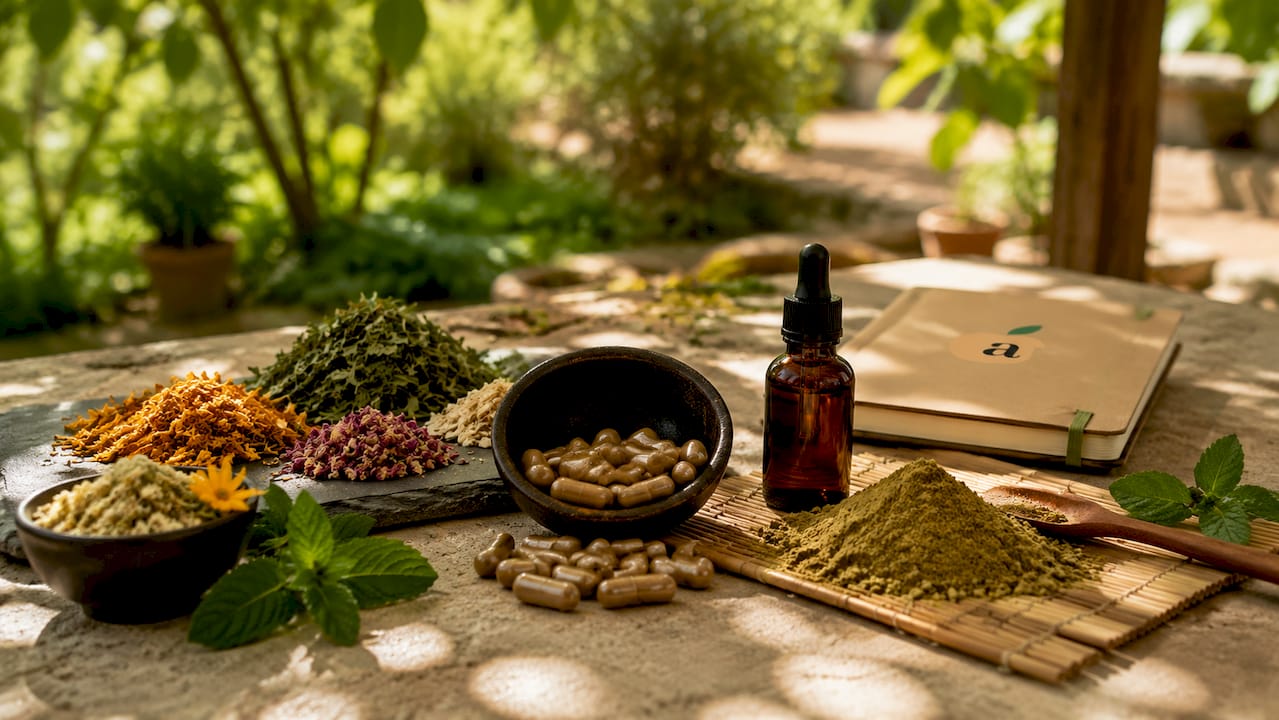
Dried herbs provide superior stability and flavour consistency over repeated reheating compared to fresh herbs. That makes them the practical choice for Sunday batch cooking that feeds you through thursday.
Tinctures offer the longest shelf life when alcohol-based. Alcohol-based tinctures store well in amber bottles and maintain potency for years. Glycerin-based versions last 1–2 years and suit people who prefer to avoid alcohol in their food.
Capsules are the simplest option for meal prep. You do not cook with them. You simply take them at the same time you eat your prepped meal, which keeps dosing precise and effortless.
Pro Tip: If you use powders in batch sauces or soups, add them at the end of cooking. Heat degrades some active compounds, particularly those in delicate botanical extracts.
How to time herbal supplements with meals for maximum absorption?
Timing is not optional. It directly affects how much of an active compound your body actually uses. The core principle is simple: fat-soluble compounds need fat, and water-soluble compounds need water.
Fat-soluble herbal supplements like curcumin must be taken with fat-containing meals for optimal absorption. Curcumin at 500–1,000mg of 95% curcuminoid extract, paired with 5–10mg piperine, absorbs best alongside dietary fats. That means your turmeric capsule belongs with lunch, not on an empty stomach at 7am.
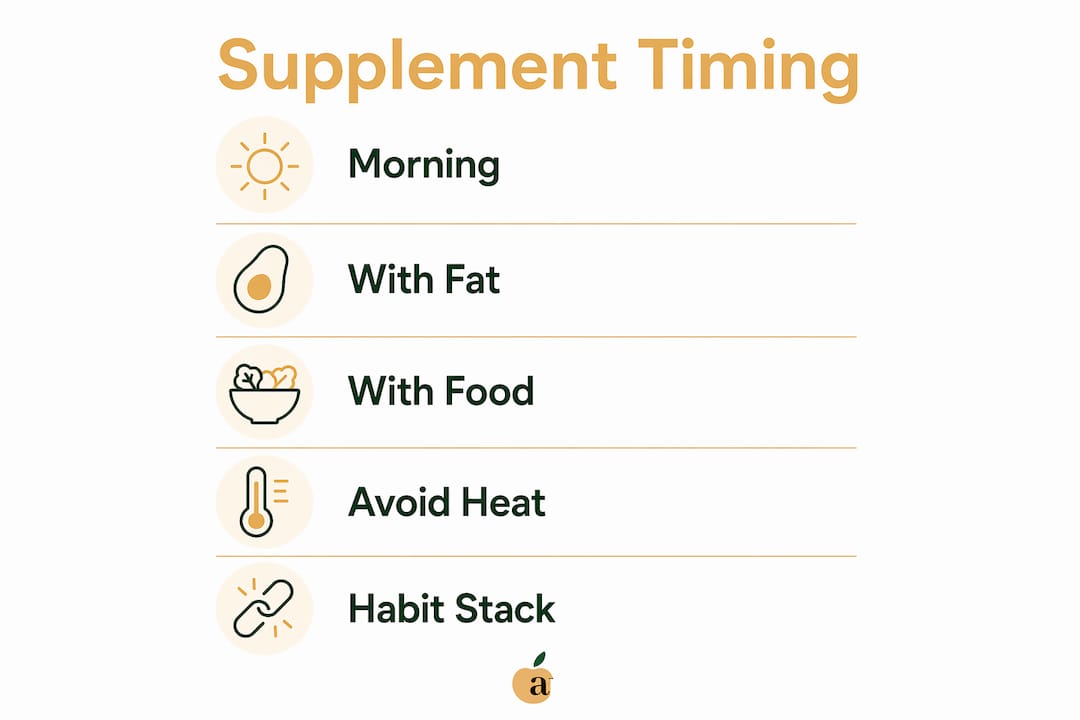
Fat-soluble compounds absorb best with foods like avocado, salmon, or walnuts. Build those foods into your meal prep and your supplements work harder without any extra effort.
Practical timing rules for meal-paired supplementation:
- Morning adaptogens (ashwagandha, rhodiola): take with breakfast, ideally with a meal containing healthy fats or protein
- Digestive herbs (ginger, dandelion root): take 15–20 minutes before a main meal to prime digestion
- Anti-inflammatory extracts (curcumin, boswellia): take with your largest fat-containing meal of the day
- Water-soluble herbs (nettle, peppermint): take with any meal or in herbal teas between meals
- Calcium carbonate and multivitamins: taking with food reduces side effects and improves uptake significantly
Linking supplement intake to meals improves adherence and clinical outcomes. This is called habit stacking. You attach a new behaviour (taking a supplement) to an existing one (eating breakfast). Read more about this approach in Vitaminb17’s guide on stacking herbal supplements effectively.
Pro Tip: If a supplement causes nausea on an empty stomach, always pair it with food. Even a small snack containing fat or protein is enough to reduce gastrointestinal discomfort for most herbal extracts.
Practical herbal supplement recipes and meal prep methods
The most effective herbal meal planning combines DIY preparations with ready-made extracts. Here are four methods that work reliably across a full week of meal prep.
- Fire cider tonic: Combine apple cider vinegar, horseradish, ginger, garlic, onion, and chilli in a glass jar. Seal and leave to macerate for 4–6 weeks, shaking daily. Strain and store in an amber bottle. Use 1 tablespoon per day as a tonic, or add to salad dressings and marinades throughout the week.
- Herbal smoothie base: Blend a measured dose of powdered adaptogen (ashwagandha or maca) into a smoothie with nut butter or avocado. The fat content supports absorption of fat-soluble compounds. Prep five portions on Sunday and refrigerate.
- Chimichurri herb sauce: Blend fresh parsley, oregano, garlic, red wine vinegar, and olive oil. Red wine vinegar preserves fresh herbs in sauce for up to 7 days. Lemon juice-based versions oxidise within 24–48 hours, so vinegar is the better choice for multi-day prep.
- Herbal gummies or infused sauces: Add a measured liquid herbal extract to a batch recipe. Precise dosing prevents over- or under-dosing in herbal gummies or sauces. Calculate the dose per serving based on total batch volume before you start.
| Recipe | Prep time | Storage | Shelf life |
|---|---|---|---|
| Fire cider | 20 min + 4–6 weeks maceration | Amber bottle, cool | Years (alcohol base) |
| Herbal smoothie base | 15 min | Refrigerated, sealed | 3–4 days |
| Chimichurri herb sauce | 10 min | Airtight jar, refrigerated | Up to 7 days |
| Herbal gummies | 30 min | Refrigerated, sealed | 5–7 days |
For readers who want to pair these recipes with an anti-inflammatory meal plan, combining herb-forward sauces with whole food bases produces the best results.
How to store and preserve herbal supplement-enriched meal prep?
Storage determines whether your herbal meal prep retains potency or becomes a waste of time and money. The rules differ by preparation type.
Vinegar-based herb sauces like chimichurri last up to 7 days refrigerated. Lemon-based versions degrade within 24–48 hours. Always choose vinegar as your acid base when preparing herb sauces for the week ahead.
Store ingredients separately in airtight containers for up to 4 days to retain flavour and freshness. Fresh herbs wilt and lose their volatile oils quickly when mixed with wet ingredients. Keep them separate until serving.
Storage do’s and don’ts for herbal meal prep:
- Do store tinctures in amber glass bottles away from direct light
- Do use airtight glass containers for herb powders and dried herbs
- Do label every container with the preparation date
- Do refrigerate herb sauces immediately after preparation
- Don’t store fresh herbs in the same container as cooked food
- Don’t use plastic containers for alcohol-based tinctures; alcohol leaches compounds from plastic
- Don’t freeze herb sauces made with fresh garlic; the texture and flavour degrade significantly
- Don’t leave powdered supplements in warm, humid environments; moisture reduces potency
Pro Tip: Glass mason jars with rubber-sealed lids are the best all-round container for herbal meal prep. They are non-reactive, airtight, and easy to label. Invest in a set of uniform sizes and your prep will be faster and more consistent every week.
What are common challenges when adding herbal supplements to meals?
The three most common problems are dosing errors, strong flavours, and inconsistent routines. Each has a practical fix.
Dosing precision is the hardest challenge in DIY herbal food preparations. When you add a liquid extract to a batch sauce, the dose per serving depends entirely on how accurately you measure and how evenly you distribute the extract through the batch. Use a digital kitchen scale and calculate dose per serving before cooking, not after.
Bitterness and strong flavours put people off quickly. Herbs like dandelion root, burdock, and turmeric carry strong, earthy notes that clash with delicate dishes. Pair bitter herbs with bold flavours: roasted garlic, miso, tamari, or smoked paprika. Capsule forms from Vitaminb17 sidestep this problem entirely, delivering the extract without any flavour impact.
Routine consistency is where most people fail. They prep well for two weeks, then life gets busy and the habit collapses. Practical troubleshooting steps:
- Attach supplement intake to a meal you never skip (most people never skip breakfast)
- Prep your supplements at the same time as your food, not separately
- Keep capsules or tinctures on the kitchen counter, not hidden in a cupboard
- Plan maceration times for tinctures in advance; fire cider needs 4 weeks, so start it a month before you need it
- Review your morning wellness routine monthly and adjust for seasons and lifestyle changes
Balancing flavours in herb-rich sauces also requires attention to oxidation. Add antioxidant-rich oils like extra virgin olive oil to slow degradation. Seal containers tightly and minimise air exposure each time you open them.
Key takeaways
Integrating herbal supplements into meal prep works best when you match the supplement form to your cooking method, time intake with the right macronutrients, and store preparations correctly to preserve potency.
| Point | Details |
|---|---|
| Match form to method | Use dried herbs for batch cooking, capsules for precision dosing, and tinctures for long shelf life. |
| Time fat-soluble herbs with fat | Curcumin and similar extracts absorb best alongside avocado, salmon, or walnuts. |
| Use vinegar-based herb sauces | Red wine vinegar preserves fresh herbs in sauce for up to 7 days, far longer than lemon juice. |
| Stack supplements with meals | Linking supplement intake to existing meal habits improves consistency and clinical outcomes. |
| Store in glass, label everything | Airtight glass containers protect potency; labels prevent dosing errors across a week of prep. |
What I have learned from years of herbal meal prep
The single biggest mistake people make is treating herbal supplements as an afterthought. They cook their meals, plate up, and then remember to take a capsule. That works, but it misses the real opportunity.
When you build supplements into the meal prep process itself, something shifts. You start thinking about what each meal is actually doing for you. A chimichurri sauce is not just a condiment. It is a delivery mechanism for fresh oregano, parsley, and garlic, all of which carry genuine functional value. That mindset change is what makes the habit stick.
The sensory side matters more than most guides admit. If your herbal prep tastes good, you will do it every week. If it tastes medicinal and unpleasant, you will stop within a month. Spend time on flavour balance. Pair bitter extracts with bold, savoury bases. Use vinegar-preserved sauces because they genuinely taste better after a day in the fridge.
Cost is also worth addressing directly. DIY fire cider costs a fraction of buying bottled herbal tonics. A batch of chimichurri with fresh herbs costs very little and lasts a week. Capsule supplements from a quality source like Vitaminb17 cost less per dose than most café coffees. The economics of herbal meal prep are firmly in your favour.
My honest advice: start with one supplement, one meal, and one week. Do not overhaul everything at once. Attach your chosen supplement to the meal you prep most reliably. Once that feels automatic, add a second. Patience here is not a weakness. It is the method.
— Jade
Vitaminb17’s guides and supplements for your meal prep
Vitaminb17 produces pure, raw herbal extracts with no fillers, no binders, and no synthetic additives. Every product delivers a standardised dose, which makes meal-paired supplementation straightforward and reliable.

If you are new to structured herbal supplementation, start with Vitaminb17’s guide on maximising natural absorption to understand which compounds need food and which do not. For those already building a routine, the guide on recognising underdosed supplements will help you audit what you are already taking. Products like Ginger Root Extract Capsules 8000mg and Burdock Root Capsules are built for exactly this kind of daily, food-paired use. Pure. Strong. No compromise.
FAQ
What is the best supplement form for meal prep?
Dried herbs and capsules are the most practical forms for meal prep. Dried herbs offer stability across multi-day cooking, while capsules deliver precise doses without affecting flavour.
How do I incorporate herbal supplements into meal prep without affecting taste?
Use capsule or tablet forms alongside meals to avoid flavour interference. For powders and tinctures, pair them with bold-flavoured dishes like curries, marinades, or herb sauces where the herbal notes blend naturally.
How long does homemade fire cider last?
Alcohol-based fire cider stored in an amber bottle lasts for years. It requires 4–6 weeks of maceration before use, so plan preparation well in advance.
Should I take herbal supplements before or after meals?
It depends on the herb. Fat-soluble extracts like curcumin absorb best taken with a fat-containing meal. Digestive herbs like ginger work better taken 15–20 minutes before eating.
How do I avoid dosing errors when adding extracts to batch recipes?
Calculate the total dose for the batch first, then divide by the number of servings. Precise dosing in batch preparations prevents both over-dosing and under-dosing when extracts are added to sauces or gummies.


