

Which herbal extracts genuinely support blood health?
The strongest plant-based compounds for blood health include resveratrol, beetroot juice, bergamot, barberry, pycnogenol, white mulberry (Morus alba L.), garlic, ginger, and turmeric. Each works through distinct mechanisms such as lowering blood pressure, improving vascular function, reducing platelet aggregation, or supporting natural detoxification. A meta-analysis of 31 randomised controlled trials found an overall effect size of d=1.45 (p<0.05) for systolic blood pressure reduction across these herbal supplements, with pycnogenol producing the strongest individual result.
These are not folk remedies dressed up in modern language. The clinical evidence is specific, dosage-dependent, and growing. For health-conscious readers in the UK, the practical question is not whether these extracts work, but which ones to prioritise, how to take them safely, and where to source quality products.
Key herbal extracts and their primary blood health actions:
- Pycnogenol (French maritime pine bark): strongest effect on systolic blood pressure in meta-analysis; requires at least 2 months of consistent use
- Bergamot extract: significant systolic blood pressure reduction (effect size d=1.73); all reviewed studies showed positive results
- Beetroot juice: rich in dietary nitrates; most effective at 250–500 ml daily over at least 6 weeks
- Resveratrol: modest systolic effect at standard doses; higher doses and longer duration improve outcomes
- Barberry: contains berberine, which supports blood pressure and lipid regulation
- White mulberry (Morus alba L.): improves vascular reactivity and reduces platelet aggregation via nitric oxide activity
- Garlic: allicin content relaxes blood vessels; clinical reviews show reductions in systolic and diastolic blood pressure
- Ginger: anti-inflammatory and blood pressure-lowering properties; also antimicrobial
- Turmeric: curcumin supports vascular function and reduces oxidative stress in blood vessels
What does the clinical research say about herbal extracts and blood health?
The evidence base for plant-based blood health support has strengthened considerably over the past decade. The 31-RCT meta-analysis referenced above is the most comprehensive review of these supplements to date, covering 1,250 participants across studies published between 2011 and 2021.
Pycnogenol showed the strongest effect for systolic blood pressure reduction in studies lasting at least 2 months. Bergamot also showed consistent positive effects across reviewed trials. Beetroot juice showed meaningful results in some studies, while others with older participants or short durations showed less effect.

| Supplement | Effect on systolic BP | Notes |
|---|---|---|
| Pycnogenol | Strong effect | Requires 2+ months |
| Bergamot | Consistent positive effect | Across all trials |
| Beetroot juice | Effect varies | Dose and age-dependent |
| Resveratrol | Modest effect | Higher doses and longer duration suggested |
| Barberry | Positive (limited data) | Limited studies on SBP reduction |
White mulberry extract offers a different mechanism. Experimental models show it partially prevents arterial hypertension by enhancing nitric oxide activity, reducing vasoconstriction, and lowering platelet aggregation. It did not fully normalise vascular function compared to the pharmaceutical captopril, but the improvements were clinically meaningful.
What the research consistently shows:
- Dosage and duration are the two biggest variables in clinical outcomes
- Participants under 65 tend to respond more strongly to beetroot juice and resveratrol
- Bergamot and pycnogenol show the most reliable results across different study designs
- Cherry juice, though not always grouped with the above, also reduces systolic blood pressure and LDL cholesterol in reviewed trials
The high-potency plant extracts principle matters here: standardised extracts with defined bioactive compound concentrations produce more predictable results than whole-food equivalents at variable concentrations.
Common herbs and natural foods that support blood cleansing and circulation
Beyond the clinically trialled supplements above, a broader set of herbs and foods contributes to blood cleansing, detoxification, and circulation support through well-understood mechanisms.
Garlic is one of the most studied. Its active compound allicin relaxes blood vessel walls and aids blood flow. A review of 12 studies in over 550 people with hypertension found garlic supplementation may reduce systolic blood pressure by 8.3 mm Hg and diastolic by 5.5 mm Hg. Raw garlic, aged garlic extract, and standardised capsules all deliver allicin, though bioavailability varies by form.
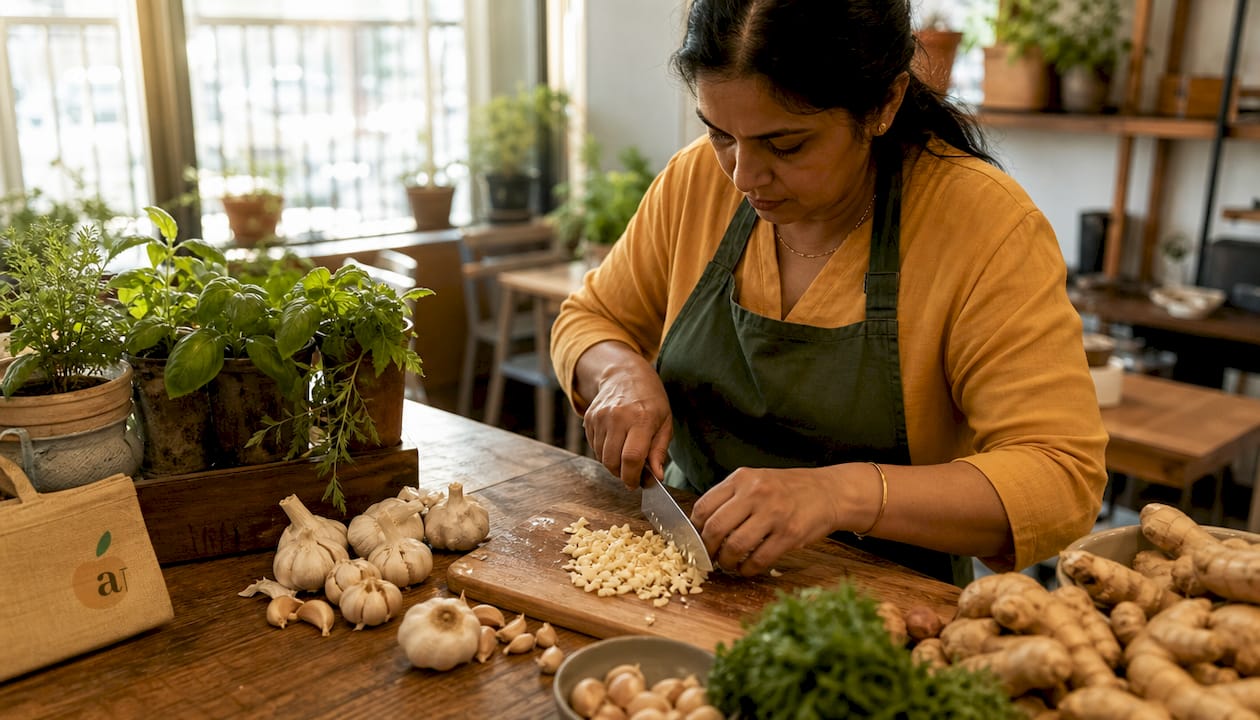
Ginger works through multiple pathways. It reduces inflammation in blood vessel walls, lowers blood pressure, and provides antimicrobial protection. Reviews indicate ginger reduces blood pressure and offers additional anti-ulcer benefits, making it one of the more versatile herbs in a blood health regimen.
Turmeric (curcumin) targets oxidative stress directly. Curcumin inhibits the oxidation of LDL cholesterol and reduces inflammatory markers associated with arterial stiffness. Absorption is the main challenge with turmeric, addressed in the section below.
Other herbs with documented blood-supportive properties include:
- Basil: contains eugenol, which acts as a natural calcium channel blocker, relaxing blood vessels
- Parsley: rich in nitrates and vitamin K, supporting vascular tone
- Celery seed: contains phthalides that relax artery walls and reduce blood pressure
- Bacopa monnieri: supports cerebral blood flow and reduces oxidative damage in blood vessels
- Chinese cat’s claw (Uncaria rhynchophylla): used in traditional Chinese medicine to lower blood pressure via alkaloid compounds
Beetroot juice and cherry juice deserve mention as whole foods with strong clinical backing. Both are rich in antioxidants and flavonoids. Cherry juice specifically reduces systolic blood pressure and LDL cholesterol, giving it a dual cardioprotective role.
Pro Tip: Pair garlic and ginger in the same meal or supplement stack. Their mechanisms complement each other: garlic relaxes vessel walls while ginger reduces the inflammation that stiffens them. For a guide on combining extracts without negative interactions, see how to stack herbal supplements.
Safety considerations when using herbal extracts for blood health
Herbal extracts are not risk-free, particularly for anyone already taking pharmaceutical medications. The most common and clinically significant concern is herb-drug interaction.
Clinical experts are clear: garlic, ginger, and several other blood-active herbs interact with pharmaceutical blood thinners such as warfarin and antiplatelet drugs like aspirin. Taking both simultaneously can amplify anticoagulant effects and increase bleeding risk. Blood pressure medications present a similar concern: combining antihypertensive drugs with pycnogenol or bergamot may cause blood pressure to drop further than intended.
Common safety considerations:
- Always consult a GP or pharmacist before starting any herbal supplement if you take prescription medications
- Garlic and ginger both potentiate blood-thinning effects; use with caution alongside warfarin, clopidogrel, or aspirin
- Digestive disturbances (nausea, loose stools) are the most frequently reported side effects across the supplements reviewed in the 31-RCT meta-analysis
- Yarrow, a traditional blood regulator, requires precise dosing because its active oils change with preparation time; incorrect steeping can alter its effect from staunching bleeding to stimulating blood flow
- Allergy risk is real with plant-derived extracts, particularly for those sensitive to the Asteraceae family (which includes yarrow, chamomile, and echinacea)
Herbal remedies for blood health perform best alongside heart-healthy diets and physical activity. Herbs alone do not reverse chronic vascular conditions. A Mediterranean-style diet, regular moderate exercise, and reduced sodium intake remain the foundation; herbal extracts add a measurable, evidence-backed layer on top.
For readers new to potent herbal extracts, starting with lower doses and building gradually is the safest approach. The guide to building tolerance safely covers this process in practical terms.
Frequently asked safety questions:
Can I take garlic supplements with blood pressure medication?
Garlic can amplify the effects of antihypertensive drugs. Speak to your GP before combining them, as the combined effect may lower blood pressure more than intended.
Are herbal blood health supplements regulated in the UK?
Herbal supplements sold in the UK must comply with the Traditional Herbal Registration (THR) scheme or hold a medicines licence. Always buy from suppliers who meet these standards and display the THR mark where applicable.
How long before herbal extracts show results for blood health?
Clinical studies suggest a minimum of 2–6 weeks for measurable effects, with pycnogenol and bergamot requiring at least 2 months for the strongest outcomes.
How to get more from your herbal supplements through better absorption
The best herbal extract in the world delivers limited benefit if your body cannot absorb it properly. Bioavailability is where many people lose the gains they expect from plant-based blood health support.
Folate is a useful illustration. The body absorbs up to 85% of supplemental folate compared to roughly 50% from food sources. That gap matters for red blood cell production and DNA synthesis, both of which depend on adequate folate. Choosing a supplement form over food alone can meaningfully improve delivery of this key nutrient.
Iron absorption follows different rules. Non-heme iron (the form found in plant sources and most supplements) is far more sensitive to what you eat alongside it. Calcium and phosphate in cow’s milk and soy milk inhibit non-heme iron absorption, so avoiding these drinks during meals or when taking iron-containing supplements improves uptake. On the other side, vitamin C significantly enhances iron absorption by converting non-heme iron into a form the gut absorbs more readily.
Practical absorption strategies:
- Take iron supplements with a glass of orange juice or alongside vitamin C-rich foods such as kiwi, red pepper, or broccoli
- Avoid milk, soy milk, and calcium supplements within 1–2 hours of taking iron or iron-containing herbal blends
- Turmeric (curcumin) absorbs poorly on its own; taking it with black pepper extract (piperine) or a fat-containing meal increases bioavailability
- Resveratrol absorbs better when taken with food rather than on an empty stomach
- Fat-soluble compounds in herbal extracts (including some in garlic and ginger) absorb more efficiently alongside a meal containing healthy fats
Pro Tip: Time your herbal supplements around meals deliberately. Fat-soluble extracts go with food; iron-based supplements go with vitamin C and away from dairy. For a full breakdown of timing strategies, the natural supplement absorption guide covers the specifics in detail.
Understanding how digestion affects nutrient uptake is equally important. Stomach acid levels, gut transit time, and the presence of competing minerals all influence how much of an active compound actually reaches your bloodstream.
Vitaminb17 offers pure, potent herbal extracts with no fillers
If you have read this far, you already know that dosage, purity, and bioavailability determine whether a herbal supplement actually works. That is exactly where Vitaminb17 is built differently.

No fillers. No binders. No synthetic additives. Vitaminb17 products use standardised, high-potency extracts so you get a consistent, measurable dose every time. The Burdock Root Capsules at 4,500mg deliver a concentrated extract supporting blood detoxification and circulation, in a clean capsule format that fits any daily routine. Every product is built for people who want real results from real ingredients.
Underdosed supplements are one of the most common reasons herbal regimens fail. Before you buy, read the buyer’s guide to identifying underdosed supplements to know exactly what to look for on a label.
Key takeaways
Pycnogenol, bergamot, and garlic are the most clinically supported herbal extracts for blood health, with effect sizes and dosage thresholds confirmed across multiple randomised controlled trials.
| Point | Details |
|---|---|
| Pycnogenol leads on blood pressure | Effect size d=1.45 for systolic BP; requires at least 2 months of consistent use |
| Bergamot is the most consistent | All reviewed trials showed positive systolic blood pressure reduction (d=1.73). |
| Garlic reduces BP measurably | Clinical reviews show reductions of 8.3 mm Hg systolic and 5.5 mm Hg diastolic. |
| Absorption determines results | Vitamin C boosts iron uptake; dairy inhibits it; fat-soluble extracts need food. |
| Vitaminb17 for clean, potent extracts | Standardised, filler-free capsules including Burdock Root at 4,500mg for blood detox support. |


