

Fenugreek (Trigonella foenum-graecum) is a Mediterranean herb whose seeds and leaves have been used as food, spice, and traditional remedy for thousands of years. In culinary amounts, it is safe for most people. As a concentrated supplement, it carries real risks: drug interactions, allergy cross-reactivity, and specific warnings for pregnancy. Here is what you need to know before you cook with it or buy a capsule.
Bottom line, fast:
- Safe in food amounts for most healthy adults
- Supplements may offer modest benefits for blood sugar and lactation, but evidence is mixed
- Clinically meaningful interactions exist with anticoagulants and antidiabetic drugs
- Avoid supplements entirely during pregnancy
- If you take any regular medication, speak to your GP before starting fenugreek capsules
Table of Contents
- What fenugreek is and which parts people actually use
- How fenugreek tastes and how to cook with it
- What the nutritional profile of fenugreek seeds tells you
- Traditional uses across Ayurveda, Middle Eastern and North African medicine
- What the research actually says about fenugreek health benefits
- How fenugreek might work: the active compounds
- Forms available, how to take fenugreek, and research-based doses
- Safety, side effects and drug interactions you need to know
- Where the evidence is strong, where it is weak, and what is still missing
- Where to buy fenugreek in the UK and how to store it properly
- Who benefits from fenugreek and who should avoid it
- Key takeaways
- The honest truth about fenugreek supplements
- Vitaminb17 fenugreek capsules: pure extract, no fillers
- Useful sources and further reading
What fenugreek is and which parts people actually use
Trigonella foenum-graecum belongs to the legume family (Fabaceae). It grows across the Mediterranean, South Asia, and the Middle East, and has been cultivated for at least 4,000 years as both a food crop and a medicinal plant. In South Asian cooking it is called methi; in Arabic-speaking regions it is known as hulba.
Three distinct parts reach the kitchen and the supplement shelf:
- Seeds (the most common form): small, hard, yellowish-brown, and intensely aromatic when roasted
- Leaves (fresh or dried): milder, slightly bitter, used as a vegetable or herb in Indian cooking
- Standardised extracts: concentrated preparations made from seeds, standardised to a specific percentage of saponins or diosgenin for consistent dosing
The seeds’ characteristic maple-like smell comes from a single volatile compound called sotolon. That aroma is the thread connecting culinary fenugreek to its supplement forms, and it matters practically: sotolon is excreted in sweat, urine, and breast milk, so regular high-dose use changes how you smell.
How fenugreek tastes and how to cook with it
Sotolon gives fenugreek its warm, maple-like, slightly bitter flavour. Raw seeds are quite bitter; roasting softens that bitterness and deepens the nutty, caramel-like aroma. Dried leaves (kasuri methi) are gentler and more herbal, with less of the maple intensity.
Regional uses:
- South Asia: seeds in panch phoron (Bengali five-spice blend) and sambar powder; dried leaves in aloo methi (potato and fenugreek curry) and methi paratha (flatbread)
- Middle East and North Africa: seeds in spice pastes, hilbeh (a Yemeni fenugreek paste), and herbal teas
- Western food industry: sotolon is used commercially to produce imitation maple flavouring in syrups and confectionery
Practical cooking tips:
- Dry-roast seeds in a pan over medium heat until golden, then grind or use whole. This reduces bitterness sharply.
- Soak whole seeds overnight before adding to curries or breads; soaking softens the texture and mellows the flavour.
- Use dried leaves (kasuri methi) as a finishing herb: crumble them into a dish in the last minute of cooking to preserve the aroma.
- Start with ½ teaspoon of ground seed per four servings; the flavour is strong and builds with heat.
- Substitute ground fenugreek for a small portion of mustard seed in spice blends when you want a sweeter, less sharp note.
Quick recipe ideas:
- Stir ¼ tsp ground seed into a lentil soup with cumin and turmeric
- Add 1 tsp dried leaves to a simple tomato-based curry sauce
- Mix ½ tsp ground seed into bread dough alongside nigella seeds for a South Asian-style flatbread
Pro Tip: If your seeds taste very bitter, you have used too many or skipped the roasting step. Dry-roast first, then taste before adding to the dish. A small amount goes a long way.

What the nutritional profile of fenugreek seeds tells you
Fenugreek seeds are nutritionally dense with a moderate amount of energy, carbohydrates including dietary fibre, protein, fat mostly unsaturated, and notable levels of iron, manganese, and calcium.
A typical culinary serving is a small amount of seed, which delivers only a fraction of those nutritional values. The numbers above matter most for supplement dosing comparisons, not everyday cooking.
Culinary serving vs research dose:
- A ¼ tsp serving (~1 g) provides roughly 3 kcal and 0.25 g fibre
- Studies on glycaemic effects have used seed powder in amounts higher than typical culinary servings.
- Testosterone studies used standardised extracts at doses distinct from whole seed amounts.
- Lactation studies used various doses of seed or extract supplement daily.
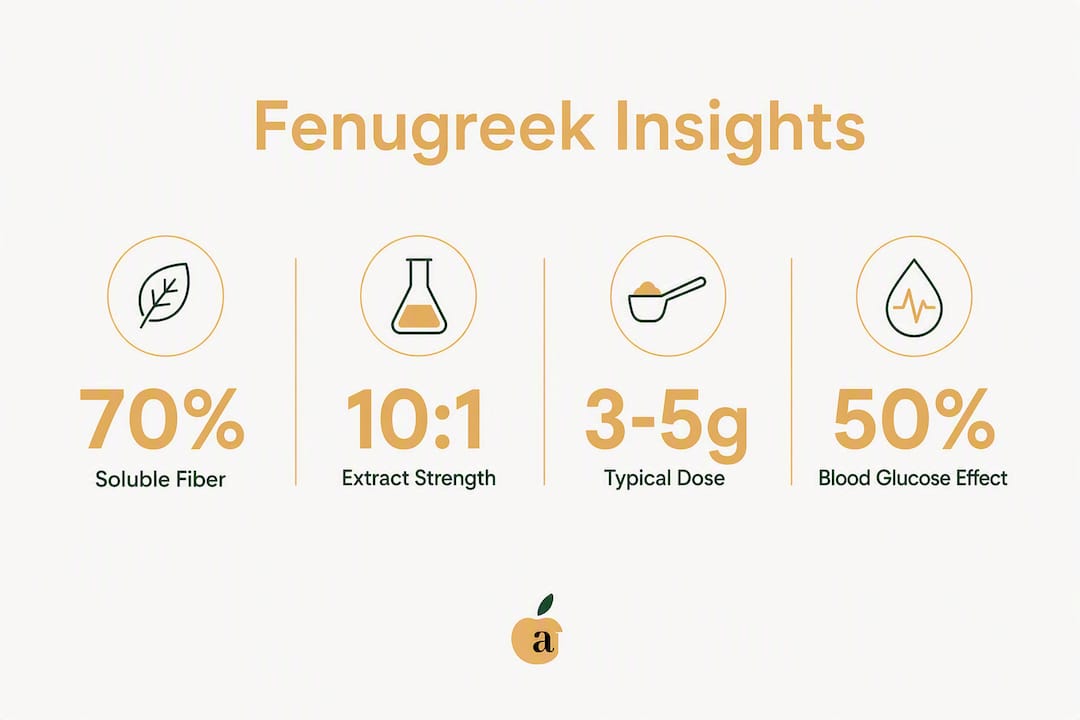
The high soluble fibre content is the most nutritionally relevant feature for health effects. Soluble fibre slows gastric emptying and blunts post-meal glucose spikes, which is one plausible mechanism behind fenugreek’s blood-sugar effects. At culinary amounts, the fibre contribution is modest; at research doses, it becomes clinically meaningful.
Traditional uses across Ayurveda, Middle Eastern and North African medicine
Fenugreek has been used medicinally across multiple cultures for centuries, long before clinical trials existed. Traditional systems valued it for a broad range of complaints:
- Lactation support: one of the most consistent traditional uses across South Asian and Middle Eastern traditions; nursing mothers used seed teas and pastes to increase milk supply
- Digestive complaints: used as a tonic for indigestion, bloating, and constipation; the high fibre content provides a plausible mechanism
- Menstrual and hormonal complaints: used in Ayurveda and North African folk medicine to ease dysmenorrhoea and regulate cycles
- Blood sugar and metabolic support: traditional use as a remedy for diabetes-like symptoms predates modern glycaemic research by centuries
- Topical applications: seed paste applied to skin for inflammation, wounds, and hair conditioning in several traditions
- General tonic: used in convalescence and as a general strengthening food in South Asian and Middle Eastern cuisines
Traditional use is a legitimate reason to investigate a plant scientifically. It is not, on its own, proof of efficacy or safety at supplement doses. Many traditional preparations used culinary quantities; modern supplements concentrate the active compounds far beyond what any traditional recipe would deliver.
What the research actually says about fenugreek health benefits
The evidence for fenugreek’s health claims varies considerably by condition. Here is an honest, condition-by-condition summary.
| Condition | Typical research dose | Direction of effect | Evidence quality |
|---|---|---|---|
| Blood glucose (type 2 diabetes) | — | Modest reduction in fasting glucose and HbA1c | Small trials, mixed quality |
| Lactation (milk supply) | 1–6 g/day seed or extract | Increased milk volume in some trials | Small, inconsistent |
| Testosterone / libido | — | Some positive signals in men | Small trials, short duration |
| LDL cholesterol | — | Modest reduction reported | Limited, heterogeneous |
| Appetite / weight | 4–8 g/day fibre fraction | Reduced calorie intake in some studies | Preliminary only |
Blood glucose and type 2 diabetes
Some clinical trials suggest fenugreek may help lower blood glucose in people with type 2 diabetes, but many studies are small and of mixed quality. The effect appears real but modest, and fenugreek should not replace prescribed antidiabetic treatment. Doses used in glycaemic studies included various levels of seed powder and extracts higher than culinary use.
Lactation
Small trials have reported increased milk production in breastfeeding people using fenugreek, but the evidence is mixed and not definitive. Doses in lactation studies included supplement ranges above typical culinary amounts. The odour change in breast milk (maple-like) is a consistent and documented side effect.
Testosterone and libido
Some studies using standardised extracts have reported modest improvements in testosterone levels and self-reported libido in men, but trials are small and short-term. Trials are short (8–12 weeks) and sample sizes small. The mechanism is hypothesised to involve diosgenin’s interaction with steroidogenic pathways, but this remains unconfirmed in humans.
Cholesterol and appetite
Evidence for cholesterol reduction and appetite suppression is preliminary. The fibre fraction is the most plausible driver of both effects. Neither outcome has sufficient trial data to support a firm recommendation.
Key points on evidence quality:
- Most trials are small (fewer than 100 participants) and short (under 12 weeks)
- Formulations vary widely between studies, making direct comparison difficult
- Experts emphasise that fenugreek should not replace medical treatment for any condition
- Standardised extracts and raw seed powders produce different results in trials, which explains much of the inconsistency
How fenugreek might work: the active compounds
Several bioactive constituents are thought to drive fenugreek’s effects, though the evidence for most mechanisms comes partly from in vitro or animal studies.
- Sotolon: the volatile compound responsible for the maple aroma; excreted in body fluids and responsible for odour changes during supplementation
- Diosgenin: a steroidal saponin that may influence steroidogenic pathways; the basis for testosterone and hormonal effect hypotheses, though human evidence is limited
- Trigonelline: an alkaloid with proposed effects on glucose metabolism and neuroprotection; studied in vitro and in animal models
- Soluble fibre (galactomannan): the most mechanistically straightforward constituent; slows gastric emptying, reduces post-meal glucose absorption, and may lower LDL cholesterol through bile acid binding
- Coumarin-like compounds: structurally related to anticoagulant compounds; the basis for the drug interaction concern with warfarin and antiplatelet agents
- 4-hydroxyisoleucine: an unusual amino acid found almost exclusively in fenugreek; proposed to stimulate insulin secretion directly, though human data are limited
The fibre and 4-hydroxyisoleucine mechanisms are the most plausible explanations for glycaemic effects. Diosgenin’s hormonal activity is better established in animal models than in humans. In vitro evidence should not be extrapolated directly to clinical outcomes without supporting human trial data.
Forms available, how to take fenugreek, and research-based doses
Fenugreek reaches consumers in several forms, each with different potency and appropriate uses.
| Form | Typical study dose | Rough kitchen equivalent | Best use |
|---|---|---|---|
| Whole seeds | — | 1–3 tsp/day | Culinary; soaking, roasting, grinding |
| Ground seed powder | — | 1–3 tsp/day | Curries, breads, teas |
| Dried leaves (kasuri methi) | Not used in clinical trials | 1–2 tsp as herb | Culinary finishing herb |
| Seed tea | Not standardised | 1 tsp seeds per cup | Traditional tonic use |
| Standardised extract capsules | — | Not applicable | Supplement use; consistent dosing |
What to look for on a supplement label (UK shoppers):
- Extraction ratio: a 10:1 extract means 10 g of seed concentrated to 1 g of extract; higher ratios deliver more active compounds per capsule
- Standardisation marker: look for a stated percentage of saponins or diosgenin, which confirms consistent constituent levels
- Third-party testing: independent verification of purity and potency; look for a certificate of analysis (CoA) from a recognised laboratory
- No fillers or binders: magnesium stearate, silicon dioxide, and maltodextrin are common fillers that dilute potency; a clean label lists only the extract and the capsule material
- Vegan capsule: relevant if you avoid animal-derived gelatine
Understanding how to read supplement labels is the single most useful skill for UK supplement buyers. Standardisation is what separates a consistent product from an unpredictable one.
The effect of fenugreek is highly dependent on formulation: standardised extracts deliver consistent constituent amounts, while raw seed powders vary batch to batch. For any clinical purpose, standardisation matters.
Safety checklist for self-administration:
- Start with a low dose and increase gradually over 1–2 weeks
- Monitor for digestive symptoms (flatulence, loose stools) in the first week
- If you are diabetic and take medication, check blood glucose more frequently when starting
- Note any body odour or urine odour changes; these are expected but worth tracking
- Stop immediately and seek advice if you develop skin reactions, breathing difficulty, or swelling
Pro Tip: If you are new to fenugreek supplements, begin with the lowest available dose for two weeks before increasing. This gives your digestive system time to adjust and lets you identify any early sensitivity before it becomes a problem.
Safety, side effects and drug interactions you need to know
Fenugreek is generally considered safe in culinary amounts, but the risk profile rises sharply with concentrated supplements. These are the safety points that matter most.
Common side effects from supplements:
- Diarrhoea and loose stools, particularly at higher doses
- Indigestion, bloating, and flatulence
- Maple-like odour in sweat, urine, and breast milk (from sotolon excretion)
- Nausea, especially when taken on an empty stomach
Serious and rarer reactions:
- Allergic reactions: fenugreek cross-reacts with peanut and chickpea allergies; people with legume allergies should avoid supplements and exercise caution with culinary use
- Asthma exacerbation: occupational asthma has been reported in people who handle fenugreek powder regularly
- Rare anaphylaxis in sensitised individuals
Drug interactions:
Fenugreek contains coumarin-like compounds that may enhance the effect of anticoagulant drugs such as warfarin and antiplatelet agents. Taking fenugreek supplements alongside these drugs raises bleeding risk. Separately, fenugreek’s glucose-lowering effect can compound the action of antidiabetic medications, increasing hypoglycaemia risk. If you take either drug class, discuss fenugreek with your GP or pharmacist before starting.

For a broader overview of herbal supplement safety considerations, including interaction risks across common herbs, independent guidance is available from holistic health practitioners.
Special populations:
- Pregnancy: fenugreek may have uterotonic or abortifacient effects at high doses; avoid supplements entirely during pregnancy. Culinary amounts in food are generally considered low-risk, but caution is reasonable.
- Breastfeeding: small trials suggest it may increase milk supply, but breast milk and infant body odour changes are documented; discuss with a midwife or GP.
- Children: insufficient safety data; avoid supplements in children without medical supervision.
- Pre-surgery: stop fenugreek supplements at least two weeks before any planned surgery due to anticoagulant interaction risk.
Practical risk mitigation:
- Tell your clinician about any fenugreek supplement use at every appointment
- Stop supplements two weeks before surgery
- Do not use supplements as a substitute for prescribed medication
Where the evidence is strong, where it is weak, and what is still missing
The overall picture of fenugreek research is one of genuine promise alongside significant gaps.
Reasonably supported (but still modest):
- Glycaemic effects in type 2 diabetes: the most studied outcome; multiple trials show modest reductions in fasting glucose, though trial quality is generally low and formulations vary
- Lactation: consistent traditional use backed by small trials; effect size is uncertain
Promising but inconsistent:
- Testosterone and libido: positive signals in short trials; no long-term data
- LDL cholesterol reduction: plausible via fibre mechanism; limited human trial data
- Appetite suppression: preliminary; mostly based on fibre fraction studies
Poor or absent evidence:
- Anti-cancer effects: animal and in vitro data only; no human trial evidence
- Neurological protection: preclinical only
- Long-term safety at supplement doses: no robust data beyond 12 weeks
Research gaps that matter:
- Most trials have fewer than 100 participants and run for under 12 weeks
- Formulations are heterogeneous: comparing a 10:1 extract trial with a whole-seed trial is comparing different interventions
- Dosing is inconsistent across studies, making meta-analyses unreliable
- No large UK-based trials exist; most data come from South Asian and Middle Eastern populations
- Long-term safety data for supplement doses are absent
A high-quality future trial would need: a standardised extract with a defined saponin percentage, a sample of at least 200 participants, a minimum 24-week duration, and pre-registered endpoints. Until that evidence exists, cautious interpretation is the only honest position.
Where to buy fenugreek in the UK and how to store it properly
Retail options:
- Supermarkets (Tesco, Sainsbury’s, Waitrose): ground fenugreek seed and occasionally whole seeds in the spice aisle; quality is generally reliable for culinary use
- South Asian and Middle Eastern grocers: the best source for whole seeds, dried leaves (kasuri methi), and bulk quantities; fresher stock and lower prices than supermarkets
- Health-food shops (Holland & Barrett and independents): supplement capsules and sometimes seed powder; check labels carefully for standardisation and filler content
- Online retailers (Amazon UK, specialist herbal suppliers): widest selection of forms and extract strengths; read reviews and check for third-party testing certificates
Shopping checklist for supplements:
- Extraction ratio clearly stated (e.g. 10:1)
- Standardisation marker listed (% saponins or diosgenin)
- Certificate of analysis available on request or published on the website
- No fillers, binders, or synthetic additives in the ingredient list
- Vegan capsule if required
- UK-based or EU-compliant supplier with clear contact details
Understanding the difference between food-grade and supplement-grade fenugreek is worth a few minutes before you buy. Food-grade seed is regulated as a food ingredient; supplement-grade extract is regulated under the UK’s food supplement rules, which do not require pre-market safety approval.
Storage:
- Whole seeds: airtight glass jar, cool dark cupboard; shelf life up to 3 years
- Ground seed powder: airtight container, away from heat and light; use within 6–12 months for best flavour
- Dried leaves: airtight bag or jar; 1–2 years
- Capsules: follow manufacturer guidance; typically cool, dry, and away from direct sunlight
If older whole seeds have lost their aroma, dry-roast them briefly in a pan before use. This revives the volatile compounds and restores much of the flavour.
UK regulatory note: fenugreek supplements are sold as food supplements under UK law. They are not medicines and are not required to demonstrate efficacy before sale. The Food Standards Agency (FSA) oversees food supplement safety in Great Britain; the Medicines and Healthcare products Regulatory Agency (MHRA) only intervenes if a product makes medicinal claims. This means the quality burden falls on the buyer, not the regulator.
Who benefits from fenugreek and who should avoid it
Culinary use is low-risk for most people. Adding seeds or dried leaves to cooking delivers flavour and modest nutritional value without meaningful risk for healthy adults.
Supplements may be worth considering if:
- You have type 2 diabetes and want a modest adjunct to diet and lifestyle changes (with GP knowledge)
- You are breastfeeding and want to try a traditional lactation aid (discuss with your midwife first)
- You are a man seeking modest testosterone support and have no contraindications
Avoid supplements if you:
- Are pregnant
- Take warfarin, aspirin, clopidogrel, or any anticoagulant or antiplatelet drug
- Take insulin, metformin, or any antidiabetic medication without medical supervision
- Have a peanut, chickpea, or legume allergy
- Are due surgery within two weeks
One-line recommendation: try culinary fenugreek first; if you are considering a supplement, choose a standardised, third-party-tested extract with no fillers, start at the lowest dose, and speak to your GP if you take any regular medication.
This article provides general information, not medical advice. Confirm current guidance with your GP or a qualified healthcare professional before starting any supplement.
Key takeaways
Fenugreek is safe in food amounts for most adults, but supplements require careful selection and medical awareness before use.
| Point | Details |
|---|---|
| Culinary use is safe | Small amounts of seed or dried leaves in cooking carry minimal risk for healthy adults. |
| Supplement doses differ sharply | Research doses far exceed culinary servings. |
| Drug interactions are real | Fenugreek can interact with anticoagulants and antidiabetic drugs; always tell your GP. |
| Choose standardised extracts | Look for a stated extraction ratio, saponin percentage, and third-party testing certificate. |
| Vitaminb17 fenugreek capsules | A 10:1 standardised extract with no fillers, suitable for adults seeking a clean, consistent supplement. |
The honest truth about fenugreek supplements
Most articles about fenugreek either oversell the evidence or dismiss the herb entirely. Neither is useful.
The glycaemic data is real but modest. If you have type 2 diabetes and your GP is on board, a standardised fenugreek extract is a reasonable addition to a diet and lifestyle plan. It will not replace metformin. What it might do, at the right dose and formulation, is provide a small, measurable improvement in fasting glucose. That is worth something.
The lactation evidence is similarly honest: small trials, consistent direction, uncertain magnitude. For a breastfeeding person who wants to try something traditional and low-risk, fenugreek at culinary-to-low-supplement doses is a reasonable first step. The breast milk odour change is real and worth knowing about in advance.
Where the evidence falls apart is in the testosterone and weight-loss claims. The trials are too small and too short to draw conclusions. That does not mean the effects are absent; it means we do not yet know.
The piece of advice most articles skip: the form matters as much as the dose. A raw seed powder and a 10:1 standardised extract are not interchangeable. If you are using fenugreek for a specific outcome, the formulation you choose determines whether you are replicating what the trials actually tested. Standardisation is not a marketing term; it is the difference between a consistent intervention and a variable one.
Vitaminb17 fenugreek capsules: pure extract, no fillers
If you have read this far and decided a standardised supplement is the right next step, the quality of what you buy matters more than the brand name on the label.

Vitaminb17’s Fenugreek Capsules 10:1 5000mg deliver a 10:1 standardised extract with no fillers, no binders, and no synthetic additives. Each capsule is vegan-friendly and formulated to deliver a consistent dose of active compounds. No magnesium stearate. No maltodextrin. Just pure fenugreek extract.
Before you buy any supplement, check whether it is underdosed or diluted with fillers. Many products on the market list impressive-sounding doses on the front label while burying fillers in the small print.
Safety reminder: do not take fenugreek supplements during pregnancy, if you are on anticoagulant or antidiabetic medication without GP approval, or within two weeks of planned surgery. Start at the lowest dose and monitor your response.
Useful sources and further reading
These are the primary and authoritative sources used in this article. Each is worth reading directly if you want to go deeper.
- The multifaceted potential of fenugreek seeds (PMC, NIH): a peer-reviewed review covering bioactive compounds, mechanisms, and clinical evidence across multiple conditions
- Fenugreek seed composition (USDA FoodData Central): the primary nutritional reference for fenugreek seed macronutrients and micronutrients
- Fenugreek: Usefulness and Safety (NCCIH): the US National Centre for Complementary and Integrative Health’s evidence summary; covers safety, interactions, and evidence quality
- Fenugreek: Benefits, Uses and Side Effects (Cleveland Clinic): a clinician-reviewed explainer covering drug interactions, dosing, and practical safety guidance
- Fenugreek: Uses, Benefits, Side Effects (Healthline): accessible summary of lactation evidence, testosterone studies, and formulation considerations
- Fenugreek: benefits, dosage and side effects (Examine): the most detailed independent dose-by-outcome breakdown available; covers study-specific dose ranges and formulation differences
- PMC review on fenugreek and lactation: peer-reviewed analysis of galactagogue evidence including fenugreek trial data
- PubMed: fenugreek and glycaemic control: a clinical study on fenugreek’s effects on blood glucose parameters


