

Dandelion (Taraxacum officinale) is a vitamin- and phytochemical-rich herb used traditionally for digestive support and as a mild diuretic, recognised by the EMA’s Community herbal monograph under its ‘long-standing use’ classification. Kew Gardens lists it as globally widespread and of least concern on the IUCN Red List, meaning supply is stable and sustainable harvesting is practical. If you are looking for a clean, potent daily supplement, the key questions are plant part, extract standardisation, and third-party testing.
Worth knowing: The EMA does not classify dandelion as a proven therapeutic agent. Its indications rest on traditional use, not large-scale human clinical trials. That distinction matters when you are comparing product claims.
Pro Tip: If standardised extracts and third-party lab testing are your priorities, skip straight to the buying checklist below before comparing product pages.
Table of Contents
- What is dandelion and which parts should you use?
- Traditional uses versus the research: where does the evidence stand?
- What product forms are available and which should you choose?
- Safety, contraindications, and drug interactions for UK shoppers
- How to choose a dandelion supplement in the UK
- How to use dandelion in your supplement routine
- How to make dandelion tea and a simple tincture at home
- Key takeaways
- Why standardised extracts are the only honest choice
- Vitaminb17’s dandelion root extract: pure, potent, no fillers
- Useful sources and further reading
What is dandelion and which parts should you use?
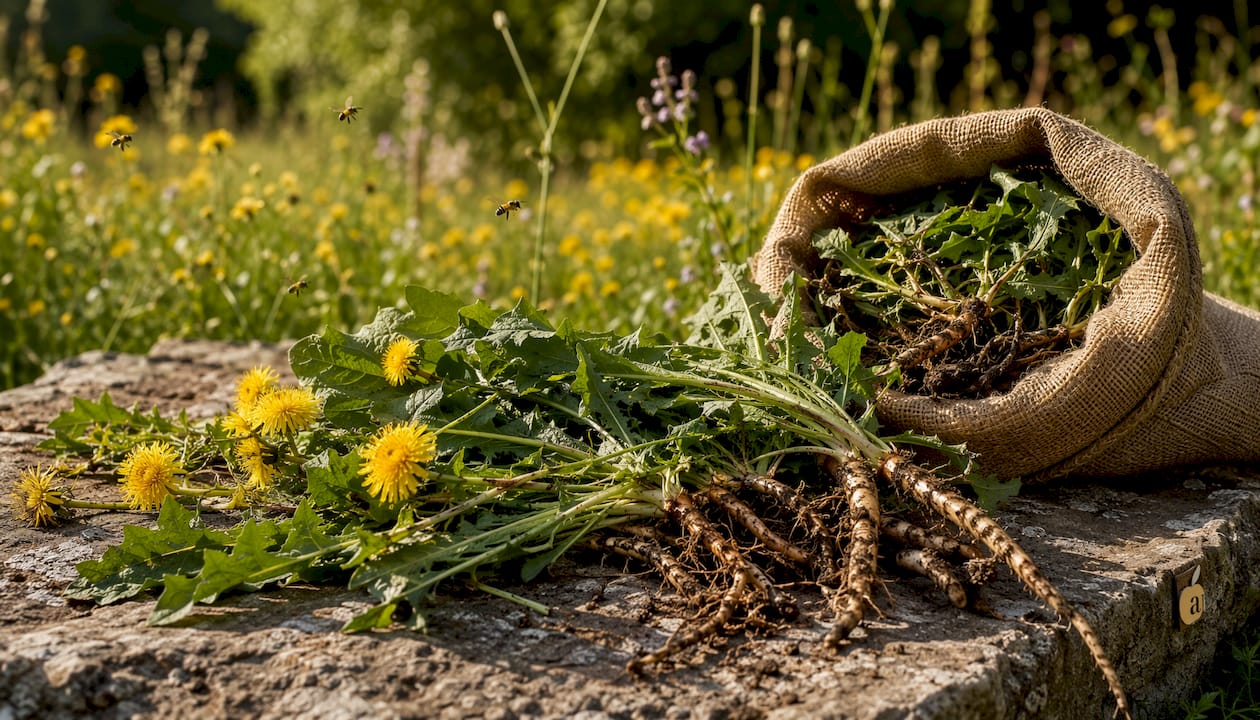
Taraxacum officinale belongs to the family Asteraceae and is one of the most widely distributed plants in the temperate world. Kew Gardens confirms it is used both as a vegetable and a medicinal herb. Leaves form a basal rosette, stems are hollow and leafless, and the bright yellow flower heads mature into the familiar spherical seed heads dispersed by wind.
Three plant parts are used in supplements, and they are not interchangeable:
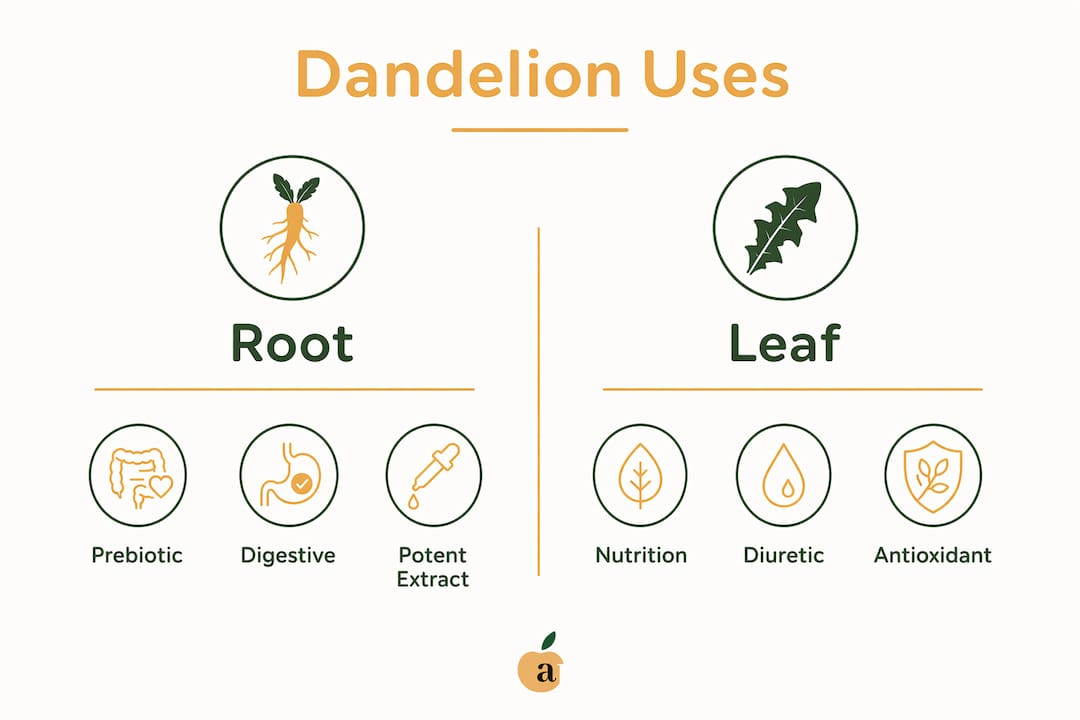
- Leaves (herba/folium): Rich in vitamins A and K, potassium, calcium, iron, and magnesium. Used primarily for nutritional and mild diuretic purposes.
- Root (radix): Contains inulin, a prebiotic fibre, and has historically been roasted as a coffee substitute. Root preparations are the focus of the EMA monograph.
- Flowers: Provide polyphenols including flavonoids such as apigenin and isoquercitrin, used in foods and functional beverages.
Core phytochemicals across all parts include flavonoids, triterpenes, phenolic acids, and sterols. These compound classes are associated with antioxidant and anti-inflammatory activity in laboratory settings, though human evidence remains limited. Understanding how secondary metabolites drive herbal action helps you evaluate what each preparation actually delivers.
Pro Tip: On any supplement label, look for explicit Latin plant-part terms: radix (root), herba (aerial parts), or folium (leaf). A label that simply says “dandelion” without specifying the part is a red flag.
Traditional uses versus the research: where does the evidence stand?
Traditional indications for dandelion include mild digestive disorders, appetite stimulation, increased urine output, and liver support. The EMA classifies these under ‘long-standing use’, which means the evidence base is historical and experiential rather than derived from controlled clinical trials.
The evidence gap is real. Most supportive data come from in vitro and animal studies. Human clinical trials are sparse, and the few that exist are small and short in duration.
The clearest human data point is a small 2009 diuretic study involving 17 participants, which reported increased urinary frequency and volume. The trial was too brief and too small to draw firm conclusions, but it does provide a plausible biological signal consistent with the leaf’s potassium content and traditional use.
Researchers also caution that ‘detox’ marketing oversimplifies the phytochemical profile. Sterols and phenolic acids interact with metabolism in multiple ways that a single marketing phrase cannot capture.
Evidence summary:
- Plausible (traditional + animal/in vitro data): Digestive support, mild diuretic effect, prebiotic fibre contribution (root inulin), antioxidant activity
- Unproven in humans: Anti-inflammatory effects, liver protection, metabolic modulation, ‘detox’ claims
- Needed: Robust, randomised human clinical trials across all major indications
What product forms are available and which should you choose?
| Form | Potency | Consistency | Convenience |
|---|---|---|---|
| Fresh leaf infusion (tea) | Low–moderate | Variable | Easy at home |
| Root decoction | Moderate | Variable | Requires preparation |
| Tincture / expressed juice | Moderate | Moderate | Portable |
| Standardised dry extract | High | Consistent | Best for dosing |
| Capsule (standardised extract) | High | Consistent | Most convenient |
The EMA monograph specifies posology by preparation type. For dried root decoctions, traditional guidance cites 3–4 g or infusions of 4–10 g up to three times daily. Coated tablets using dry extract are referenced at 300 mg twice daily. The monograph also specifies dry extract DER ranges of 5.6–8.4:1 with ethanol 60% v/v as the extraction solvent, which tells you how concentrated the extract is relative to the raw plant material.
Key points when choosing a form:
- Standardised extracts deliver reproducible doses batch to batch; loose teas and tinctures do not.
- A DER of 5.6–8.4:1 means 5.6–8.4 kg of raw root produces 1 kg of extract. Higher DER generally means greater concentration.
- Capsules with a standardised extract are the practical choice if you want consistent intake without preparation time. High-potency plant extracts explain why concentration matters for reproducible results.
- Taste is bitter, particularly in teas made from mature leaves or roots. Capsules sidestep this entirely.
Safety, contraindications, and drug interactions for UK shoppers
Dandelion is generally well tolerated at traditional doses, but several specific risks apply:
- Anticoagulants (e.g. warfarin): Leaves are high in vitamin K, which can reduce anticoagulant effectiveness. Do not combine without medical supervision.
- Diuretics: Additive diuretic effect may disrupt fluid and electrolyte balance.
- Blood sugar medications: Animal data suggest possible hypoglycaemic activity; monitor closely if you use insulin or oral antidiabetics.
- Certain antibiotics (e.g. quinolones): Dandelion may reduce absorption; separate doses by at least two hours.
- Asteraceae allergy: Cross-reactivity with ragweed, chrysanthemum, and related plants is possible.
The EMA advises that dandelion preparations are not recommended for children under 12 years. Duration of use should follow product-specific guidance; prolonged unsupervised use is not recommended. For broader guidance on supplement safety, independent pharmacy resources offer useful checklists.
This article is general information, not medical advice. Confirm current guidance with a qualified healthcare professional for your own situation.
How to choose a dandelion supplement in the UK
A short checklist cuts through the noise on product pages:
- Plant part clearly stated (root, leaf, or aerial parts) with Latin term on the label
- Extract ratio (DER) specified — look for 5.6–8.4:1 or similar, referenced to the EMA monograph
- Marker compound or test specification listed (e.g. inulin content for root, flavonoid content for leaf)
- Third-party certificate of analysis (CoA) available on request or displayed on the product page
- No fillers, binders, or synthetic additives in the capsule formulation
- Clear posology stating dose, frequency, and duration
Each item on this list protects you differently. The DER tells you potency. The CoA confirms purity. The plant-part label tells you what you are actually taking. Understanding herbal supplement purity in detail helps you read labels with confidence.
Pro Tip: If a product page does not display or offer a certificate of analysis, treat that as a signal to look elsewhere. Reputable suppliers make this document easy to find.
Vitaminb17’s dandelion root capsules meet these criteria: standardised root extract, no fillers, no binders, and clear plant-part labelling.
How to use dandelion in your supplement routine
Traditional dosing ranges, drawn from the EMA monograph and older herbal references, give a practical starting framework:
- Dried root decoction: 3–4 g per serving, up to three times daily with meals.
- Dried leaf infusion: 4–10 g per serving, up to three times daily.
- Standardised capsule (300 mg dry extract): Twice daily, typically with food and water.
- Tincture or liquid extract: Follow label-specific drop counts; these vary by concentration.
Start low and monitor. Introduce dandelion at the lower end of any traditional range for the first two weeks, then assess tolerance before increasing. This is especially relevant if you are new to herbal supplements or taking other botanicals.
Safe stacking ideas: dandelion root pairs naturally with other prebiotic-supporting fibres given its inulin content. For broader digestive support, burdock root is a complementary root-based option. Avoid combining dandelion with prescription diuretics or anticoagulants without professional guidance. Morning use with breakfast suits most people; evening use is fine unless the mild diuretic effect disrupts sleep. For structured stacking advice, see how to stack herbal supplements effectively.
How to make dandelion tea and a simple tincture at home
Basic leaf infusion (tea)
- Harvest young leaves in early spring before flowering, from uncontaminated ground well away from roadsides, treated lawns, or industrial sites.
- Rinse thoroughly under cold running water.
- Use 4–10 g of fresh or dried leaf per 200 ml of near-boiling water.
- Steep for 10 minutes, strain, and drink up to three times daily.
Simple root tincture
- Dig roots in autumn when inulin content peaks.
- Clean, chop finely, and pack loosely into a clean glass jar.
- Cover completely with food-grade ethanol (40–60% alcohol, such as vodka).
- Seal and store in a cool, dark place for four weeks, shaking daily.
- Strain through muslin, bottle, and label with date and plant part.
Foraging warning: Never harvest from roadsides, near agricultural fields that use pesticides, or from any site where soil contamination is possible. Dandelion accumulates heavy metals from polluted soils. Confirm plant identity before harvesting: true dandelion has unbranched, hollow, hairless stems and smooth (not hairy) leaves, distinguishing it from lookalikes such as cat’s ear (Hypochaeris radicata) and coltsfoot (Tussilago farfara).
Leaves are best in early spring. Roots are most potent when harvested in autumn after the aerial parts die back.
Key takeaways
Dandelion is a well-documented traditional herb with a plausible phytochemical profile, but human clinical evidence remains limited. Choose a standardised root extract with a clear DER, third-party testing, and no fillers for the most reliable supplement experience.
| Point | Details |
|---|---|
| Match plant part to your goal | Root for prebiotic/digestive support; leaf for nutritional and mild diuretic use. |
| Demand a DER specification | EMA references dry extract DER 5.6–8.4:1; this figure confirms concentration and reproducibility. |
| Human evidence is limited | Most benefits are supported by animal or in vitro data; treat therapeutic claims cautiously. |
| Key safety cautions | Avoid combining with warfarin, prescription diuretics, or antidiabetics without medical advice. |
| Vitaminb17 standardised extract | Dandelion root capsules with no fillers, clear plant-part labelling, and extract specification. |
Why standardised extracts are the only honest choice
The supplement market is full of dandelion products that list the plant on the label and little else. No DER. No plant-part specification. No CoA. That is not transparency; it is a gap you pay for with inconsistent results.
Reproducible dosing depends on knowing what is in each capsule, batch after batch. A standardised extract with a documented DER and a third-party CoA gives you that. A loose powder in a capsule with no specification gives you a guess. Vitaminb17 builds every product around this principle: pure, raw, no fillers, no binders, and a clear extract specification so you know exactly what you are taking. That approach applies to dandelion root just as it does to every other botanical in the range.
Vitaminb17’s dandelion root extract: pure, potent, no fillers
Vitaminb17 offers a standardised dandelion root extract formulated for health-conscious shoppers who want potency without compromise.

Pure dandelion root. No fillers. No binders. No synthetic additives. The extract is clearly labelled by plant part, with a specified extract ratio so you know the concentration in every capsule. If you have been comparing products and finding vague labels and missing CoAs, this is the alternative. Not sure whether you are looking at an underdosed herbal supplement? That guide walks you through exactly what to check. Visit the product page to review full specifications and place your order.
Useful sources and further reading
For readers who want to go deeper into the science and regulatory context:
- EMA Community herbal monograph on Taraxacum officinale: The primary regulatory document. Consult this for posology by preparation type, DER specifications, and the official ‘long-standing use’ classification.
- ScienceDirect phytochemical and pharmacological profile review: Detailed breakdown of flavonoids, triterpenes, phenolic acids, and sterols. Use this for phytochemical depth and to understand functional food applications.
- Kew Gardens dandelion plant page: Authoritative botanical profile covering distribution, food and medicinal uses, and IUCN conservation status.
- Healthline dandelion benefits overview: Consumer-friendly summary of current evidence, including honest caveats on the limits of human trial data. Good starting point for practical context.


