

Celery capsules contain either whole ground celery seed (Apium graveolens) or a standardised extract concentrated for active phthalide compounds. People take them primarily for gout and joint comfort, mild inflammation support, and circulatory benefits. Before you start, note the short list of people who should not take them:
- Pregnant women should avoid celery seed supplements entirely
- Anyone with kidney inflammation should not use them
- People on anticoagulants, lithium, thyroid medication, or blood-pressure medicines must speak to a GP or pharmacist first
Table of Contents
- What do celery capsules actually do? The evidence explained
- How celery seed works in the body
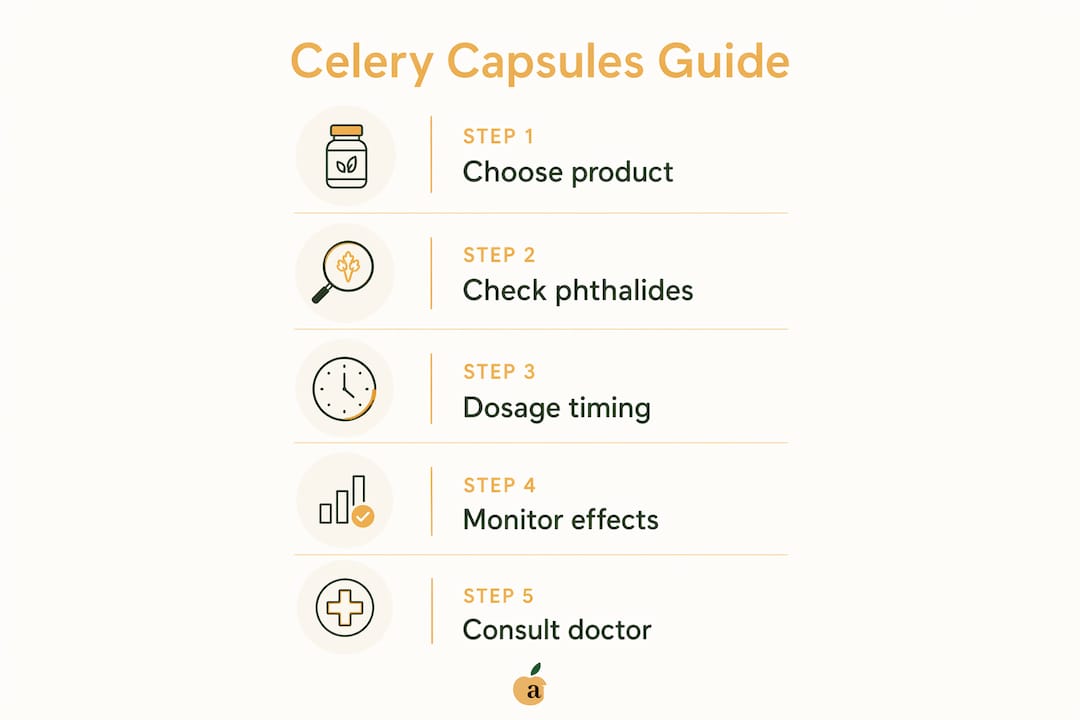
- How to take celery seed capsules: dosage and timing
- Side effects, safety, and drug interactions
- How to choose quality celery capsules in the UK
- Where to buy celery seed capsules in the UK
- Why Vitaminb17 Celery Seed Capsules are worth considering
- Key takeaways
- The case for measured expectations with celery seed
- Get Vitaminb17 celery seed capsules: pure, potent, no fillers
- Useful sources for further reading
What do celery capsules actually do? The evidence explained
The claims made for celery seed extract cover a wide range, and the evidence behind each one varies considerably. Here is a clear breakdown.
- Gout and uric acid support — Traditional use is strong; preclinical data is promising. Human trial evidence remains limited, but the diuretic and anti-inflammatory actions of phthalides provide a plausible mechanism. Classed as: traditional use with preliminary clinical support.
- Anti-inflammatory and joint comfort — Animal and in vitro studies show clear anti-inflammatory activity. A narrative pharmacological review confirms multiple in vivo findings but stresses that large-scale human trials are sparse. Classed as: promising preclinical evidence; limited human data.
- Blood pressure and circulatory effects — A randomised clinical trial in hypertensive patients using 1.34 g per day of celery seed extract over four weeks reported measurable reductions in blood pressure alongside improvements in anxiety and depression scores. Classed as: small clinical trial support.
- Digestive support — Traditionally used for bloating and digestive discomfort. Classed as: traditional use; insufficient clinical evidence.
- Antioxidant benefits — Celery seed contains flavonoids and volatile oils with antioxidant activity. The role of antioxidants in joint health is well documented in the broader botanical literature. Classed as: in vitro evidence; plausible.
The honest picture is that human evidence is limited in size and scope. Short trials show benefit signals, but long-term, large-scale randomised controlled trials are sparse. Set realistic expectations: celery seed is a supportive supplement, not a pharmaceutical treatment.
For gout and joint comfort, most people who report a noticeable effect describe it appearing after two to four weeks of consistent use. Circulatory effects from a diuretic action can be felt sooner, sometimes within days.

How celery seed works in the body
The key active compounds in celery seed are phthalides, particularly 3-n-butylphthalide (3-nB), along with volatile oils and flavonoids. The pharmacological review in SAGE identifies these phthalides and volatile oils as the likely drivers of the plant’s circulatory, anti-inflammatory, and mild diuretic effects.
3-nB appears to act on smooth muscle in blood vessel walls, supporting vasodilation and reducing vascular resistance. This same vasomodulating action may help the kidneys excrete uric acid more efficiently, which is the proposed link to gout relief. The diuretic effect increases urine output, which further supports uric acid clearance. For herbal extracts and blood health, phthalide concentration is the single most important variable.
This is where standardisation matters enormously. Therapeutic benefit depends more on phthalide concentration than on total capsule weight. A 75 mg capsule standardised to 85% total phthalides delivers far more active compound than a 500 mg whole-seed powder capsule with no stated phthalide content.
| Form | Typical capsule weight | Typical phthalide content | Notes |
|---|---|---|---|
| Whole ground seed powder | 500 mg | Not stated / variable | Broad nutritional profile; lower active-compound certainty |
| Standardised extract (mid-range) | 150 mg | 42.5% total phthalides | Consistent dosing; suitable for therapeutic goals |
| High-potency standardised extract | 75 mg | 85% total phthalides | Maximum concentration; small capsule size |
| Celery juice / tea | Variable | Very low / trace | Convenient but not suitable for therapeutic dosing |
Pro Tip: When comparing products, calculate the actual phthalide milligrams delivered per capsule rather than comparing capsule weights. A 150 mg capsule at 42.5% phthalides delivers 63.75 mg of active phthalides; a 500 mg whole-seed powder with no standardisation figure delivers an unknown amount.
How to take celery seed capsules: dosage and timing
Dosing depends entirely on the product format. Whole-seed powder and standardised extracts are not interchangeable by milligram count.
Common label-based dose ranges:
- Whole seed powder: Retail labels such as Solaray suggest taking multiple capsules daily, consistent with traditional use ranges.
- Standardised extract (mid-range): Products standardised to around 42.5% phthalides are typically dosed at 150 mg once or twice daily.
- High-potency standardised extract: Products at approximately 85% phthalides are dosed at 75 mg, often once daily.
- Clinical trial dose: The randomised trial in hypertensive patients used 1.34 g per day of celery seed extract across four capsules in a crossover design over four weeks.
Practical starting protocol:
- Start at the lower end of the label range for the first week to assess tolerance
- Increase to the full suggested dose in week two if no adverse reactions occur
- Take capsules with food to reduce the chance of gastric discomfort
- Take your daily dose in the morning or early afternoon, not in the evening
- Drink at least 1.5–2 litres of water daily; the diuretic effect increases fluid loss
- Avoid taking concentrated doses late in the day to reduce the risk of nocturia
For herbal supplements that suit a busy routine, pairing your capsule with breakfast is the simplest habit anchor.
Expected onset windows:
- Mild diuretic effect: within 24–48 hours
- Blood pressure and circulatory support: two to four weeks of consistent use
- Joint comfort and gout support: typically two to six weeks; some people report longer
Side effects, safety, and drug interactions
Short clinical studies of up to six weeks have reported no significant adverse effects in specific study cohorts. That said, longer-term safety data are limited, and individual responses vary.
Common side effects to watch for:
- Allergic reactions, including skin rash or oral allergy syndrome (particularly in people allergic to birch pollen, mugwort, or related plants)
- Photosensitivity: increased sensitivity to sunlight, especially with high doses
- Diuretic effects: increased urination, potential for electrolyte imbalance with prolonged use
- Mild gastrointestinal discomfort if taken on an empty stomach
Drug interactions — check these before you start:
- Anticoagulants (e.g. warfarin): Celery seed may potentiate anticoagulant effects; interaction cautions are documented in clinical supplement references
- Lithium: Diuretic action may reduce lithium clearance, raising plasma levels
- Thyroid medication: Some evidence of interference; confirm with your GP
- Blood-pressure medicines: Additive hypotensive effect is possible; monitor blood pressure closely
- Other diuretics: Combined diuretic effect increases the risk of dehydration and electrolyte loss
UK-specific guidance:
- Contact NHS 111 if you develop sudden swelling of the lips, throat, or tongue, or difficulty breathing after taking celery seed (signs of anaphylaxis)
- See your GP before starting if you have any kidney condition, are on prescription medicines, or have a known plant allergy
- Stop immediately and seek medical advice if you notice unusual bruising, significant changes in urination, or severe skin reactions
Pregnant women and anyone with active kidney inflammation should not take celery seed supplements. This is a general information article, not medical advice. Always confirm suitability with a qualified healthcare professional for your own situation.
How to choose quality celery capsules in the UK
The UK supplement market is unregulated for efficacy, which means product quality varies widely. A short checklist cuts through the noise.
What to look for:
- Standardised extract with a stated phthalide percentage — this is the single most important quality signal for therapeutic use
- GMP (Good Manufacturing Practice) certification — confirms the product was made in a facility with quality controls
- Third-party testing or lab verification — look for “Lab Verified”, “Non-GMO Project Verified”, or equivalent badges; these indicate independent quality checks
- Clear supplement facts panel — every ingredient, its amount, and any excipients should be listed
- No fillers, binders, or synthetic additives — a clean formula means the capsule contains only what it claims
- Country of manufacture stated — UK or EU manufacture generally carries stronger regulatory oversight
Red flags to avoid:
- “Proprietary blend” labels with no individual ingredient amounts
- No potency figure or phthalide percentage stated
- Unrealistically high daily dose claims with no standardisation data
- Missing batch numbers or no way to request a certificate of analysis
Pro Tip: Ask the supplier for a certificate of analysis (CoA) for the specific batch you are buying. A reputable UK supplier will provide this on request. If they cannot, that is a clear signal to look elsewhere.
Understanding how to spot underdosed herbal supplements before you buy saves both money and disappointment. For a broader view of what clean labelling looks like, food-grade herbal supplement standards are a useful reference point.
Where to buy celery seed capsules in the UK
Typical buying channels:
- Specialist supplement retailers and brand websites — usually the best source for standardised, high-potency products with transparent labelling and batch traceability
- Health food stores (e.g. Holland & Barrett) — convenient for whole-seed powder products; standardised extracts are less consistently stocked
- Pharmacy chains — limited range; useful for basic whole-seed products
- Online marketplaces (e.g. Amazon UK) — wide selection but variable quality; always check the seller’s credentials and look for fulfilled-by-brand listings rather than third-party resellers
Price guidance:
- Whole-seed powder capsules: typically lower cost per capsule, reflecting lower active-compound concentration
- Standardised extract capsules: higher cost per capsule, but the effective dose per serving is smaller, so cost per therapeutic dose is often comparable
- High-potency extracts (85% phthalides): premium pricing; justified for targeted therapeutic use
Verifying authenticity:
- Buy direct from the brand’s own website where possible
- Check that the product page lists a UK or EU address and a customer service contact
- Avoid listings with no reviews, no batch information, or prices significantly below the market norm
Storage and shelf life:
- Store in a cool, dry place away from direct sunlight
- Avoid humid environments such as bathroom cabinets; moisture degrades potency
- Most celery seed capsules carry a 24-month shelf life from manufacture; check the best-before date on the label
- Once opened, reseal tightly and use within the period stated on the packaging
Why Vitaminb17 Celery Seed Capsules are worth considering
Vitaminb17’s Celery Seed Capsules 8,000mg are formulated as a high-potency, raw, clean product specifically positioned for gout relief and inflammation support.
Key product quality signals:
- High-potency celery seed extract with an 8,000 mg equivalent per serving
- Raw formula: no fillers, no binders, no synthetic additives
- Transparent labelling with clear ingredient information
- Encapsulated for convenient, consistent daily dosing
- Produced to the brand’s clean-formula standard, consistent with its wider range of potent herbs for cellular health
The product sits within Vitaminb17’s broader philosophy of single-ingredient, high-concentration botanical capsules. That approach matters because it removes the guesswork around what you are actually taking.
As with any celery seed supplement, check for interactions with your current medicines and consult your GP or pharmacist before starting, particularly if you are on anticoagulants, lithium, or blood-pressure medication.
*Author: Jade —
Key takeaways
Celery seed capsules offer the most reliable results when you choose a standardised extract with a stated phthalide percentage, start at the lower label dose, and rule out interactions with any prescription medicines before you begin.
| Point | Details |
|---|---|
| Standardisation is everything | Choose a product with a stated phthalide percentage; milligram weight alone tells you nothing about potency. |
| Clinical evidence is promising but limited | One trial used 1.34 g/day over four weeks with measurable blood pressure effects; large-scale RCTs are still sparse. |
| Safety checklist before you start | Avoid if pregnant or have kidney inflammation; check interactions with anticoagulants, lithium, and blood-pressure medicines. |
| Timing and hydration matter | Take capsules in the morning with food and drink at least 1.5–2 litres of water daily to manage the diuretic effect. |
| Vitaminb17 celery seed capsules | High-potency, raw, no-filler formula available direct from Vitaminb17 for UK buyers targeting gout and inflammation support. |
The case for measured expectations with celery seed
There is a tendency in the natural health space to present celery seed as either a miracle cure for gout or a supplement with no real evidence behind it. Neither position is accurate, and both do the reader a disservice.
The honest position sits in the middle. Phthalides are pharmacologically active compounds. The diuretic and vasomodulating mechanisms are real and documented. A small clinical trial produced measurable results at a defined dose. That is more than can be said for many popular supplements. At the same time, celery seed is not a replacement for allopurinol or colchicine in acute gout management, and anyone presenting it as such is overstating the evidence.
Where celery seed extract genuinely earns its place is as an adjunct: something you use alongside dietary changes, adequate hydration, and where necessary, medical treatment. The comparison between natural health approaches and conventional medicine is rarely an either/or question, and celery seed is a good example of why. It works best when it is part of a considered routine, not a substitute for one.
The other point worth making is about product quality. The gap between a cheap whole-seed powder with no standardisation data and a properly concentrated phthalide extract is not trivial. Buying on price alone is the most common mistake. A product that delivers an unknown quantity of active compound is not a supplement; it is a gamble.
Get Vitaminb17 celery seed capsules: pure, potent, no fillers
If you have read this far, you know what separates a high-quality celery seed product from an underdosed one. Vitaminb17’s celery seed capsules deliver a high-potency, raw formula with no fillers, no binders, and no synthetic additives — exactly the profile this article recommends for gout and inflammation support.

The product is available directly from the Vitaminb17 website, with transparent labelling and clear ingredient information. For UK buyers who want a clean, single-ingredient celery seed option without the guesswork, this is a straightforward choice. If you want to understand more about what makes a high-potency extract worth the price, the guide to benefits of high-potency plant extracts is worth reading first.
Before you order, confirm there are no interactions with your current medicines. If you are on any prescription medication, speak to your GP or pharmacist. Visit the Celery Seed Capsules 8,000mg product page to check availability and place your order.
Useful sources for further reading
The following sources were used in this article and are recommended for readers who want to go deeper into the clinical and regulatory evidence.
- Randomised clinical trial — PubMed: A crossover, triple-blind trial in hypertensive patients using 1.34 g/day of celery seed extract over four weeks. The primary source for clinical dosing and blood-pressure effect data cited in this article.
- Narrative pharmacological review — SAGE Journals: A comprehensive review of celery seed’s pharmacological activity, covering phthalides, volatile oils, anti-inflammatory mechanisms, and the limits of current human evidence. The most useful single source for understanding how celery seed works.
- RxList — Celery supplement monograph: A clinical supplement reference covering side effects, drug interactions, and safety cautions. Useful for checking interactions with specific prescription medicines.
- NCBI/PubMed research database: Primary research literature on Apium graveolens and its bioactive compounds; useful for readers who want to review individual studies directly.
- USDA National Nutrient Database: Reference source for the nutritional composition of celery seed, including mineral and flavonoid content.


