

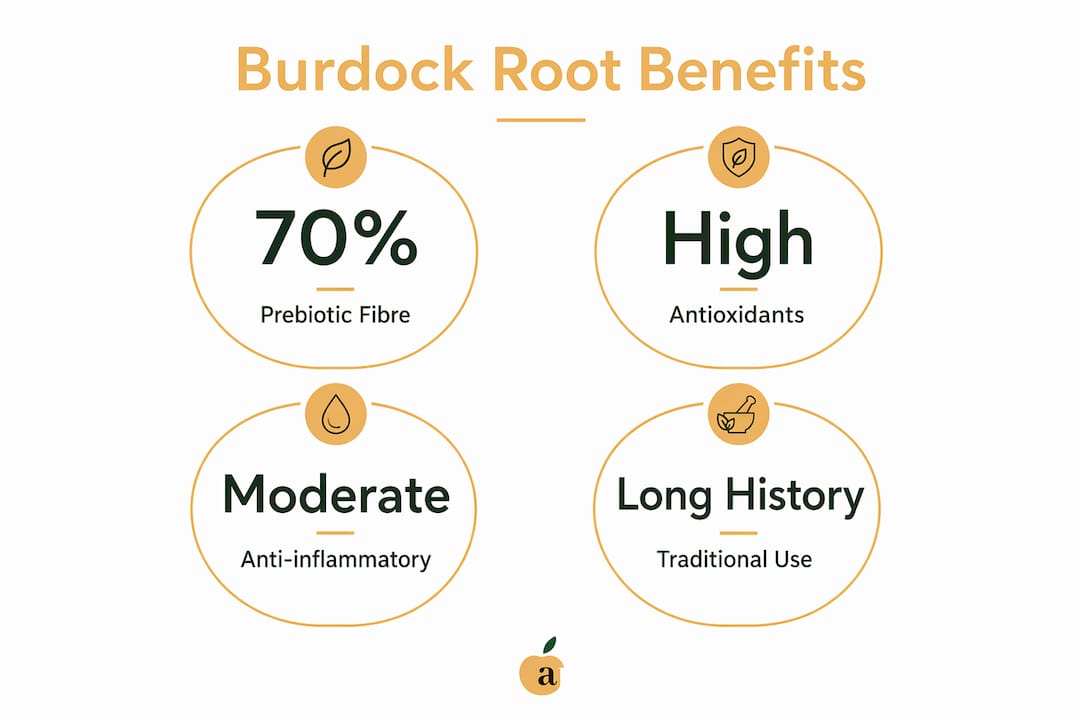
Burdock root (Arctium lappa) is a nutrient-dense, edible root rich in prebiotic inulin and polyphenolic antioxidants, with plausible benefits for digestive health, blood sugar balance, and inflammation. The evidence is promising but largely preclinical. As a food, it is safe and nutritious. As a supplement, it requires careful sourcing and medical caution.
Quick summary:
- Primary benefits: Prebiotic fibre (inulin), antioxidant activity, possible blood sugar support, mild anti-inflammatory effects
- Primary risks: Allergic reactions (especially if sensitive to the daisy family), rare liver injury, drug interactions with diabetes and diuretic medications, avoid in pregnancy
- Next steps: Eat it as a vegetable for fibre and antioxidants; consult your GP or pharmacist before taking any supplement form
Table of Contents
- What is burdock root and what does it contain?
- What health benefits does burdock root offer?
- How solid is the science behind burdock root?
- How to use burdock root: forms, doses and choosing wisely
- Risks, side effects and who should avoid burdock root
- Simple burdock root recipes and preparation tips
- Growing and foraging burdock root in the UK
- Key takeaways
- Why the “detox” framing undersells what burdock actually does
- Vitaminb17 burdock root capsules: pure, no fillers
- Useful sources and further reading
What is burdock root and what does it contain?
Burdock (Arctium lappa), commonly called greater burdock, is a biennial plant native to Europe and Asia and naturalised across the British Isles. In Japan it is known as gobō and has been a staple vegetable for centuries. In traditional European herbalism it appeared under names including “beggar’s buttons” and “cockle buttons,” a nod to its notorious hooked seed burrs.
The plant behaves as a biennial in most UK conditions: it produces a rosette of large leaves and a long taproot in its first year, then flowers and sets seed in its second. For culinary purposes, first-year roots are the target — tender, earthy, and mild. Second-year roots become woody and fibrous.
| Nutrient / Bioactive | What it does |
|---|---|
| Inulin (prebiotic fibre) | Feeds beneficial gut bacteria; supports stool regularity and may aid blood sugar balance |
| Chlorogenic acid | Polyphenol antioxidant; hepatoprotective and anti-inflammatory activity in cell models |
| Quercetin | Flavonoid with antioxidant and anti-inflammatory properties |
| Arctigenin / arctiin (lignans) | Bioactives under investigation for anti-inflammatory and anticancer activity in lab studies |
| Potassium, iron, manganese | Minerals supporting fluid balance, oxygen transport, and enzyme function |
The antioxidants in burdock root — particularly chlorogenic acid and quercetin — show hepatoprotective and anti-inflammatory activity in cell and animal models. Inulin is the most nutritionally significant component for most people eating the root as a vegetable, acting as a prebiotic fibre that supports digestive regularity and may assist blood sugar stability.
What health benefits does burdock root offer?
Digestive and prebiotic effects
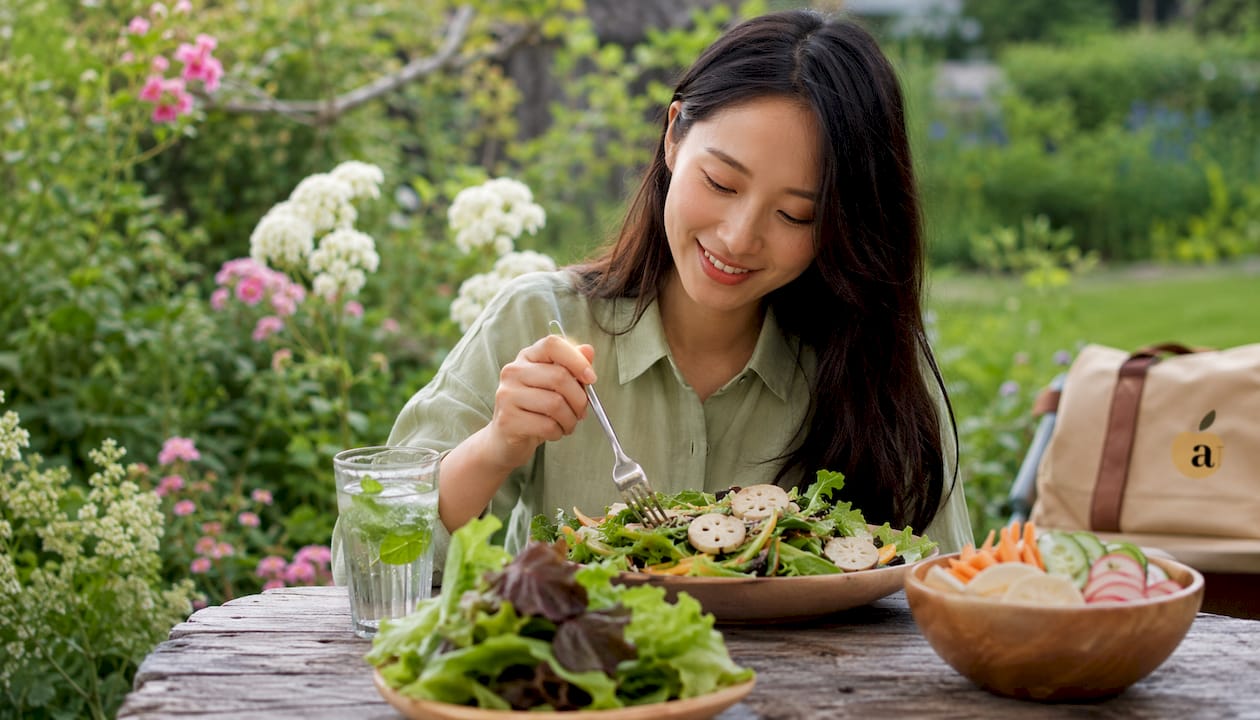
Burdock contains both inulin and fructooligosaccharides (FOS), compounds that promote beneficial gut bacteria in animal studies. Inulin passes undigested to the colon, where it selectively feeds Bifidobacterium and Lactobacillus species. The practical result for most people eating the root regularly is improved stool consistency and a modest boost to gut microbiome diversity.
Blood sugar and metabolic effects
Inulin slows gastric emptying and blunts post-meal glucose spikes. Chlorogenic acid has shown glucose-lowering activity in animal models by inhibiting glucose-6-phosphatase. These mechanisms are plausible and supported by laboratory evidence, but human clinical trials are limited. Do not treat burdock as a substitute for prescribed diabetes management.
Anti-inflammatory and joint support
That trial is one of very few human studies in this area. The anti-inflammatory signals from chlorogenic acid and arctigenin are consistent across cell models, but translating lab results to clinical outcomes requires much larger, controlled human trials.
Skin benefits
Historically, burdock was applied topically for eczema, psoriasis, and acne. The antibacterial and anti-inflammatory properties of its polyphenols provide a plausible mechanism. Modern use as a burdock root extract in skincare products is growing, though robust clinical skin trials are absent.
Diuretic and “detox” reputation
Burdock has a long history as a mild diuretic. Contemporary evidence suggests its value lies more in long-term antioxidant and prebiotic support than in short-term cleansing effects. The “detox” framing is largely a marketing interpretation of its historical diuretic use.
Early cancer research
Laboratory studies on arctigenin and related lignans show cytotoxic activity against certain cancer cell lines. These are in vitro findings only. There is no human clinical evidence that burdock root treats or prevents cancer, and it must not be positioned as an alternative to oncology care.
How solid is the science behind burdock root?
Most of the positive signals come from cell cultures and animal models, not human trials. That distinction matters practically.
- In vitro studies expose isolated cells to concentrated extracts. The doses used are often far higher than anything achievable through diet or standard supplementation.
- Animal studies provide useful mechanistic clues but do not reliably predict human outcomes, particularly for complex metabolic effects.
- Human trials are scarce. The 2016 osteoarthritis tea study is one of the few, and it was small with no control group.
Key limitations across the literature:
- Small sample sizes in most human studies
- Lack of standardised extracts makes cross-study comparison difficult
- Extract potency varies widely depending on drying method, solvent used, and plant part
- No large randomised controlled trials (RCTs) for any of the headline claims
The honest position: burdock root as a food has well-established nutritional value. Its medicinal claims remain promising but unproven at the clinical level.
How to use burdock root: forms, doses and choosing wisely
Burdock is available in several forms, each with different practical trade-offs.
| Form | Ease of use | Evidence strength | Dose clarity | Daily use suitability |
|---|---|---|---|---|
| Fresh root (cooked) | Moderate | Nutritional evidence solid | Serving-based, intuitive | Excellent |
| Dried root tea / decoction | Easy | Modest (traditional use) | Variable | Good |
| Tincture | Easy | Limited human data | Manufacturer-dependent | Moderate |
| Powdered root | Easy | Limited | Often unclear | Moderate |
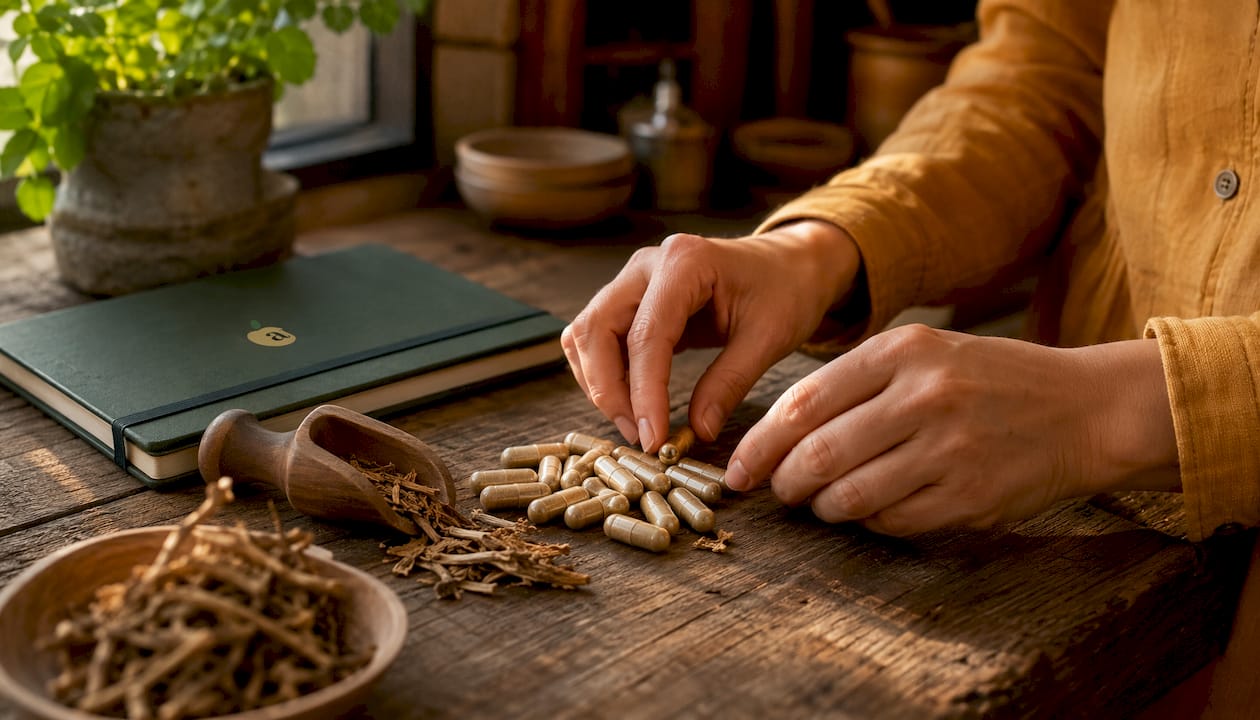
| Capsules (standardised extract) | Very easy | Limited human data | Clearest of supplement forms | Good with caution |
No universal therapeutic dose has been established for supplements. For food use, follow normal serving norms — a typical portion of cooked root is consumed in Japanese cuisine. For supplements, follow the labelled dose and start at the lower end.
Processing and industrial extraction can reduce bioavailability of active compounds compared with eating the whole root. Registered dietitians consistently note that supplements are not equivalent to the whole food. When choosing a supplement, look for food-grade herbal preparations with third-party testing and a declared extract ratio or standardised active content. Avoid products with proprietary blends that obscure individual ingredient doses — single-ingredient supplements make it far easier to track what you are actually taking.
Pro Tip: Combine burdock root with other prebiotic foods — Jerusalem artichoke, chicory, or leek — to amplify the gut microbiome benefits. Inulin from multiple sources has a synergistic effect on beneficial bacteria.
Risks, side effects and who should avoid burdock root
Burdock as a food is generally safe for most adults. Supplements carry a different risk profile.
Common adverse reactions:
- Contact dermatitis on skin handling the raw root — wear gloves when peeling
- Allergic cross-reactivity with the Asteraceae (daisy) family: if you react to chrysanthemums, ragweed, or daisies, approach burdock cautiously
- Digestive discomfort (bloating, loose stools) when introducing high-inulin foods quickly
Serious but rare:
- Acute liver injury has been reported in supplement users
- Anaphylaxis is rare but documented; seek urgent care for throat swelling, difficulty breathing, or sudden rash
Drug interactions — consult your GP or pharmacist before use if you take:
- Blood sugar-lowering medications (risk of hypoglycaemia)
- Diuretics (additive effect may cause electrolyte imbalance)
- Anticoagulants (theoretical interaction via flavonoid activity)
Burdock supplements may interact with blood-sugar-lowering drugs and diuretics; anyone on prescription medication should check with a pharmacist before starting.
Who should avoid burdock supplements entirely:
- Pregnant people: possible uterine stimulation; avoid burdock during pregnancy and seek qualified guidance on safe herbal use
- Breastfeeding people: insufficient safety data
- Children: no established paediatric dosing
- People with chronic liver or kidney conditions: consult a clinician first
Stop use immediately if you develop a rash, unusual fatigue, or jaundice, and contact your GP.
This article is general information, not medical advice. Confirm current guidance with a qualified health professional for your own situation.
Simple burdock root recipes and preparation tips
Fresh burdock root is sold in East Asian supermarkets and some health food shops across the UK, typically as long, dark-brown roots resembling a thin parsnip.
Basic preparation:
- Scrub under cold water with a stiff brush; do not peel deeply — the skin holds flavour
- Slice or julienne immediately into cold water with a splash of lemon juice or vinegar to prevent browning
- Discard any hollow or very fibrous core in older roots
Easy recipes:
- Kinpira gobō (Japanese braised burdock): Julienne burdock and carrot, stir-fry in sesame oil for 3–4 minutes, add soy sauce, mirin, and a pinch of chilli flakes, cook until tender. Ready in 15 minutes.
- Burdock soup: Add sliced root to miso broth with tofu and spring onion; simmer 20 minutes for a clean, earthy flavour.
- Burdock crisps: Peel thin ribbons, toss in olive oil and sea salt, bake at 180°C for 12–15 minutes until crisp.
- Pickled burdock: Blanch julienned root for 2 minutes, then pickle in rice vinegar, sugar, and salt for 24 hours.
Flavour notes: Burdock is earthy and slightly sweet with a mild bitterness. It pairs well with sesame, soy, miso, ginger, and root vegetables. Avoid overcooking — it softens quickly and loses texture.
Storage: Fresh root keeps for up to two weeks wrapped in damp paper and refrigerated. Blanched, sliced root freezes well for up to three months.
Pro Tip: Buy burdock root from East Asian grocers rather than health food shops for the freshest culinary-grade root at a fraction of the supplement price. Look for firm, unblemished roots with no soft spots.
Growing and foraging burdock root in the UK
Cultivation
- Choose your site. Burdock needs deep, loose, well-drained soil — ideally sandy loam to a depth of 60 cm. Compact clay produces stunted, forked roots. Full sun to partial shade suits it well.
- Sow seeds. Direct sow in April–May, 1 cm deep, thinning to 30 cm apart. Germination takes 10–14 days in warm soil.
- Manage growth. Water consistently in dry spells. The plant produces large leaves in year one; do not let it dry out during root development.
- Harvest in autumn of year one. Dig carefully with a fork to avoid snapping the long taproot. First-year roots are tender and culinary-grade; second-year roots become woody after the plant flowers.
- Container growing. Use a deep pot (minimum 60 cm depth) or a dustbin-style container. Burdock will grow in containers but root length is limited.
Foraging safely in the UK
Burdock grows widely on roadsides, waste ground, and field margins across Britain. Positive identification is straightforward once you know the key features, but lookalikes exist.
- Key ID features: Very large, heart-shaped basal leaves (up to 70 cm), woolly white underside, hollow leaf stalks, and distinctive round burr seed heads in year two
- Lookalike risk: Consult a trusted field guide before harvesting; foxglove (Digitalis) and butterbur (Petasites) can be confused with burdock at the leaf stage
- Contamination: Never forage from roadsides, urban verges, or land near industrial sites — vehicle pollution and herbicide residues accumulate in roots
- Legal access: Under the Countryside and Rights of Way Act 2000, foraging for personal use is generally permitted on open access land, but taking roots constitutes “uprooting” and requires landowner permission on private land. Always check before digging.
- Sustainable harvesting: Take no more than you need, harvest from established patches only, and leave the majority of plants undisturbed to allow regeneration
UK seasonal timeline:
- April–May: Sow seeds or identify first-year plants emerging
- June–September: Leaves develop; root is growing
- October–November: Best window for harvesting first-year culinary roots
- Year two (June–August): Burr heads appear — plant has flowered; root is now woody
Key takeaways
Burdock root is a nutritious, fibre-rich vegetable with real prebiotic and antioxidant value as a food, but its medicinal claims rest on limited human evidence and supplements require careful sourcing and medical caution.
| Point | Details |
|---|---|
| Eat it as food first | Cooked burdock root delivers inulin, antioxidants, and minerals with a strong safety record. |
| Supplement with caution | Extracts lack consistent human trial evidence; choose standardised, third-party tested products only. |
| Avoid in pregnancy | Possible uterine stimulation makes burdock supplements unsuitable during pregnancy or breastfeeding. |
| Check drug interactions | Burdock may interact with diabetes medications and diuretics; always consult your GP or pharmacist first. |
| Vitaminb17 burdock capsules | Vitaminb17 offers burdock root capsules with no fillers or binders for those choosing supplement form. |
Why the “detox” framing undersells what burdock actually does
The wellness industry has spent decades marketing burdock as a cleansing herb. That framing is both reductive and slightly misleading, and it probably puts off the people who would benefit most from simply eating it.
Burdock’s real strength is unglamorous: it is a prebiotic vegetable with a decent antioxidant profile. Eating it regularly as part of a varied diet makes straightforward nutritional sense. The inulin feeds your gut bacteria. The polyphenols reduce oxidative load. Neither of those things requires a “detox” narrative to be worth doing.
Where the conversation gets murkier is supplements. The gap between a promising in vitro result and a clinically validated dose is enormous, and most burdock supplements on the market do not bridge it. Extract standardisation is inconsistent. Doses are often arbitrary. And the people most likely to reach for a supplement are often those with existing health conditions — precisely the group most at risk from unverified interactions.
The practical position is simple: eat burdock as a vegetable when you can find it. If you prefer capsules for convenience, choose a product with a declared extract ratio, no fillers, and third-party testing. And if you are on any prescription medication, ask your pharmacist before you start.
Vitaminb17 burdock root capsules: pure, no fillers
For readers who want the convenience of a supplement, Vitaminb17’s burdock root capsules deliver 4500 mg of raw burdock root extract per serving. No fillers. No binders. No synthetic additives. Just pure burdock root in a clean capsule.

Choosing a food-grade herbal supplement matters because extraction method and ingredient quality directly affect how much active compound you actually receive. Vitaminb17 uses standardised extracts so you know exactly what you are taking. Before starting, read the guide on recognising underdosed supplements to understand what to look for on a label. Always consult your GP or pharmacist before beginning any supplement, particularly if you take prescription medication. View the full product details and order at vitaminb17.co.uk.
Useful sources and further reading
The following sources informed this article’s health claims, safety guidance, cultivation notes, and foraging advice.
- Cleveland Clinic — Burdock root benefits: Nutritional overview, dietitian caution on supplements vs whole food, and safety summary. health.clevelandclinic.org/burdock-root
- Medical News Today — Burdock root: benefits, side effects, and uses: Drug interactions, pregnancy caution, liver injury risk, and supplement safety. medicalnewstoday.com/articles/320035
- Healthline — Burdock root: benefits, side effects, and more: Evidence quality assessment, anti-inflammatory and antioxidant claims, diuretic history. healthline.com/health/burdock-root
- Health.com — 6 science-backed health benefits of burdock root: 2016 osteoarthritis tea trial summary, FOS and gut bacteria evidence. health.com/burdock-root-benefits-8684804
- Springer Nature — Harnessing the power of Arctium lappa root (review): Phytochemical analysis of chlorogenic acid, quercetin, and lignans; hepatoprotective and anti-inflammatory activity in cell and animal models. link.springer.com/article/10.1007/s13659-024-00466-8
- Britannica — Burdock: Botanical lifecycle, biennial behaviour, and culinary root harvest timing. britannica.com/plant/burdock
- Wild Food UK — Burdock foraging guide: UK identification features, lookalike risks, contamination cautions, and sustainable harvesting. wildfooduk.com/wild-plants/burdock
- PubMed / PMC: Multiple peer-reviewed studies on inulin, prebiotic effects, and polyphenol bioactivity in Arctium lappa available via pubmed.ncbi.nlm.nih.gov and pmc.ncbi.nlm.nih.gov


