

Tolerance in herbal supplementation is defined as the body’s gradual adaptation to an active botanical compound, allowing effective use without adverse reactions. To build tolerance to potent herbal supplements, the standard clinical approach is low-and-slow titration: starting at the lowest effective dose and increasing by 50–100 mg every 7–10 days. This method reduces side effects, identifies your minimum effective dose, and protects against the risks that come with potent extracts. Vitaminb17 formulates its high-potency botanicals without fillers or binders precisely because clean products make this process far more predictable and manageable.
How to build tolerance to potent herbal supplements: what to do first
Before you introduce any potent botanical, preparation determines whether the process goes smoothly or not. Skipping this stage is the most common reason people report bad reactions in the first week.
Assess your baseline health first. Certain conditions and medications interact directly with herbal extracts. Potent herbs like burdock root, ginger, and apricot kernels affect metabolic pathways that some prescription drugs also target. Speak with a qualified practitioner if you take any regular medication.

Choose quality above all else. Third-party tested supplements verified by bodies such as USP or ConsumerLab reduce your exposure to contaminants and deliver consistent potency. Inconsistent potency is a leading cause of unexpected reactions. Vitaminb17 products use standardised extracts with no fillers, which means the dose you read on the label is the dose you receive.
Understand the therapeutic window. Potent herbs operate within a narrow therapeutic window: too low a dose produces no benefit, too high a dose risks toxicity. This is why tracking your dosage from day one is not optional.
Key preparation steps before you begin:
- Introduce one herb at a time. Adding multiple botanicals simultaneously makes it impossible to identify which compound caused a reaction.
- Start at the lowest dose listed on the product label, not the recommended full dose.
- Check for fillers and binders in your chosen product. Fillers and additives are a frequent hidden cause of intolerance, entirely separate from the active herb.
- Assess your gut health. A compromised gut lining amplifies reactions to potent extracts.
- Note your current stress levels. Chronic stress places the nervous system in a heightened state that makes the body far more reactive to new compounds.
Pro Tip: Keep a simple daily log from day one. Note the dose, timing, and any physical response. This single habit gives you the data to make confident adjustments rather than guessing.
What does a safe dose escalation protocol look like?
A structured escalation protocol is the practical core of developing tolerance for herbal extracts. Without structure, you either under-dose and see no benefit, or over-dose and trigger reactions that set you back.
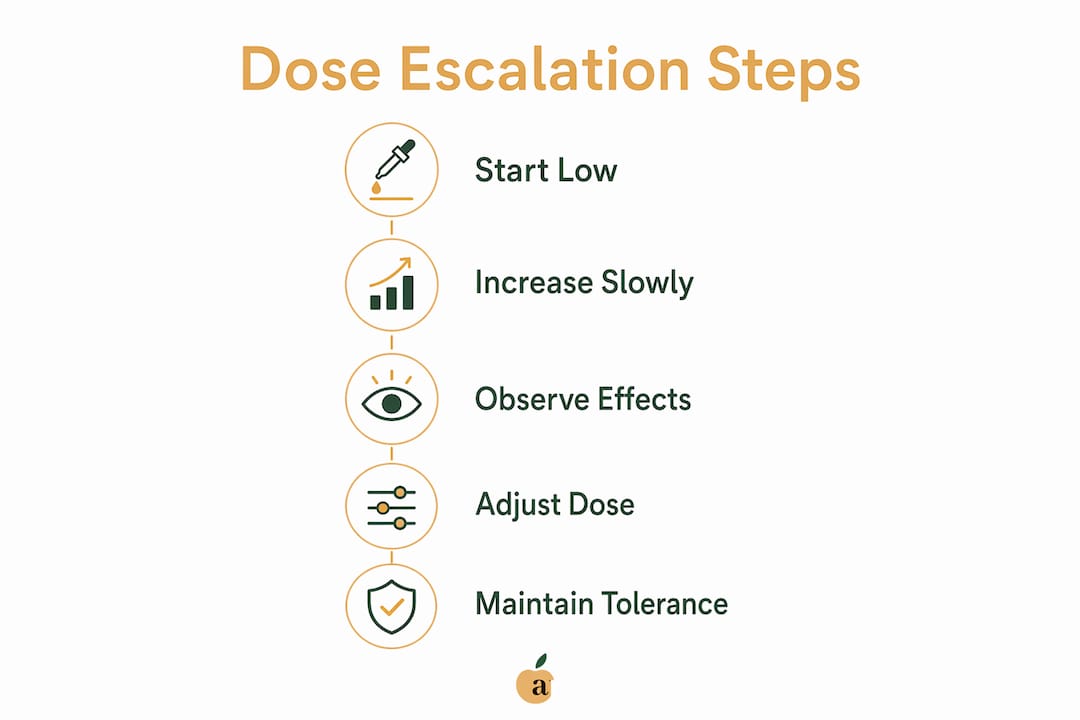
The method that works is gradual titration: increase your dose by 50–100 mg every 7–10 days while observing effects at each level. This pace allows your digestive system, liver, and nervous system to adapt before the next increase.
Follow this sequence:
- Set your starting dose. Begin at 50% of the product’s lowest recommended dose. For a 500 mg capsule, that means starting with half a capsule or choosing a lower-strength product.
- Take with food. Taking supplements with food or alongside a small amount of healthy fat improves absorption and significantly reduces nausea. Never take potent extracts on an empty stomach during the adaptation phase.
- Hold for 7–10 days. Observe your response at the current dose before increasing. If you feel well, increase by 50–100 mg. If you notice discomfort, hold at the current dose for a further 3–5 days.
- Split your daily dose. Divide your total daily amount across two meals. This reduces the concentration hitting your gut at any one time and smooths the body’s response.
- Log every day. Record dose, time, food eaten alongside it, energy levels, digestion, and sleep quality. Patterns emerge quickly when you have written data.
- Introduce cycling. Once you reach your target dose, build in one or two days off per week. This prevents tolerance saturation, where the body stops responding to the herb effectively.
| Phase | Dose increment | Observation period | Action if side effects occur |
|---|---|---|---|
| Starting phase | 50% of lowest label dose | 7 days | Hold, do not increase |
| Early escalation | +50 mg per step | 7–10 days | Step down to last tolerated dose |
| Mid escalation | +100 mg per step | 10 days | Step down, hold 3–5 days |
| Maintenance | Target dose reached | Ongoing | Introduce 1–2 days off per week |
Pro Tip: Split a capsule by opening it and mixing half into food if a lower-strength product is not available. This gives you precise control during the earliest phase without needing to buy multiple products.
What side effects and tolerance challenges should you expect?
Side effects during the adaptation phase are common and manageable. Recognising them early prevents the mistake of pushing through when you should step back.
The most frequent issues are gastrointestinal: nausea, bloating, loose stools, and constipation. These typically signal that the dose is too high for your current tolerance level. The correct response is to step down to the last tolerated dose and hold there for 3–7 days before attempting another increase. Pushing through GI discomfort rarely resolves it and often worsens it.
A less obvious but equally important cause of reactions is the nervous system. Many intolerance cases are caused by non-active ingredients or stress-induced nervous system hypersensitivity rather than the herb itself. If you are under significant stress, your body is already in a heightened reactive state. Introducing a potent extract into that environment amplifies every signal.
Safety warning: Stop use immediately and seek professional advice if you experience heart palpitations, severe abdominal pain, difficulty breathing, or significant changes in blood pressure. These are red flags that go beyond normal adaptation responses.
Common mistakes to avoid during tolerance building:
- Increasing the dose too quickly because you feel no immediate effect.
- Taking potent herbs on an empty stomach during the first four weeks.
- Introducing a second herb before the first is fully tolerated.
- Ignoring mild symptoms and continuing to escalate.
- Stopping and restarting repeatedly, which resets your adaptation progress each time.
Pro Tip: If you suspect your reaction is to fillers rather than the active herb, switch to a product with no binders or synthetic additives before concluding the herb itself is the problem. Many people who “can’t tolerate” an herb are actually reacting to the capsule coating or flow agents.
How do lifestyle and supplement combinations affect tolerance?
Lifestyle is not a background factor in herbal supplement tolerance. It is a direct variable that determines how well your body adapts.
Gut health, stress levels, hydration, and sleep each significantly affect how your body processes potent botanical compounds. A well-hydrated person with consistent sleep absorbs and metabolises herbal extracts more efficiently than someone who is dehydrated and sleep-deprived. These are not minor differences. They change the entire tolerance trajectory.
Stacking multiple potent herbs simultaneously is one of the most common errors. Introducing herbs one at a time is the recommended approach because combining several strong botanicals makes it impossible to assess which compound is responsible for any given response. You lose all diagnostic clarity. For guidance on building a multi-herb protocol safely, the Vitaminb17 resource on stacking herbal supplements provides a structured framework for 2026.
Lifestyle factors that directly support tolerance development:
- Hydration. Drink at least 1.5–2 litres of water daily. Many herbal extracts are diuretic or stimulate detox pathways that require adequate fluid.
- Sleep. Aim for 7–9 hours. The liver processes compounds most actively during sleep, and poor sleep slows adaptation.
- Stress management. Chronic stress keeps the nervous system reactive. Practices like diaphragmatic breathing or short daily walks reduce baseline reactivity before you introduce a new herb.
- Nutrition. Eat meals that include healthy fats when taking fat-soluble herbal extracts. Absorption increases substantially with dietary fat present.
- Consistency. Take your supplement at the same time each day. Irregular timing disrupts the body’s adaptation rhythm and produces inconsistent responses.
Choosing clean products matters more for sensitive individuals than for those with robust digestive systems. Products free of synthetic additives, as Vitaminb17 formulates, remove one variable entirely. That simplification makes the adaptation process cleaner and the data from your log more reliable.
Key takeaways
Building tolerance to potent herbal supplements requires a structured low-and-slow titration protocol, clean filler-free products, and consistent lifestyle support to achieve safe and effective results.
| Point | Details |
|---|---|
| Start low and increase slowly | Raise your dose by 50–100 mg every 7–10 days to identify your minimum effective dose safely. |
| Choose filler-free products | Fillers and binders cause many reported reactions; clean products make tolerance assessment accurate. |
| Log your responses daily | Systematic documentation is mandatory for potent herbs with a narrow therapeutic window. |
| Step down on side effects | Reduce to the last tolerated dose and hold for 3–7 days rather than pushing through discomfort. |
| Support with lifestyle basics | Hydration, sleep, and stress management directly affect how well your body adapts to potent extracts. |
What I have learnt from years of watching people get this wrong
The single biggest mistake I see is impatience. People start a potent extract, feel nothing in three days, and double the dose. Then they spend two weeks recovering from the reaction and conclude the herb “doesn’t work for them.” The herb worked fine. The protocol failed.
The second thing I have learnt is that the product quality conversation is not optional. I have watched people struggle with an herb for months, switch to a clean, standardised extract with no fillers, and adapt within two weeks. The active compound was never the issue. The capsule coating was. This is why I always recommend checking the full ingredient list before concluding an herb is unsuitable for you.
Logging is the habit that separates people who succeed from those who cycle endlessly through reactions and restarts. You do not need an app. A notebook works. What matters is that you have written evidence of what happened at each dose level, so your next decision is based on data rather than memory.
Finally, do not underestimate the role of your nervous system state. If you are going through a period of high stress, your tolerance window narrows considerably. I have seen people who tolerated an herb well for months suddenly react badly during a stressful period. The herb had not changed. Their baseline had. Working with a practitioner who understands whole-body wellness and stress physiology makes a real difference when tolerance building stalls.
— Jade
Vitaminb17 products built for safe tolerance building
Vitaminb17 formulates every product without fillers, binders, or synthetic additives. That matters most when you are working through a careful dose escalation protocol and need to know that what you are reacting to is the active herb, not a hidden ingredient.

Products like Burdock Root Capsules and Ginger Root Extract use standardised extracts, so each capsule delivers a consistent dose. Consistency is what makes gradual titration possible. If you want to understand whether your current supplement is actually delivering the dose on the label, the Vitaminb17 guide on identifying underdosed supplements is the right place to start. Pure. Raw. No fillers. That is the foundation for building tolerance that actually holds.
FAQ
What does “build tolerance to potent herbal supplements” mean?
It means gradually adapting your body to an active botanical compound through low-and-slow dose escalation, so you receive the therapeutic benefit without adverse reactions.
How long does it take to develop tolerance for herbal extracts?
Most people establish a working tolerance within 4–8 weeks using a structured 50–100 mg increment protocol with 7–10 day observation periods between increases.
Why do herbal supplements cause nausea or bloating at first?
GI symptoms usually indicate the dose is too high for your current tolerance level, or that the product contains fillers your body is reacting to rather than the active herb itself.
Should I take potent herbal supplements with food?
Taking supplements with food or a small amount of healthy fat improves absorption and significantly reduces nausea, particularly during the early adaptation phase.
When should I stop increasing my herbal supplement dose?
Stop increasing when you reach your target therapeutic dose, when side effects appear, or when you achieve the health outcome you are working towards. Maintain that dose with one to two days off per week to prevent tolerance saturation.


